
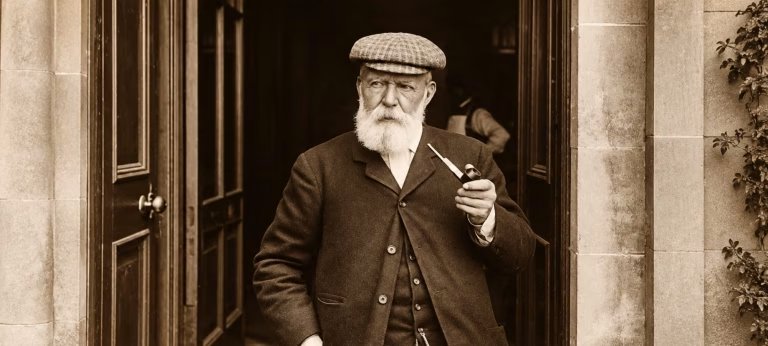
Old Tom Morris spent more than six decades inside the game, from his early years in St Andrews to a career that touched competition, greenkeeping, and course design. His name became closely linked with golf's growth during the nineteenth century.
In this article, we follow Morris through the roles, places, and relationships that defined his career, from early professional golf to the courses that still carry his influence.
Key Takeaways
- Old Tom Morris became a defining nineteenth-century figure through competitive golf, craftsmanship, greenkeeping, and course design.
- His St Andrews upbringing and apprenticeship under Allan Robertson gave him early experience across golf, equipment making, and professional competition.
- Prestwick became a defining chapter of his career, from shaping its original links to winning four early Open Championships there.
- His return to St Andrews brought lasting changes to the Old Course through enlarged greens, bunkers, maintenance practices, and routing adjustments.
- Young Tom followed his father into elite golf, creating a remarkable two-generation story before his untimely passing at 24.
- Morris influenced later golf through course care, natural-land routing, and design principles that remain recognisable across many traditional links courses today.
- Courses across the British Isles still preserve documented elements of Morris's work despite later redesigns.
A Legend Who Shaped the Game
Thomas Mitchell Morris was born in St Andrews on 16 June 1821 and became known throughout golf as Old Tom Morris. His life covered most of the nineteenth century, placing him close to many of the changes that reshaped the game.
Golf in Morris's youth still belonged largely to a small network of Scottish links and their traditions. By 1908, the game had become more organised, widely followed, and increasingly international, with Morris established as one of the figures most closely associated with its growth.
His importance came from the range of work he carried out within golf. Morris was a leading player, craftsman, greenkeeper, and course maker, giving him a practical understanding of the game that extended far beyond competition.
That breadth made him an authority during a period when golf itself was changing quickly. His name became familiar well beyond the players he competed against, and his long involvement gave him a place within the sport as older Scottish traditions met a more organised golfing world.
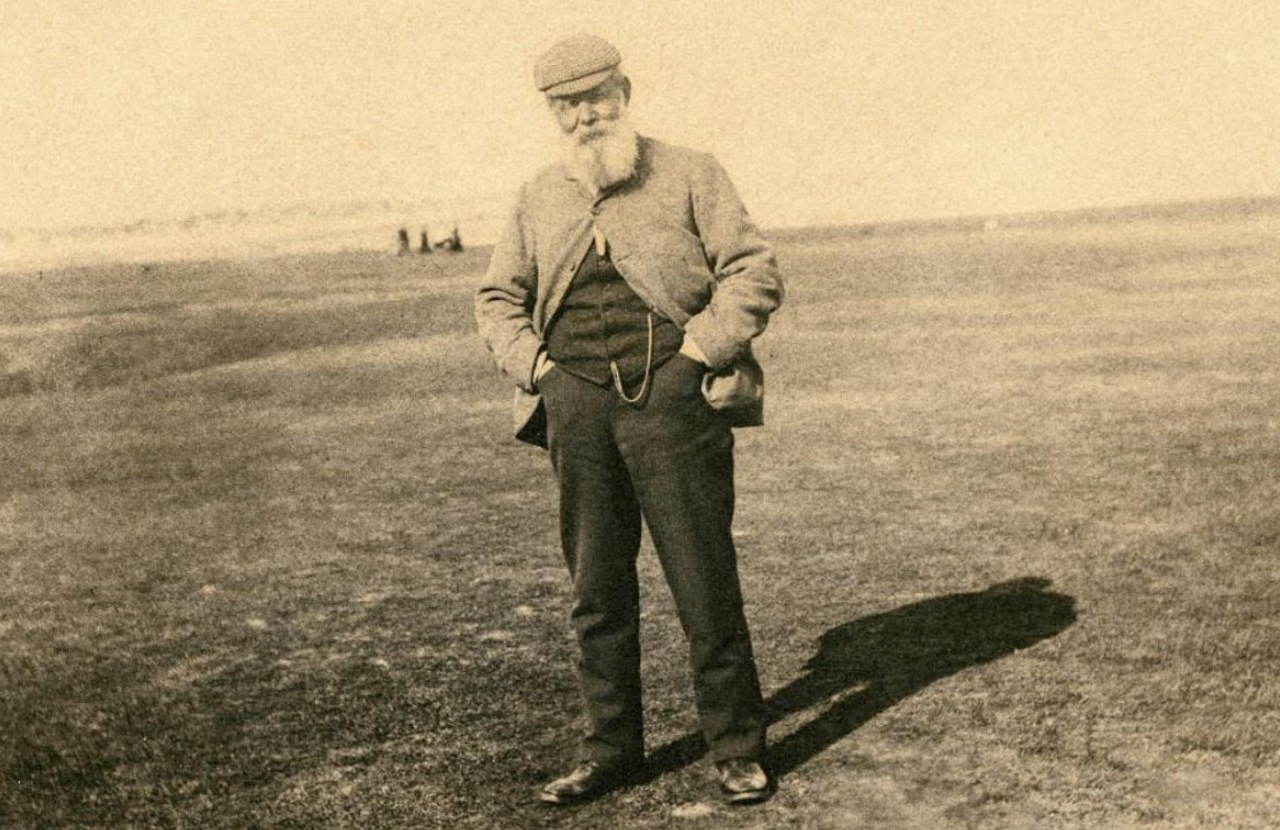 Old Tom Morris on the links. Image: BIGGA.
Morris remained closely involved with golf for more than six decades. Few figures of his era experienced such a long span of change while also taking an active part in the game throughout much of their adult life.
Contemporary accounts describe a man known for composure, good humour, and an ability to deal comfortably with people from different social backgrounds. Those qualities strengthened his standing during the Victorian era, when leading professionals were becoming increasingly visible figures within a sport attracting a much broader public.
By his later years, Morris was widely known as the "Grand Old Man of Golf". The title reflected both his longevity and the place he had come to occupy in the game, with his name closely tied to Scottish golf and its nineteenth-century development.
The Early Years at St Andrews
Morris grew up in a St Andrews household already tied to the links. His father, John, worked as a weaver and also caddied, while his grandfather had caddied before him, so golf was part of family life from childhood.
He began playing on the St Andrews links as a boy and spent much of his youth close to the course. Caddying offered local boys a practical way to earn money, while giving Morris regular exposure to players, equipment, course conditions, and the customs surrounding the game.
In his late teens, Morris joined Allan Robertson, one of the leading golfers of the period and part of a St Andrews family whose reputation for making golf balls had been established over several generations.
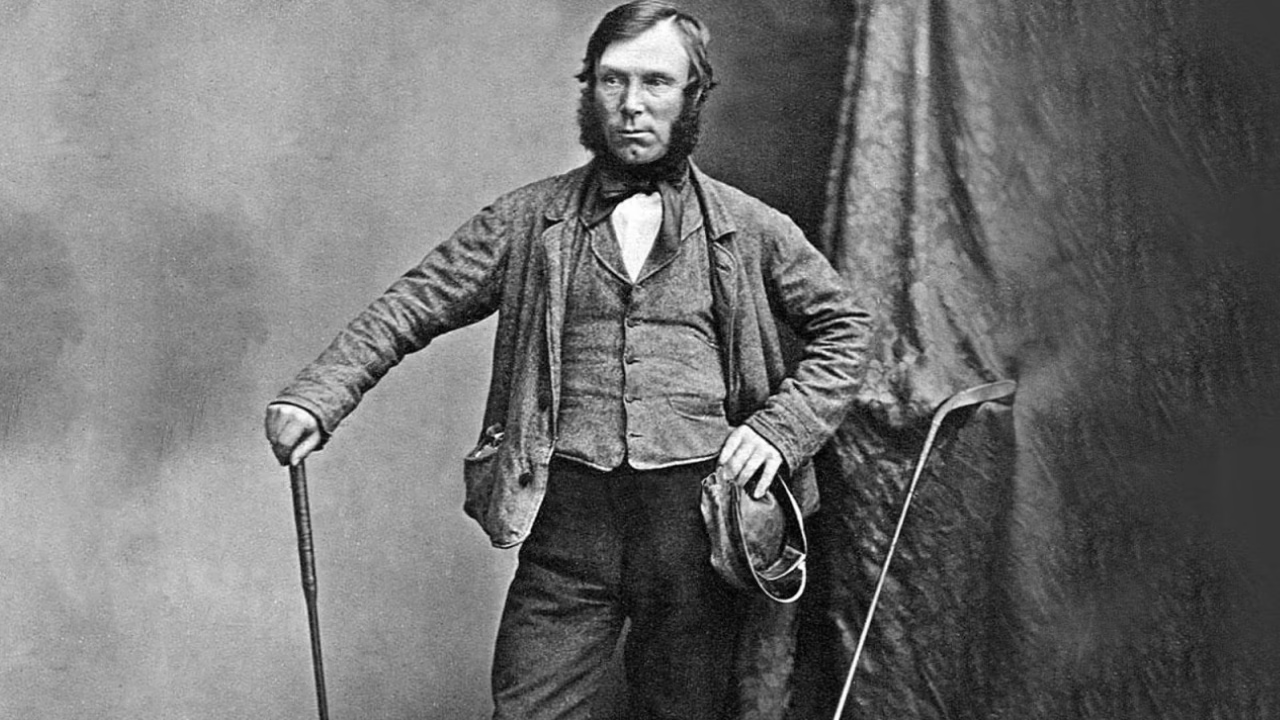 Portrait of Allan Robertson. Image: the Memorial Tournament.
Robertson's workshop introduced Morris to the skilled trade behind nineteenth-century golf. He learned to make featherie balls, formed from leather cases packed tightly with feathers, while gaining first-hand experience of the workmanship and consistency expected from equipment made for accomplished players.
Robertson was only a few years older than Morris, and their relationship soon extended beyond the workshop. They became regular partners in challenge matches, where professionals competed for stakes and built their standing against strong opposition.
Morris was already a capable golfer when he entered Robertson's employment, rather than a complete beginner learning the game from scratch. Working beside one of Scotland's finest players gave him stronger competitive experience while deepening his knowledge of the practical trade surrounding professional golf.
The pair became a formidable partnership in the challenge-match culture of the 1840s. Backers put money behind leading players, spectators followed important contests, and Morris gained both income and standing from matches that took him beyond casual local play and into Scotland's increasingly visible professional game at the time.
After his apprenticeship, Morris stayed with Robertson as a journeyman. His livelihood combined skilled work with competitive golf, reflecting an era when professionals were expected to understand equipment and earn their place through both craft and play.
Their working relationship ended in the late 1840s after Morris used a gutta-percha ball, a newer and cheaper alternative to the featherie. Robertson resisted a ball that threatened his family's established trade, and the disagreement brought Morris's years in the workshop to a close.
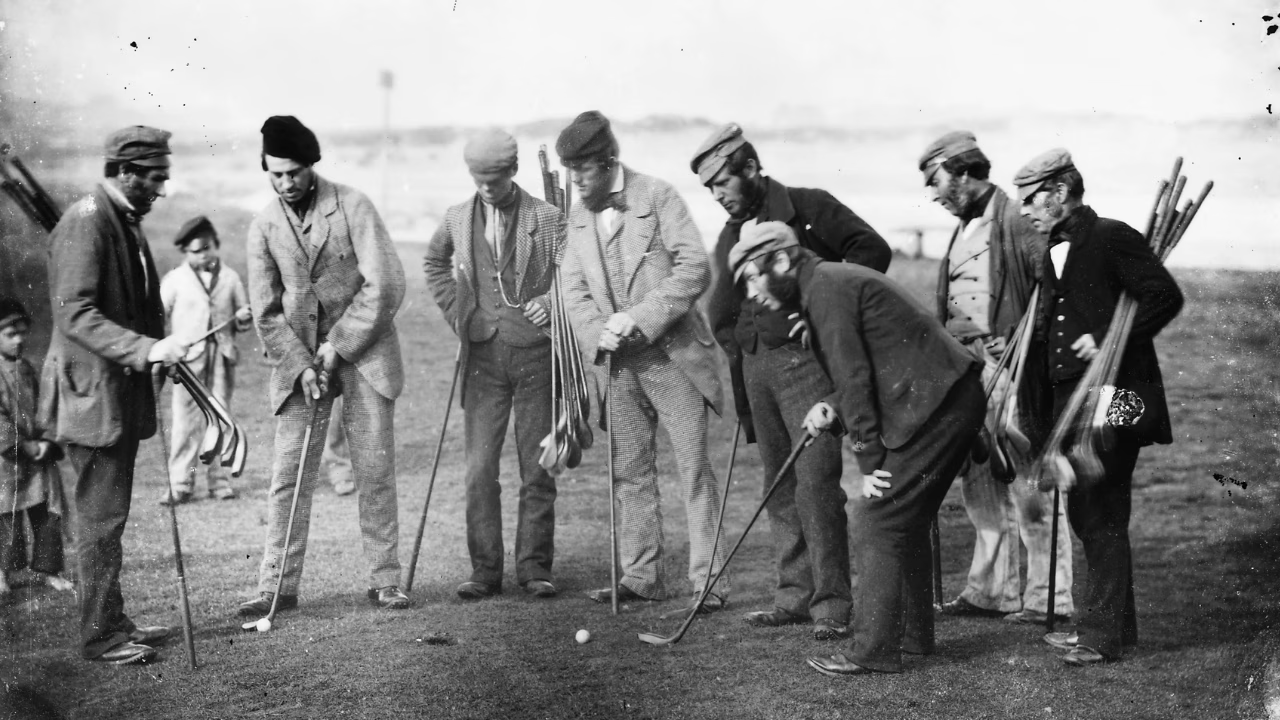 Old Tom Morris (third from the right) with Allan Robertson (front) and fellow golfers. Image: The Open.
A New Chapter at Prestwick, Birthplace of The Open
The break with Allan Robertson opened the next major chapter of Morris's career. In 1851, James Ogilvy Fairlie recruited him to the newly formed Prestwick Golf Club as Keeper of the Green, Ball and Clubmaker.
Morris left St Andrews for Ayrshire with his wife Agnes and their young family, including the recently born Young Tom Morris. Prestwick was then a much smaller golfing centre, but the appointment placed him at the centre of a new club from its earliest days.
He laid out Prestwick's original 12-hole course across the natural links. Its routing included blind shots, unusual angles, and large natural features that demanded careful judgement of ground, wind, distance, and strategy from the golfers who played it.
His work at Prestwick went well beyond playing matches. Morris cared for the links, made and repaired equipment, and served as the club's professional, giving him daily responsibility for the conditions, tools, and playing environment around which the young club was building its identity.
Nine years after Prestwick was founded, the club staged a professional competition on 17 October 1860 following Allan Robertson's death. Eight players contested three rounds of the 12-hole course for the Challenge Belt on the Ayrshire links.
Morris entered as Prestwick's professional and one of the strongest players in the field. Willie Park Sr of Musselburgh finished on 174, two strokes better than Morris, taking the inaugural title and beginning a rivalry that would define much of the Championship's first decade.
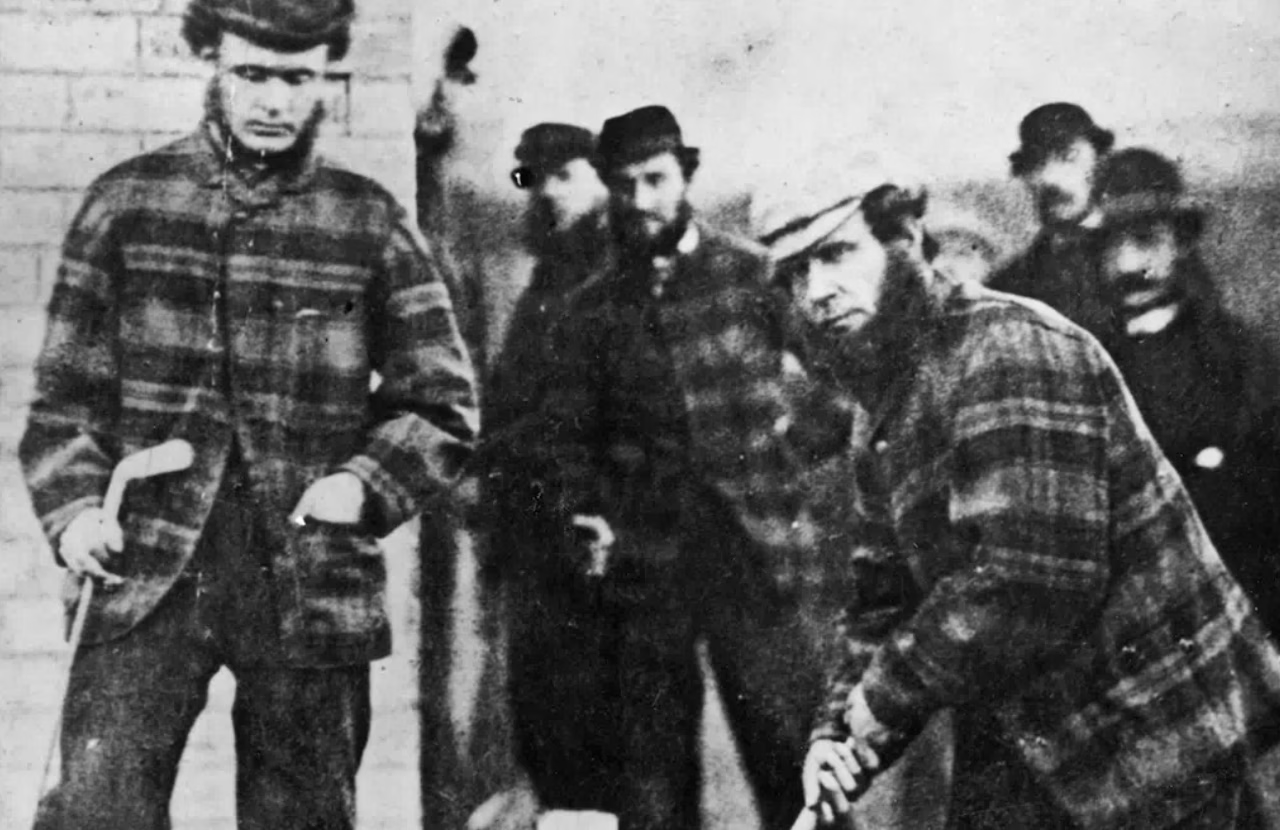 Old Tom Morris (right) playing at Prestwick in 1860. Image: The Open.
The competition returned in 1861 with amateurs permitted to enter, broadening the field beyond professionals. Morris reversed the previous result, scoring 163 across the three rounds and defeating Park by four strokes for his first Open Championship.
Morris defended the title in 1862 with another total of 163. This time, he finished 13 strokes ahead of Park, setting a winning-margin record that remains unmatched in The Open more than a century later.
Park answered in 1863, beating Morris by two strokes and preventing him from claiming a third consecutive title. The result kept their contest finely balanced: across the first four Opens, either Morris or Park had won every Championship and repeatedly occupied the leading places.
Morris reclaimed the title in 1864 with rounds of 54, 58, and 55. His total of 167 beat Andrew Strath by two strokes and brought a third Open victory in four years, together with £6 in prize money.
Three years later, Morris won for a fourth time at Prestwick. After opening with 58, he followed with 54 and another 58 for a total of 170, finishing two strokes ahead of Park in another close meeting between the era's two leading rivals.
That 1867 victory made Morris the oldest Champion Golfer in Open history at 46 years and 102 days. The record still stands, marking the final title of a seven-year run in which he won four times.
His Mark on the Old Course
Morris returned to St Andrews in 1864 after thirteen years at Prestwick, taking responsibility for the Old Course and bringing his practical experience back to the links where he had first learned the game as a boy.
The Royal and Ancient paid him £50 a year to oversee the course, with additional funds set aside for maintenance. His position covered the daily condition of the links, but it also gave him room to make changes that would affect how golfers played the Old Course for years.
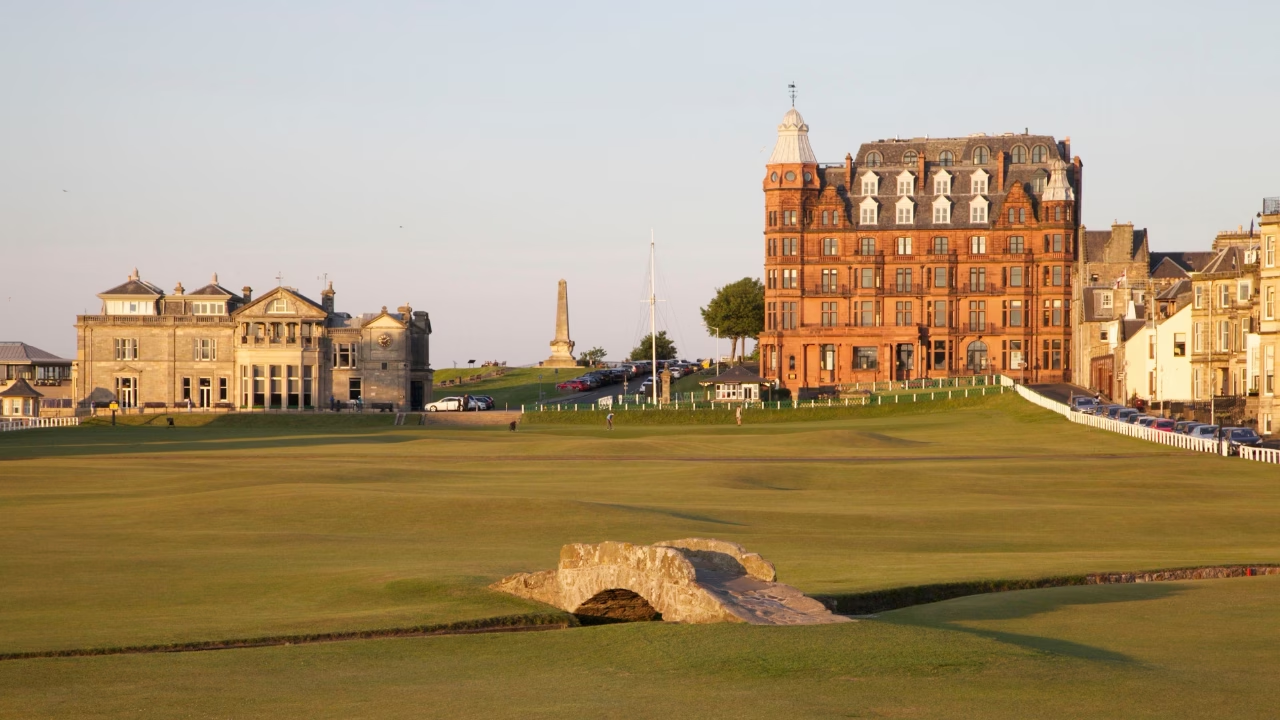 St Andrews Links (Old Course)
Morris enlarged several greens where the land allowed, often extending them sideways across the links. Those broader putting surfaces became part of the Old Course's character while making better use of the shared ground available to players.
He also created new first and 18th greens and made substantial changes to the outward half. The work altered how golfers entered and finished the round, while reshaping parts of the front nine without replacing the ancient routing with an entirely new course of his own.
Top-dressing formed part of Morris's approach to maintaining the turf and improving playing surfaces. It was practical work aimed at keeping heavily used links ground in better condition, and the method remains familiar to course managers today.
Bunkers became more deliberate within the course as well. Morris placed hazards where they influenced line and placement, asking golfers to think more carefully about the route to the hole and contributing to a more strategic style of play on the Old Course.
Morris also influenced the direction in which the links were played. The anti-clockwise routing familiar today became increasingly established during his stewardship, although the Old Course had already evolved through centuries of shared ground and repeated use.
When The Open came to St Andrews for the first time in 1873, competitors met a course Morris had spent years refining. The championship brought greater attention to the Old Course and showed that an ancient links could meet the demands of organised competitive golf.
Morris never treated the Old Course as a blank canvas. He worked with what generations had left behind, improving surfaces, adjusting holes, and refining how the links functioned while preserving its inherited character and the unusual features that had developed naturally over centuries of golf at St Andrews.
Two Generations of the Morris Family
Young Tom Morris grew up around Prestwick Golf Club, with his father's work placing golf firmly within everyday family life. The links, workshop, and professional game were part of his surroundings from childhood, giving him a close introduction to the sport much like his father had experienced in St Andrews.
Young Tom's ability became apparent early. At 13, he defeated his father in a friendly game at St Andrews, and before long the two were appearing together in challenge matches. Their partnership drew large crowds, giving spectators the unusual sight of two generations competing side by side.
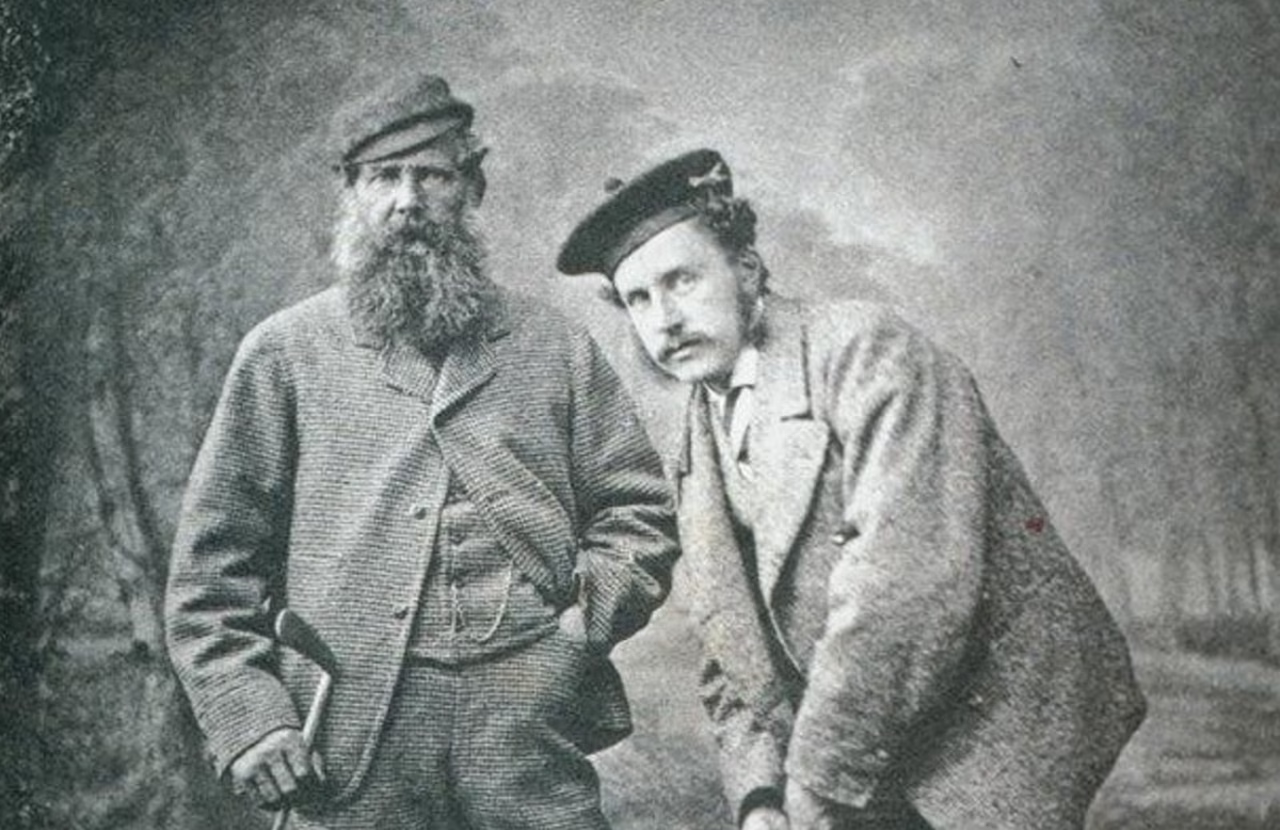 Old Tom Morris with his son, Young Tom Morris. Image: The Scotsman.
Father and son first appeared in the same Open Championship in 1865 at Prestwick. Young Tom was only 14, while Old Tom was already a three-time Champion, placing two generations of the Morris family in the same field.
The clearest changing of the guard came in 1868. A year after Old Tom won his fourth Open, 17-year-old Young Tom defeated him by three strokes at Prestwick, becoming the youngest Champion Golfer in history. Old Tom finished second, creating the only father-son one-two in Open history.
Young Tom won again in 1869 and 1870. With no Championship held in 1871, he returned in 1872 to claim a fourth successive Open victory, matching his father's four-title total while still only 21 years old.
Their partnership continued away from The Open through challenge and exhibition matches. In September 1875, father and son were playing at North Berwick against Willie and Mungo Park when news arrived that Young Tom's wife, Margaret, had suffered serious complications during childbirth.
Margaret and their newborn did not survive, and neither Morris played in that year's Open while the family grieved. Young Tom passed away on Christmas Day 1875 at 24, bringing an extraordinary father-and-son chapter in golf to an early close.
An Influence That Still Shapes Golf
By the later decades of his career, Morris had moved far beyond tournament golf. He designed or remodelled more than 70 courses, while his work in course care helped establish practices that became part of modern greenkeeping and agronomy.
Sand topdressing is one of the clearest examples. Morris used sand on putting surfaces at St Andrews, and the practice remains standard in modern course maintenance because, when applied correctly, it can improve firmness, smoothness, turf health, and the consistency golfers experience underfoot and on the greens.
His greenkeeping influence also came from treating the course as something that required regular, skilled attention rather than occasional repair. Preparation, drainage, and surface condition became part of the professional responsibility attached to caring for important golf links.
The tools available to Morris were simple by modern standards, but his methods depended heavily on observation. He worked with sandy links turf, changing weather, wear from play, and natural drainage, developing practical responses to the conditions golfers and greenkeepers faced across a season.
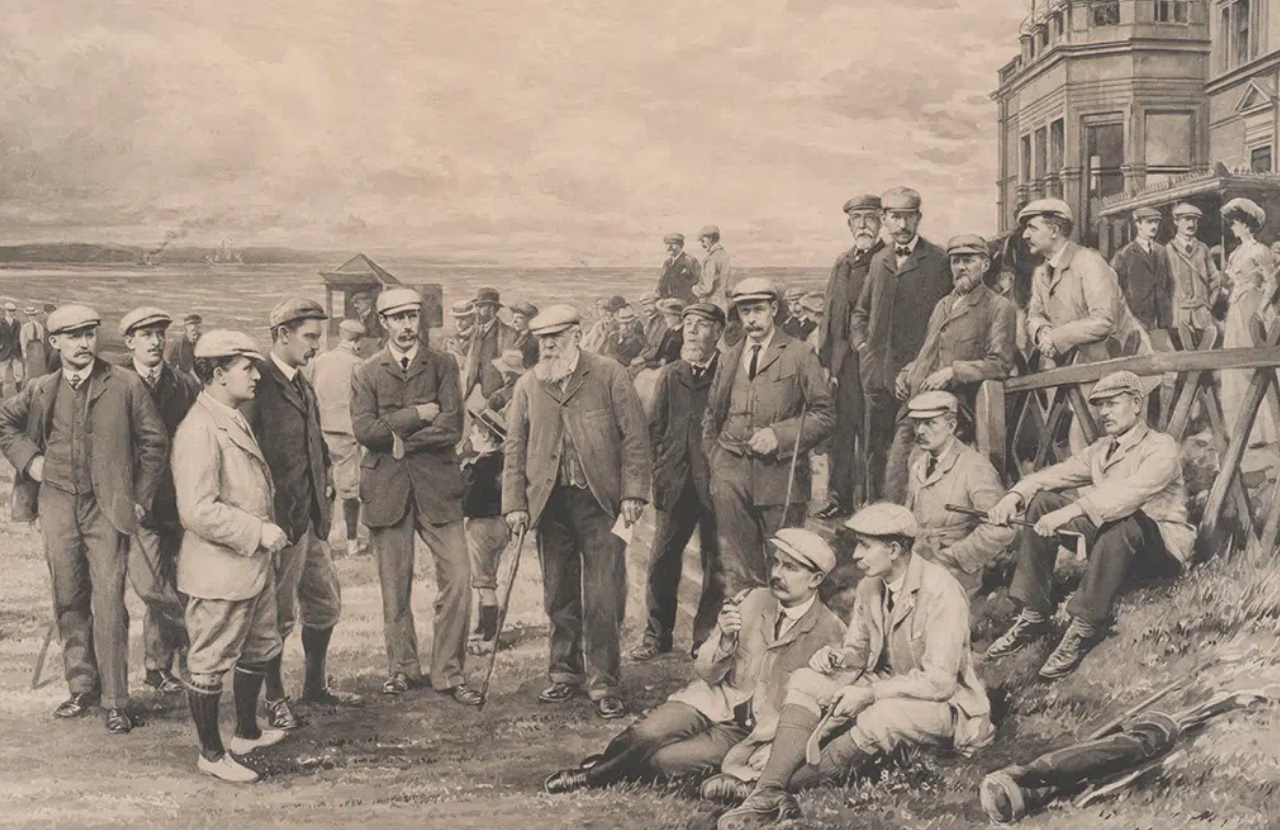 Old Tom Morris among surviving Open Champions. Image: The Open.
His approach to course design followed a similarly direct relationship with the land. Accounts of his routing method describe Morris choosing promising sites for greens first, then linking them across the existing terrain rather than forcing the ground into a rigid pattern.
It allowed dunes, hollows, slopes, and exposed ground to influence the golf itself. A player might have to carry an obstacle, work around it, or accept an awkward stance, so the landscape became part of the decisions required from tee to green.
Morris's architectural work eventually reached far beyond St Andrews and Prestwick. More than 70 courses are credited to his design or remodelling work, including several venues that later staged The Open during the championship's long history.
Many of those courses have since been altered by later architects, club committees, changing equipment, and more than a century of maintenance. His contribution therefore survives in layers, sometimes through original routing or green sites, and elsewhere through ideas preserved within substantial later redesigns.
Modern golf has machinery, data, irrigation systems, and scientific knowledge that Morris never possessed, yet parts of his working philosophy remain recognisable. Firm surfaces, site-led routing, respect for natural terrain, and maintenance centred on playability still sit comfortably within the game he helped shape.
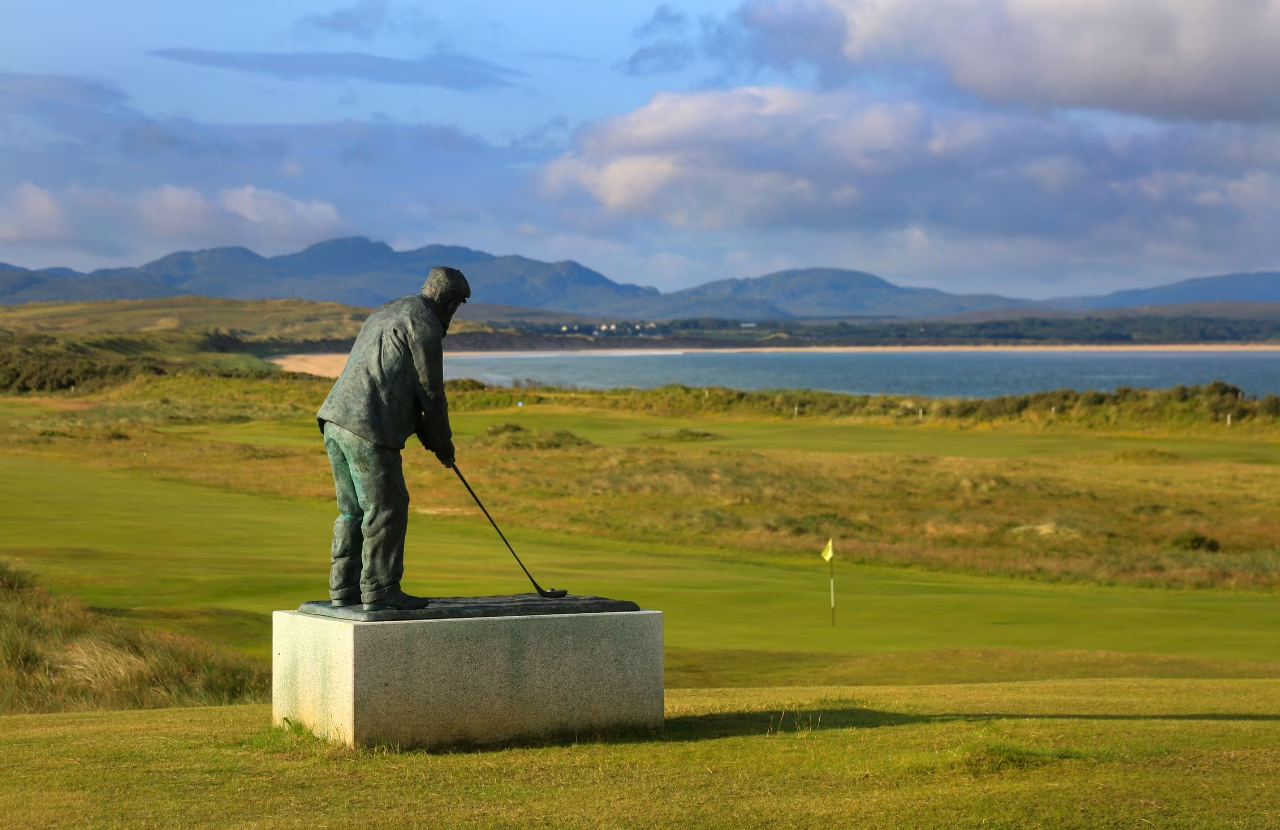 Statue of Old Tom Morris at Rosapenna. Image: Rosapenna Hotel & Golf Resort.
The Courses That Carry His Legacy
Old Tom Morris's architectural legacy reaches far beyond the Old Course and Prestwick. He is associated with more than 70 golf courses across the British Isles. His involvement was not identical at every club: the work ranged from original layouts and new holes to extensions, remodelling, and advice on courses that other architects later changed.
Scotland
Scotland accounts for 52 courses on the list, so a short roll call was never really an option. His involvement stretched across the country, from established links to emerging clubs seeking his experience in routing, extensions, and course improvements.
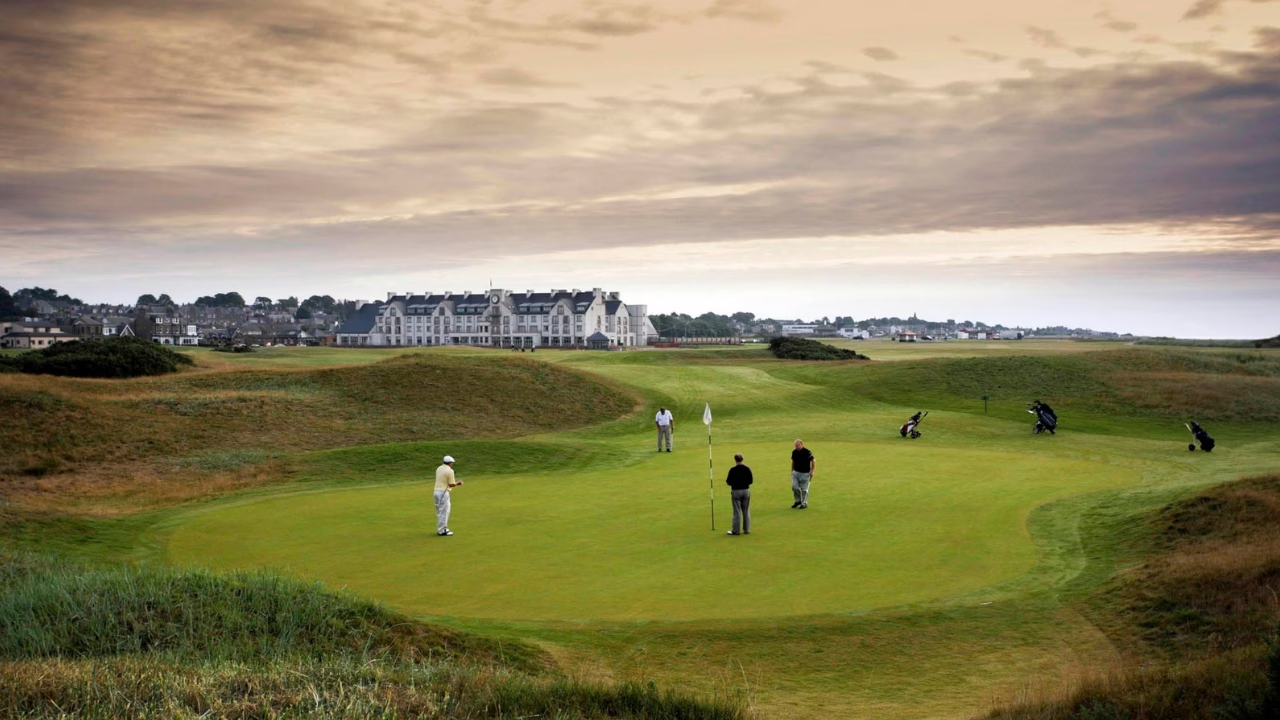 Carnoustie Golf Links (Championship Course)
- Alyth Golf Club (Alyth Course)
- Anstruther Golf Club
- Arbroath Golf Links
- Askernish Golf Club
- Bridge of Allan Golf Club
- Callander Golf Club
- Carnoustie Golf Links (Championship Course)
- Crail Golfing Society (Balcomie Links)
- Crieff Golf Club (Ferntower Course)
- Cruden Bay Golf Club (Championship Course)
- Cruden Bay Golf Club (St Olaf Course)
- Cullen Links Golf Club
- Dunbar Golf Club
- Dunkeld & Birnam Golf Club
- Forfar Golf Club
- Glasgow Golf Club (Killermont Course)
- Helensburgh Golf Club
- Kinghorn Golf Club
- King James VI Golf Club
- Kingussie Golf Club
- Kirkcaldy Golf Club
- Ladybank Golf Club
- Lanark Golf Club (Old Course)
- Leslie Golf Club
- Leven Links
- Luffness New Golf Club
- Lundin Golf Club
- Montrose Golf Links (1562 Course)
- Moray Golf Club (Old Course)
- Muirfield Golf Course
- Nairn Dunbar Golf Club
- Nairn Golf Club (Championship Course)
- Newtonmore Golf Club
- North Berwick Golf Club (West Links)
- North Inch Golf Course
- Panmure Golf Club
- Prestwick Golf Club
- Royal Dornoch Golf Club (Championship Course)
- Scotscraig Golfing Club
- St Andrews Links (Jubilee Course)
- St Andrews Links (New Course)
- St Andrews Links (Old Course)
- St Michaels Golf Club
- Stirling Golf Club
- Strathpeffer Spa Golf Club
- Tain Golf Club
- Tarland Golf Club
- Thornhill Golf Club
- The Golf House Club, Elie
- The Machrihanish Golf Club (Championship Course)
- The Royal Burgess Golfing Society
- The West Kilbride Golf Club
England
England accounts for 15 courses on the list, with Morris's work reaching from the south-west coast to clubs in northern England. As elsewhere, later architects reshaped several of these courses, so their present layouts may preserve his contribution to different degrees.
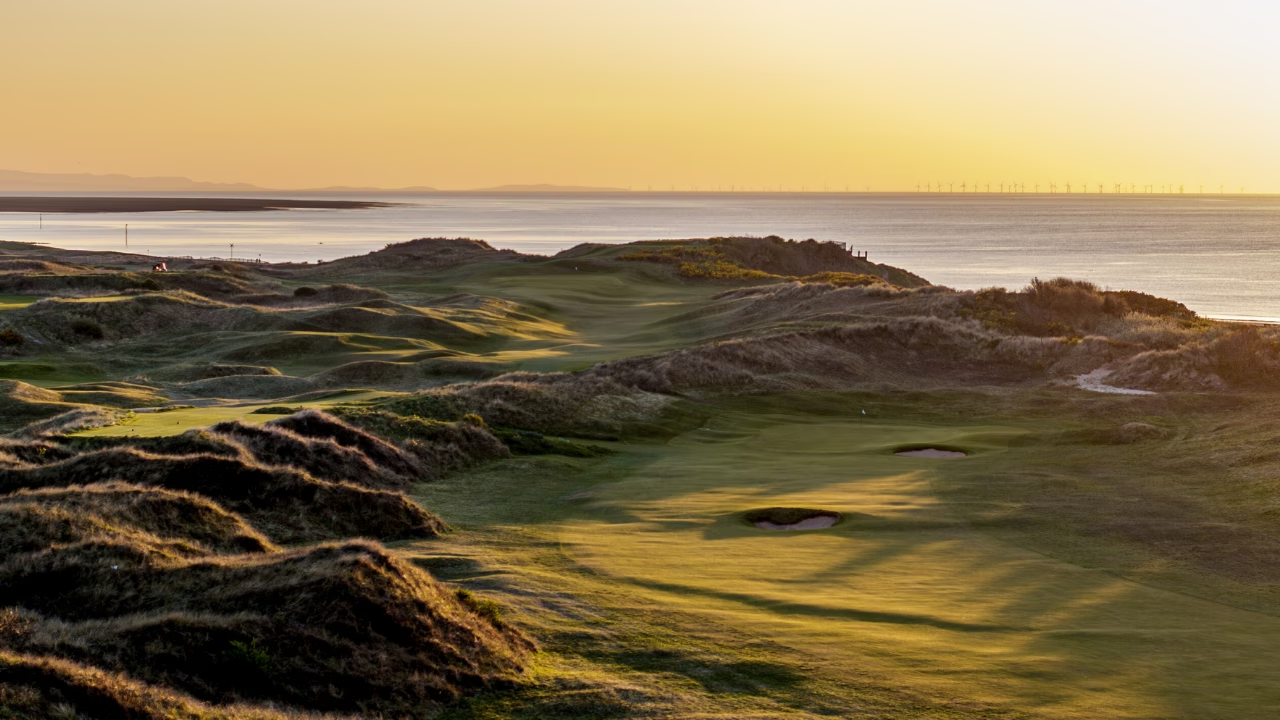 Wallasey Golf Club
- Cleeve Hill Golf Club
- Cleveland Golf Club
- Dewsbury District Golf Club
- Kendal Golf Club
- Kettering Golf Club
- Kirby Muxloe Golf Club
- Lindrick Golf Club
- Mitcham Golf Club
- Newcastle United Golf Club
- Northampton Golf Club
- Royal Cromer Golf Club
- Royal North Devon Golf Club
- Wallasey Golf Club
- Warkworth Golf Club
- West Herts Golf Club
Northern Ireland
Three entries represent Morris's documented work in Northern Ireland. Royal County Down contributes two present-day courses to the historical list, while Royal Portrush reflects another early Morris connection that was later substantially reshaped by subsequent architects.
 Royal County Down Golf Club (Championship Links)
- Royal County Down Golf Club (Annesley Links)
- Royal County Down Golf Club (Championship Links)
- Royal Portrush Golf Club (Dunluce Links)
Republic of Ireland
The Republic of Ireland contributes two courses to the list, and both are important examples of Morris's work on natural linksland. Later architects altered each layout, leaving his contribution as part of a longer architectural history.
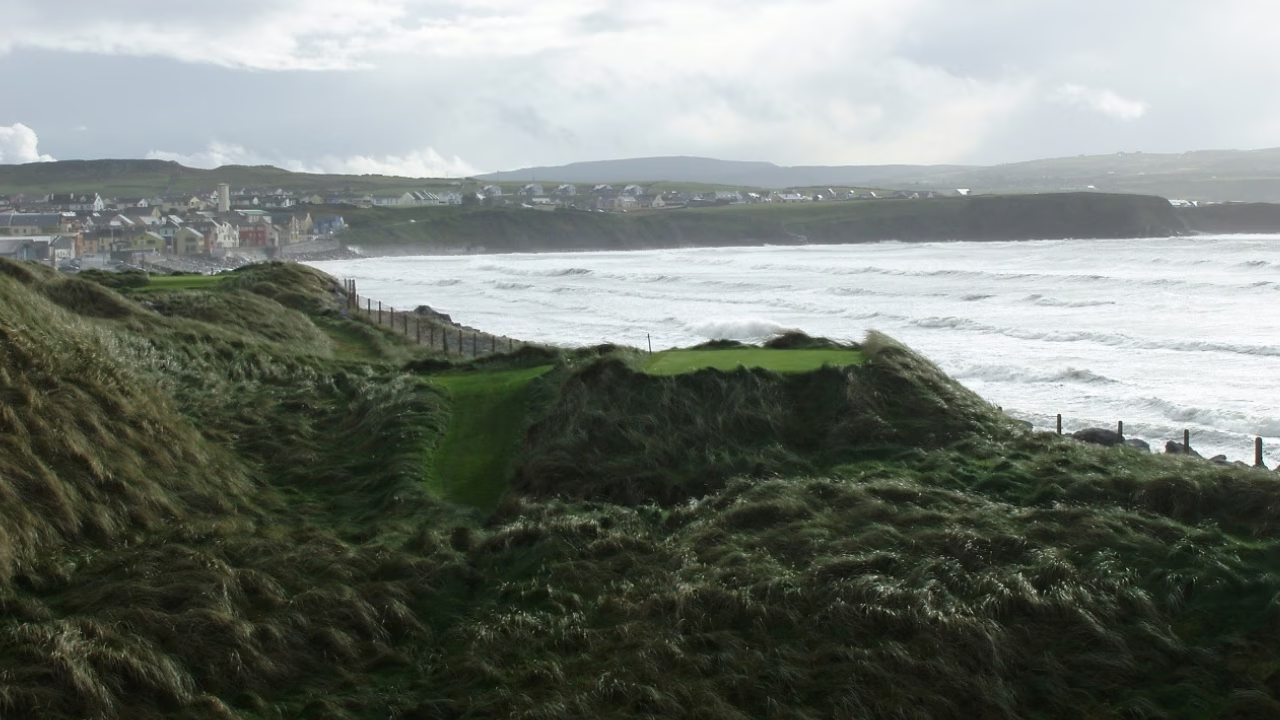 Lahinch Golf Club (Old Course)
Isle of Man
Three Manx courses complete the list. Morris's work on the island forms a smaller part of his architectural record, with all three layouts later experiencing further development or alteration after his involvement.
 Castletown Golf Links. Image: Castletown Golf Links.
- Castletown Golf Links
- King Edward Bay Golf Club
- Ramsey Golf Club
Experience the Legacy for Yourself
Old Tom Morris left more than a record of victories or a collection of courses bearing his influence. His work helped shape how golf was played, maintained, and designed, while his name remained closely tied to the traditions of Scottish links golf.
Those connections still matter for golfers who travel to Scotland today. Courses linked to Morris offer a direct way to place his story within the landscapes, clubs, and playing traditions he helped shape.
The years moved on, but golf never lost sight of Old Tom Morris.
If a new golf experience is on your mind, start the conversation with Kinfern. We can develop your ideas into a considered itinerary, bringing together the golf, accommodation, transfers, and local details into one well-planned experience.