
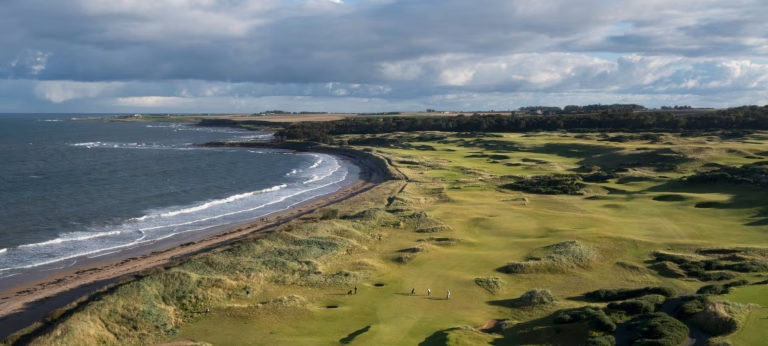
East Neuk Coast brings together a compact stretch of Fife where established links, newer designs, fishing villages, and coastal life sit close enough to shape one focused golf stay without losing the character of the place.
In this article, we look at its six courses, local experiences, a sample seven-night stay, and how East Neuk Coast fits within the wider St Andrews golf region.
Key Takeaways
- East Neuk Coast is a Kinfern-defined Golf Destination within the St Andrews golf region, shaped around Fife's eastern coastal communities.
- Its golf combines historic links, modern design, championship pedigree, shorter formats, and parkland play within a compact part of Fife.
- Kingsbarns, Elie, Crail's Balcomie and Craighead, Anstruther, and Charleton each offer a distinct round, with histories and playing demands of their own.
- Away from golf, distilling, coastal walking, wildlife, heritage, and fishing traditions add worthwhile ways to experience the East Neuk.
- A seven-night sample stay can cover all six courses from one East Neuk base, with selected local experiences scheduled naturally.
- East Neuk Coast can stand alone or be tailored with other Kinfern Destinations and courses across the wider St Andrews golf region.
A Kinfern-Defined Golf Destination: East Neuk Coast
Within Kinfern's St Andrews golf region, East Neuk Coast brings the golf of Fife's eastern edge into one defined area. It follows the established East Neuk communities from Elie and Earlsferry through to Crail and Kingsbarns.
The East Neuk forms Fife's eastern corner, where fishing villages, beaches, farmland, and working harbours sit close together along the coast. Elie and Earlsferry, St Monans, Pittenweem, Anstruther, Cellardyke, Crail, and Kingsbarns give the area a clear geographic identity that is easy to understand on the ground.
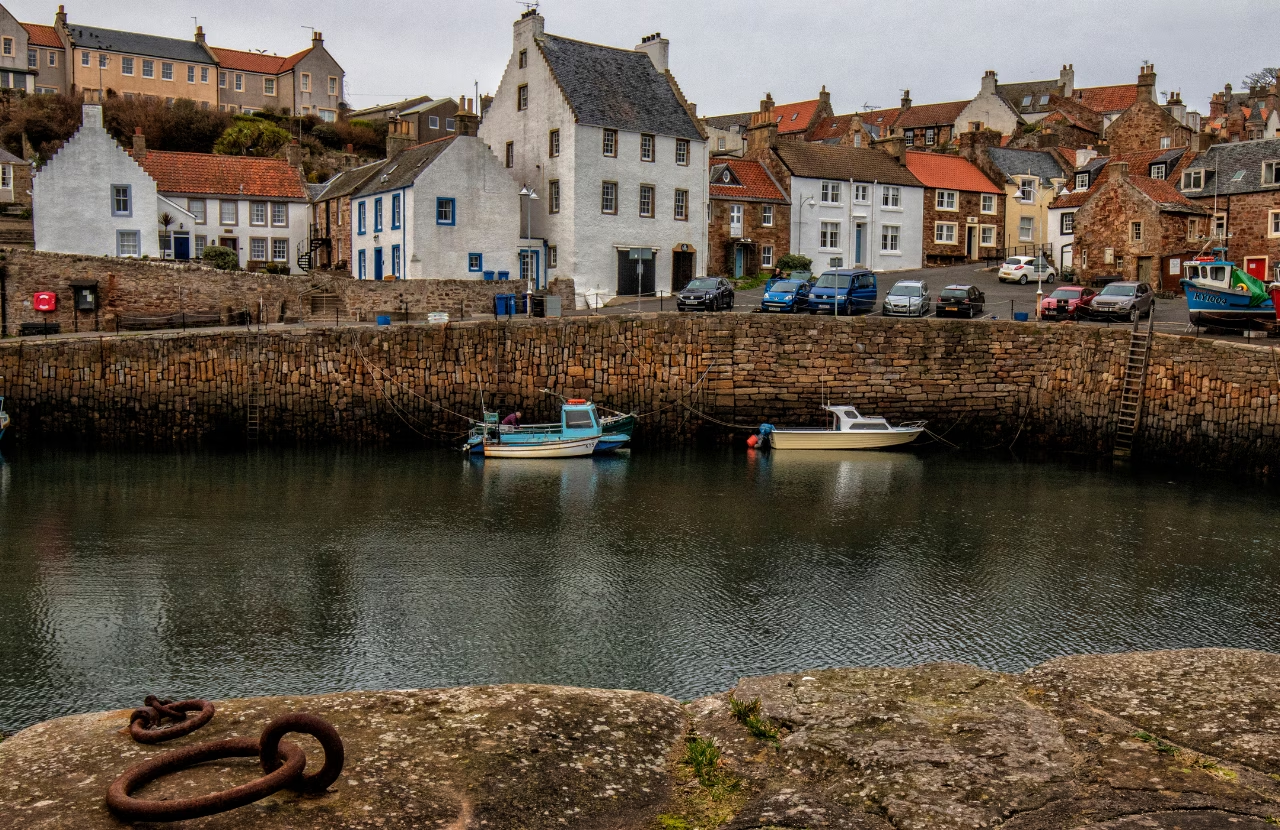 Crail Harbour and its traditional waterfront.
Its geography suits a golf-led stay. Tee times, accommodation, meals, and time in the villages can sit within the same coastal area, keeping the experience focused on one part of Fife throughout the stay, which is why Kinfern defines it as a distinct golf Destination.
The coast gives the destination more substance between rounds. Fishing still forms part of local life, fresh seafood is closely tied to the East Neuk's harbours, and historic waterfronts remain central to several villages. Golfers spend time in communities that still carry the character of the coastline around them.
Its position within the St Andrews golf region makes it suitable for golfers building several days around eastern Fife. The coast, villages, and countryside give those days their own identity while keeping the experience firmly centred on playing golf in this part of the country.
Kinfern frames East Neuk Coast around the relationship between golf and place. The recognised East Neuk geography gives the experience a natural boundary, while its connected communities and coastal setting give visiting golfers useful context for the courses they play and the part of Fife they are spending time in.
What Defines Golf in This Destination
Golf in East Neuk Coast is defined by variety within a compact part of Fife. Old and modern golf sit close together, with coastal and inland settings creating noticeably different rounds for visiting golfers across the destination.
Five characteristics give the golf here its shape:
- Coastal golf. Much of the golf sits close to the Firth of Forth or North Sea, where exposed ground and changing wind influence club selection, ball flight, and approach play. Kingsbarns follows 1.8 miles of coastline, while other courses occupy links, shoreline, or clifftop ground around the East Neuk.
- Golf across generations. Elie's documented golfing history reaches back to the 1500s, while later courses arrived near the end of the twentieth century and in 2000.
- Varied course formats. Full-length championship golf sits alongside a nine-hole coastal course and an inland parkland option. The change in scale affects pace, shot demands, and how a day of golf can be structured, giving the destination more range than a collection built around one course type.
- Design shaped by time. Most layouts developed gradually as golf evolved on existing links, while others were created as complete modern projects.
- Championship and club golf. International tournament pedigree forms part of the destination, but long-established club golf remains just as visible. Kingsbarns has hosted major professional events, while other venues keep a more intimate rhythm shaped by members, local competitions, and visiting golfers playing alongside everyday club life.
East Neuk Coast Golf Courses
Along this stretch of Fife, each course deserves to be read on its own terms. History, routing, design, and individual features shape very different rounds, and those differences become clearer once you experience the wider destination.
Kingsbarns Golf Links
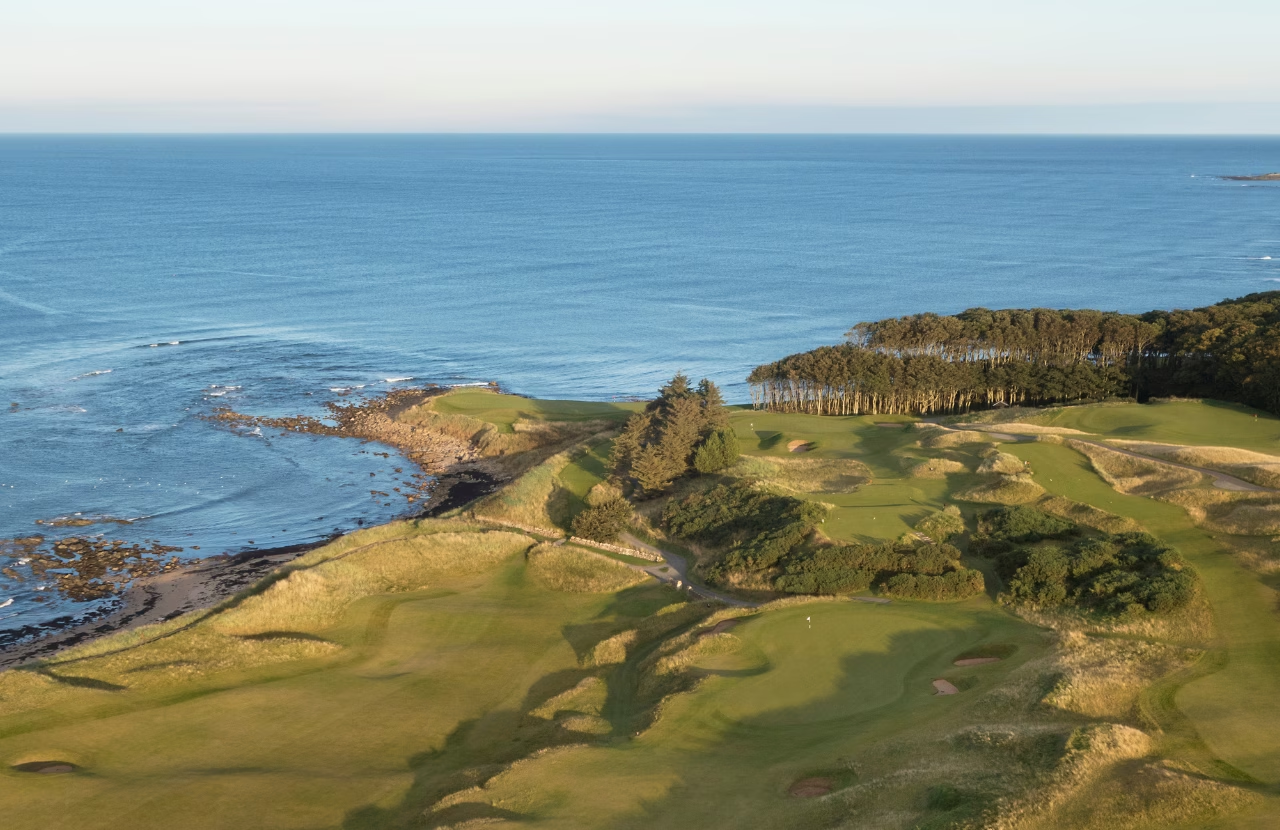 Kingsbarns Golf Links
Golf at Kingsbarns is recorded from 1793, when local golfers were recognised by Crail Golfing Society. The Kingsbarns Golfing Society was formally founded in 1815, before the links were lost to farming in 1850 and later closed again during the Second World War.
Kyle Phillips designed the modern course after construction began in 1997, working with developers Mark Parsinen and Art Dunkley. The routing follows 1.8 miles of North Sea coastline, using sandy soil and fine fescue across undulating ground to create a contemporary links that still feels rooted in traditional Scottish golf.
Tournament golf soon became part of Kingsbarns' modern story. It joined the Old Course at St Andrews and Carnoustie for the Alfred Dunhill Links Championship in 2001, then hosted the Ricoh Women's British Open in 2017.
Sea views appear throughout the round, while broad fairways and shaped approaches lead into large greens that still demand thought. Kingsbarns gives travelling golfers championship scale without losing the movement and ground interaction expected from links golf.
The Golf House Club, Elie
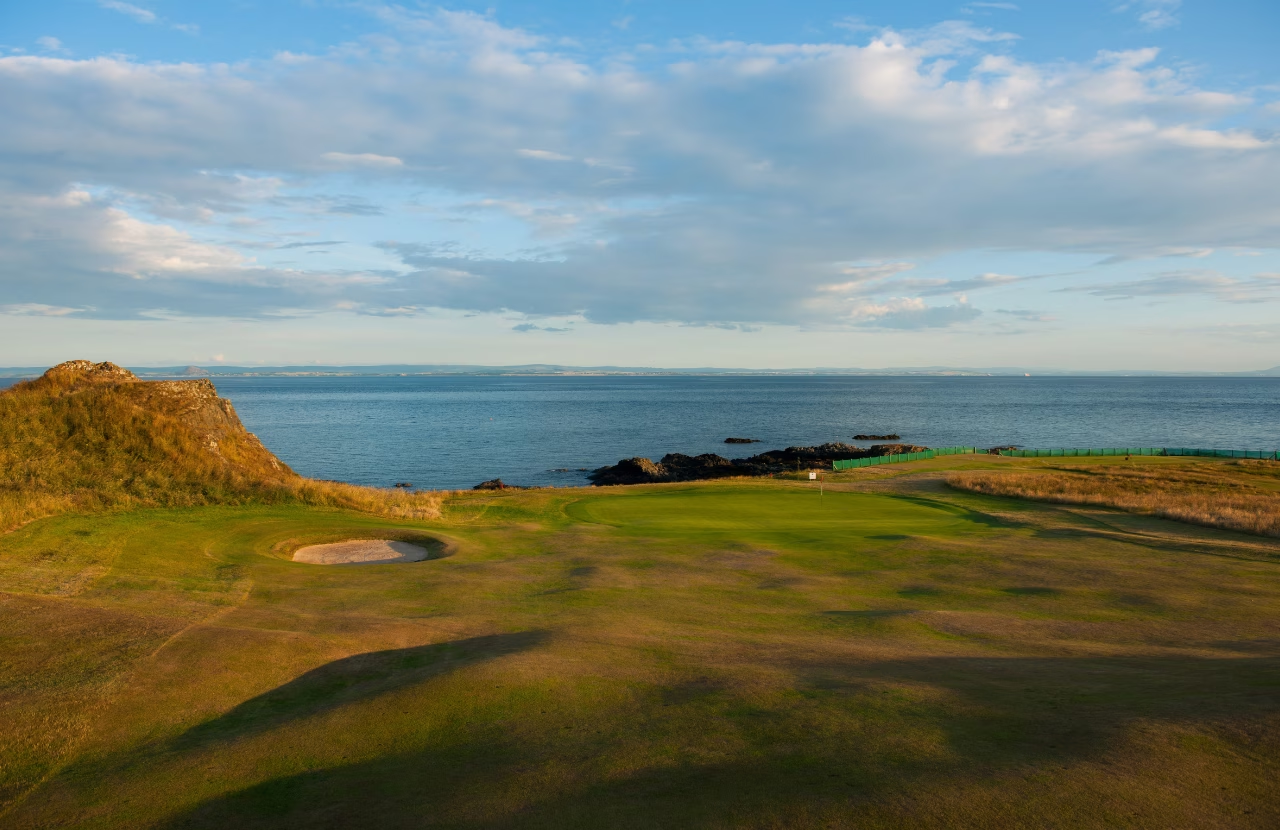 The Golf House Club, Elie
Golf at Elie is documented from the sixteenth century, with a 1589 royal charter confirming the right to play over the links. The course changed gradually over generations, moving through earlier layouts before reaching 18 holes in 1895 on ground that had already carried golf for centuries.
At 6,273 yards from the white tees, Elie is short by modern standards. Rolling fairways and revetted bunkers lead to firm greens, while coastal wind places more value on control and imagination than on carrying the ball farther.
James Braid was born in neighbouring Earlsferry in 1870 and learned the game on these links, winning his first local competition at eight. He later claimed five Open Championships before becoming one of Britain's most influential course designers, leaving Elie with a direct link to his formative years.
Beside the opening tee stands one of Elie's most unusual features. A submarine periscope from HMS Excalibur lets the starter check the blind first fairway, while visitors can also look through it for a 360-degree view across the links and surrounding countryside.
Crail Golfing Society (Balcomie Links)
 Crail Golfing Society (Balcomie Links)
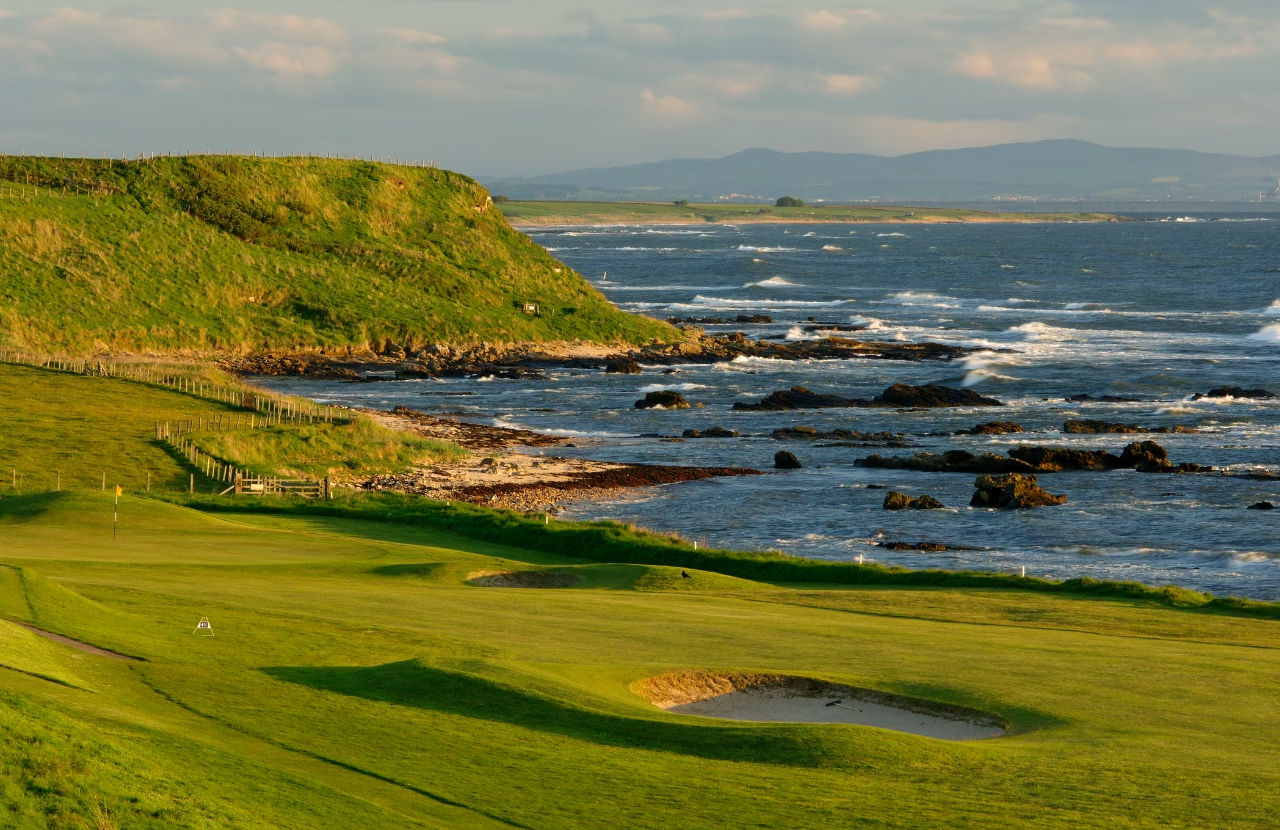
Crail Golfing Society dates to 1786, but Balcomie took its present direction later. Old Tom Morris laid out the first nine holes in 1894, the course opened in 1895, and he returned to extend it to 18 holes in 1900.
Much of Morris's work remains central to the round. Balcomie has an unusual par-69 scorecard with three par fives, six par threes, and nine par fours, so the sequence rarely settles into a predictable pattern and repeatedly brings iron play and distance control back into focus.
The old links carries physical traces of its past throughout the routing. Stone walls and shared greens sit alongside railway-sleeper bunker faces, while the former lifeboat house near the second tee and fourteenth green remains another visible part of the course.
Those features matter because they still influence play. Natural contours and uneven lies alter the sensible shot from one hole to the next, while changing angles and the concentration of par threes interrupt any easy rhythm and keep attention on placement throughout the round.
Crail Golfing Society (Craighead Links)
 Crail Golfing Society (Craighead Links)
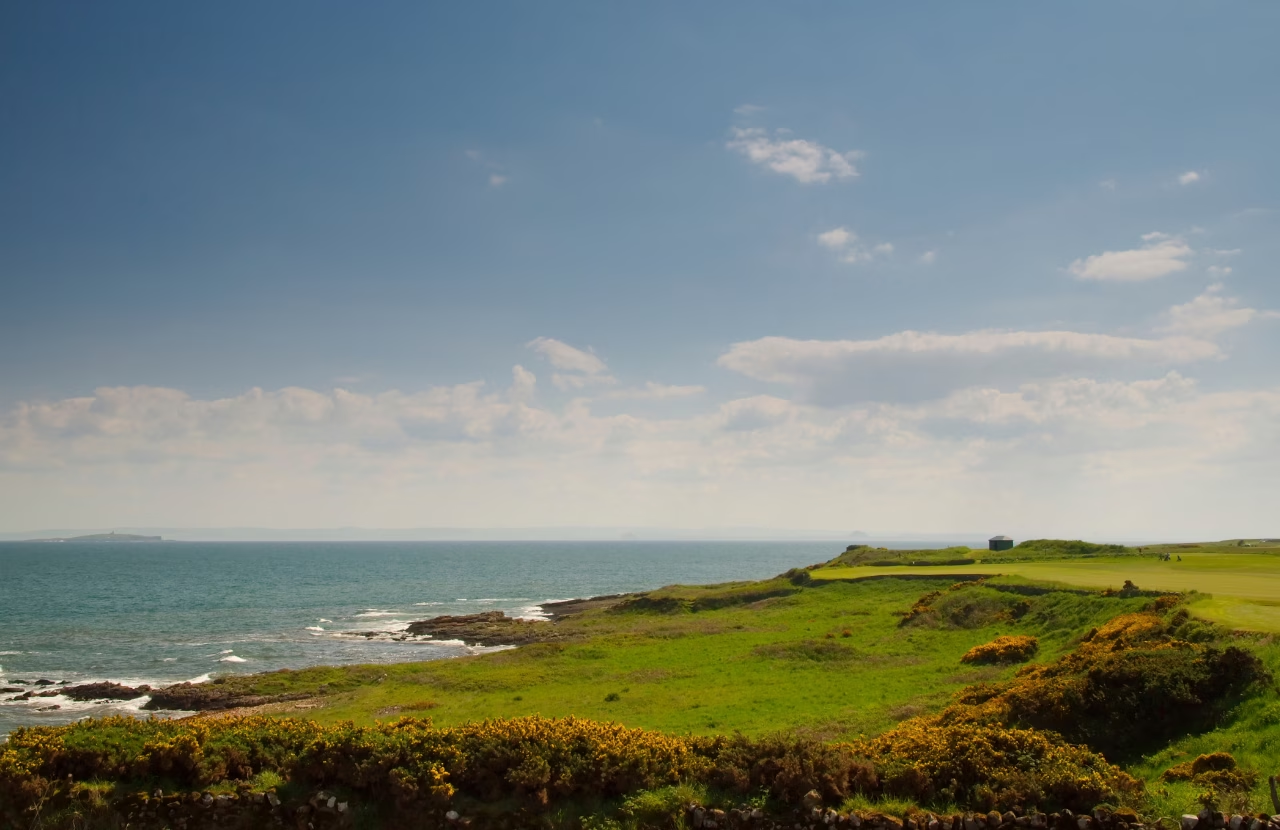
Craighead Links opened in 1998 after Crail Golfing Society acquired neighbouring farmland and commissioned Gil Hanse to design its second course. It was Hanse's first course outside the United States, giving the Society a modern companion to Balcomie.
Hanse used the clifftop ground at a larger scale, setting tees and greens around natural elevation changes and long coastal views. The course also crosses remnants of medieval revetted drystone walls, deliberately worked into the routing so old boundaries can still alter the preferred line from tee to green.
From the back tees, Craighead asks for stronger carries and firmer commitment, while forward positions make the course more accessible. It lets the layout test accomplished players without removing the strategic choices available to visiting golfers.
Its championship record includes the 2018 Ladies' Senior British Open Amateur Championship and the 2019 Scottish Amateur Championship, played across both Crail courses. The annual Battle Trophy also uses Craighead, keeping high-level amateur competition closely tied to the modern links and its more demanding tournament set-up.
Anstruther Golf Club
 Anstruther Golf Club
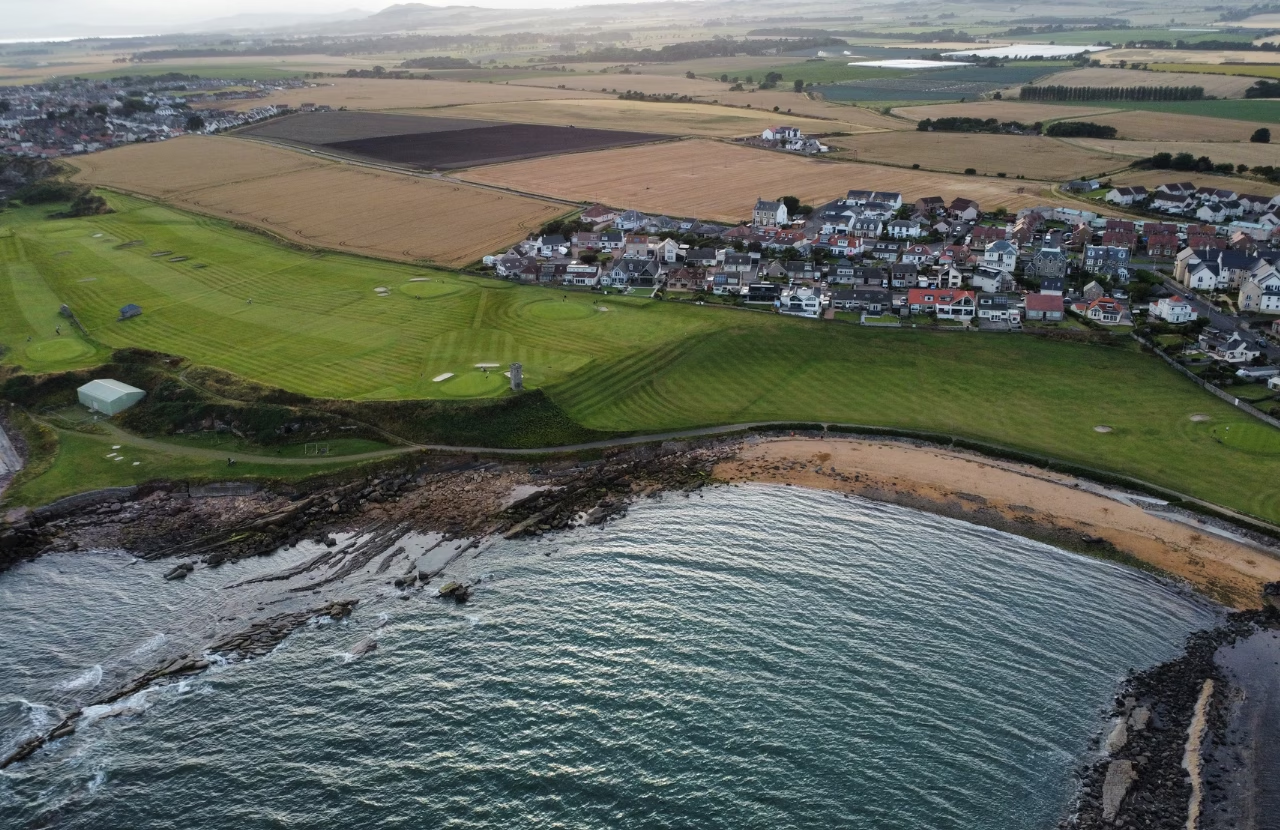
Anstruther Golf Club was formed in November 1890, with its original seven-hole course opening at Billowness in April 1891. Additional ground allowed the club to reach nine holes in 1893, a format that remains central to the course today.
Five par threes shape the nine-hole card, including three in succession from the fifth through the seventh. That concentration makes distance control especially important, while the shorter par fours still ask for accurate positioning around slopes, gorse, and uneven ground close to the shoreline before another demanding short hole arrives.
The fifth, The Rockies, is the hole most associated with Anstruther. From the yellow tees it measures 237 yards, with rock outcrops, gorse, a steep cliff face, and a partly hidden green making the tee shot demanding before the wind is considered.
Old Tom Morris entered the club's early history in 1896, advising Anstruther to secure more ground at the Hynd. Several later schemes proposed an 18-hole course, but none replaced Billowness, leaving the club with a compact layout whose identity still rests on nine concentrated holes.
Charleton Golf Club
 Charleton Golf Club
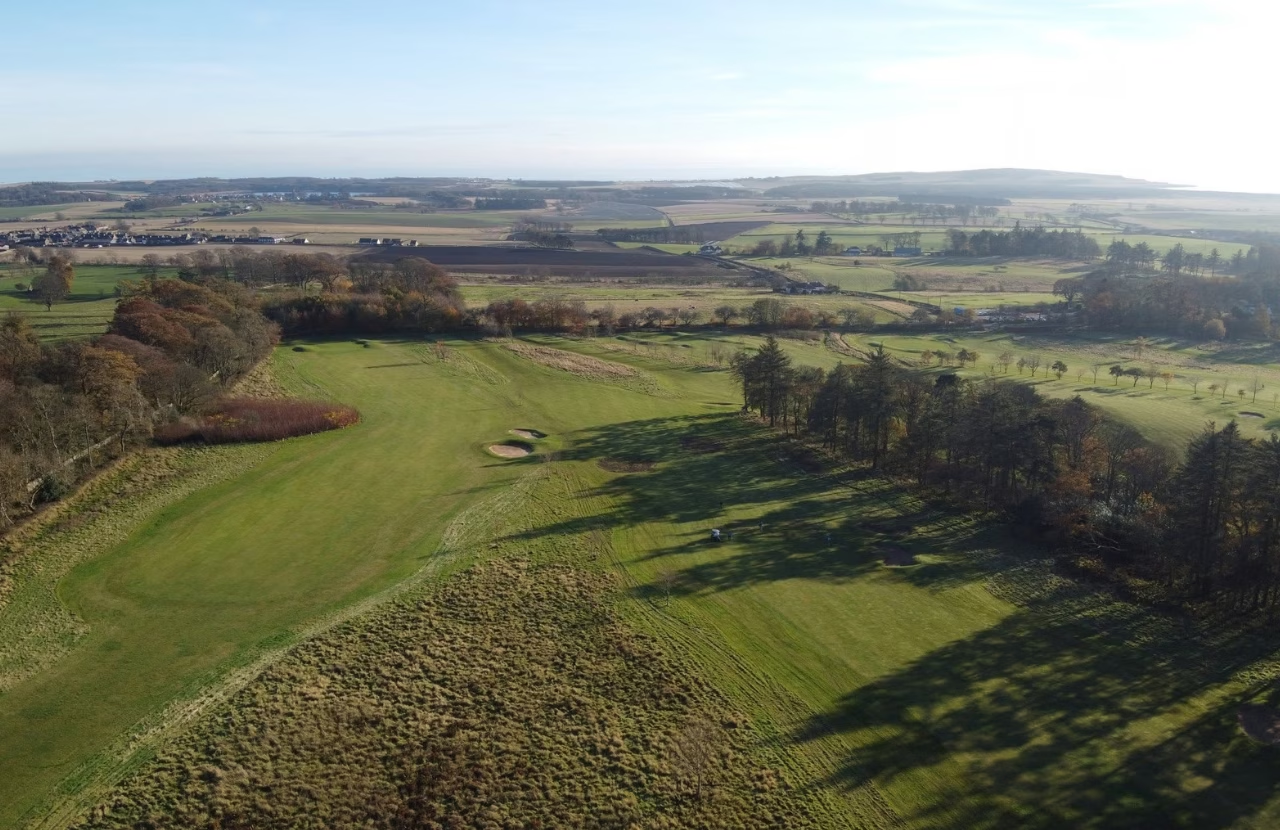
Charleton Golf Club opened in 1994 within Charleton Estate near Colinsburgh. The 18-hole, par-72 course winds through mature woodland, giving the round a parkland setting within the eastern part of Fife.
Wide fairways give golfers room from several tees, but the course keeps asking for position through bunkering, trees, and large contoured greens. Approaches become more exacting when flags sit away from the safest entrances, so the scorecard length does not remove the need for careful club selection and course management.
Views across the Firth of Forth appear from parts of the course, while the surrounding estate provides mature trees and established landscape. Investment for 2026 included bunker work and upgraded course-maintenance equipment.
Experiences Away from the Course
Golf may bring travellers to the East Neuk Coast, but time away from the course reveals another side of the place. Distilling, walking, wildlife, heritage, and fishing traditions give the wider stay more depth without competing with the reason for coming.
East Neuk offers many more things to see and do, so this guide focuses on a smaller selection that suits a golf-led stay especially well. Each can sit naturally alongside a round, adding something worthwhile to the day.
Kingsbarns Distillery
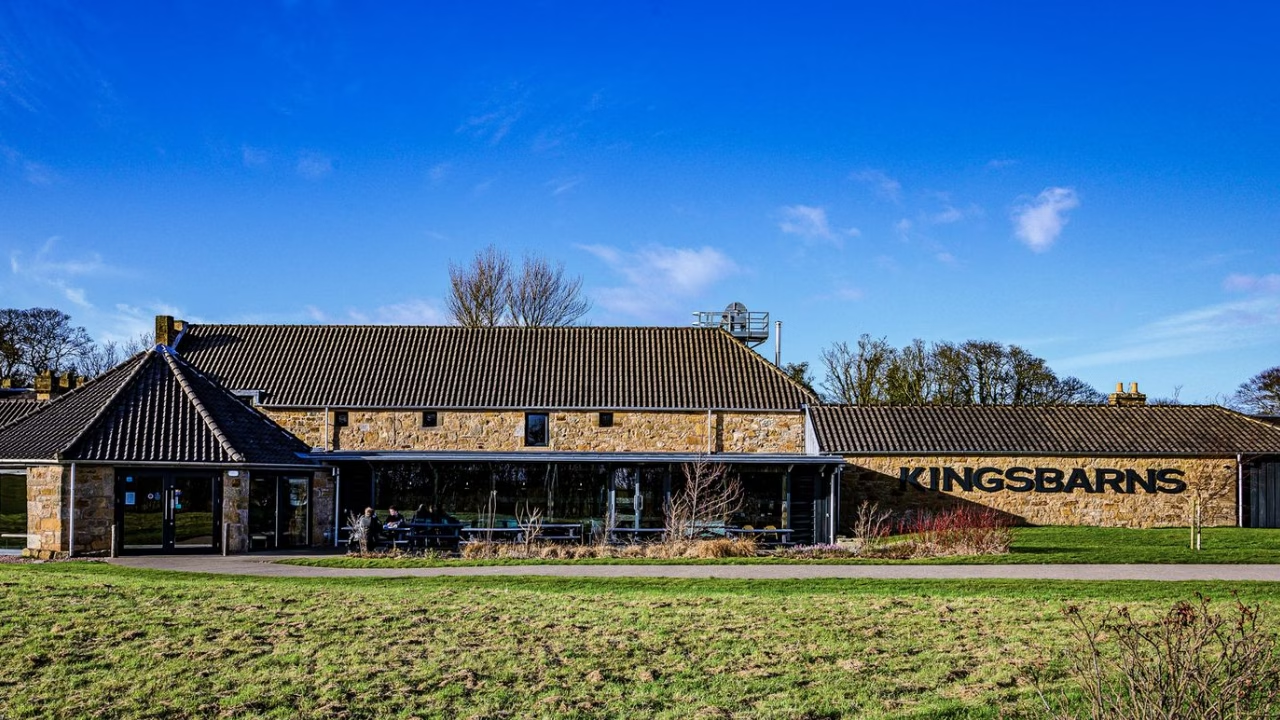 Kingsbarns Distillery. Image: Kingsbarns Distillery.
Kingsbarns Distillery occupies a restored 18th-century farm steading in the East Neuk, where Lowland single malt whisky is produced, with Darnley's Gin Cottage also located onsite. The preserved buildings give the visit a clear connection to rural Fife, while the working distillery keeps that history tied to something still being made here today.
Guided whisky tours move through the production areas before finishing with a tasting of Kingsbarns single malts. On the same site, Darnley's Gin Cottage offers separate experiences covering botanicals, copper-pot distillation, and gin tasting.
Visitors can follow how the spirits are produced, move through the restored steading, and spend extra time in the café or shop after the guided experience.
Fife Coastal Path
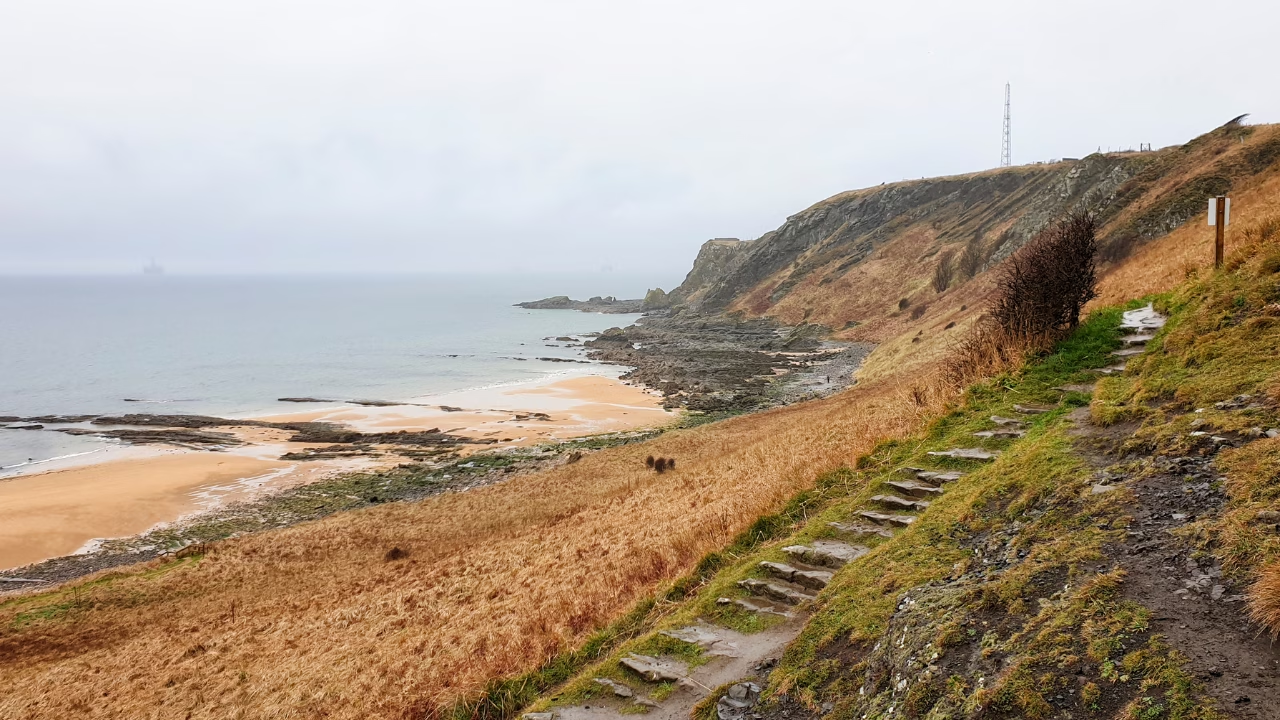 The Fife Coastal Path along the East Neuk coast.
The Fife Coastal Path extends for around 117 miles between Kincardine and Newburgh, but the 16-mile section from Elie to Cambo Sands is the stretch that runs through the heart of the East Neuk. It connects shoreline, villages, working harbours, old landmarks, and open ground in one continuous walk.
A shorter section still reveals plenty of local history. Around Elie and St Monans, walkers pass Lady's Tower, castle ruins, the old windmill and salt pans, and the 14th-century St Monans Church before continuing east.
Farther along, the path passes Pittenweem, Anstruther, Cellardyke, and Crail before reaching rougher ground around Fife Ness and the coast towards Kingsbarns. Sandstone caves, pasture, rocky shore, and old harbour streets appear along the way, giving the walking experience a noticeably different texture as the coastline changes.
Isle of May National Nature Reserve
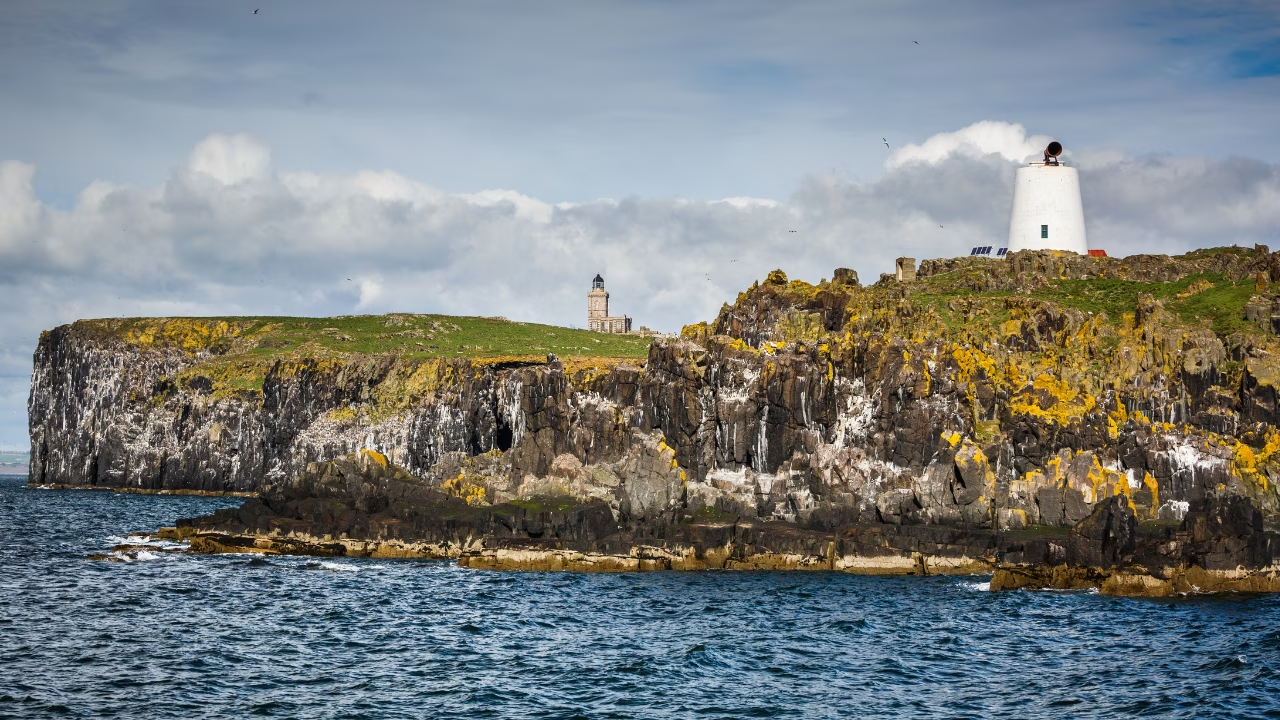 Isle of May National Nature Reserve
The Isle of May lies at the entrance to the Firth of Forth and is managed by NatureScot as a National Nature Reserve. Its cliffs, reefs, and surrounding waters support dense wildlife within a compact offshore setting.
From April to July, puffins, guillemots, razorbills, and other breeding seabirds dominate the visit, especially along the cliff-top paths. Later in the season, the wildlife picture changes as Atlantic grey seals gather around the island and autumn breeding becomes one of the reserve's defining natural events for visitors.
Trips leave from Anstruther during the visitor season, making the crossing part of the day before visitors step ashore. Low-level paths then lead between sea cliffs, natural history displays, and remains linked to the island's religious, maritime, and military past.
Kellie Castle & Garden
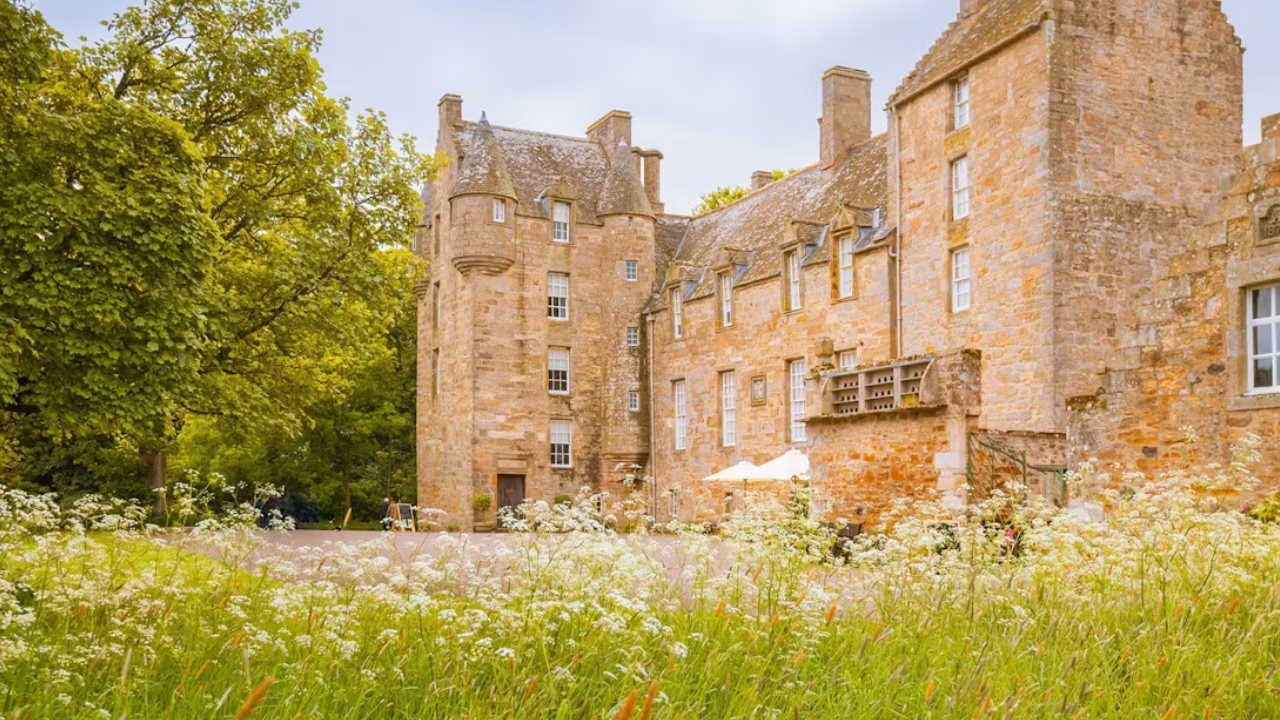 Kellie Castle & Garden. Image: National Trust for Scotland.
Kellie Castle sits a few miles inland from Pittenweem, with its oldest towers dating to the 14th century. The building developed over several periods before the Lorimer family restored it in the late 19th century.
Inside, medieval stonework sits beside the artistic work of the Lorimers. Ornamental plaster ceilings, painted interiors, furniture by Sir Robert Lorimer, and the recreated studio of sculptor Hew Lorimer show how one family left a lasting creative imprint on the castle and its rooms.
The Arts and Crafts garden carries that character outdoors through herbaceous borders, old roses, fruit, and vegetables grown organically within the historic grounds. The castle and garden together offer a quieter view of East Neuk heritage, centred on architecture, craft, and domestic life away from the shoreline.
Scottish Fisheries Museum
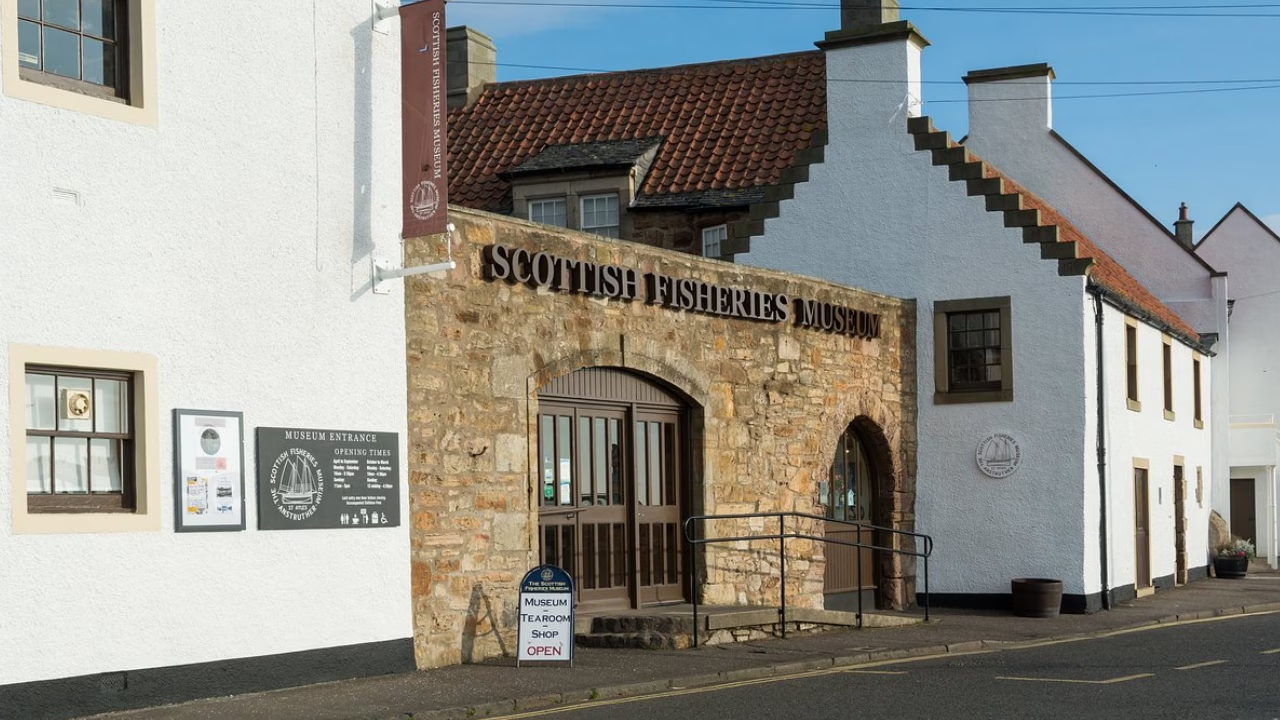 The Scottish Fisheries Museum. Image: Scottish Fisheries Museum.
The Scottish Fisheries Museum stands beside Anstruther Harbour in buildings that once served fishing-related purposes. Its nationally significant collection tells the story of Scotland's fishing industry through the people, skills, trades, and communities that depended on the sea.
Historic boats, fishing gear, photographs, paintings, knitwear, and personal objects fill the museum, alongside a working vessel collection. The restored Reaper, a 1902 Fifie sailing herring drifter, provides a particularly tangible link to the fleets that once supported fishing communities around Scotland's coast.
This has a particular weight in Anstruther, where fishing was once the town's mainstay and supported a network of related trades. The museum gives useful context to the harbour streets, boatbuilding traditions, and maritime identity still visible around the East Neuk today.
A Sample East Neuk Coast Golf Experience
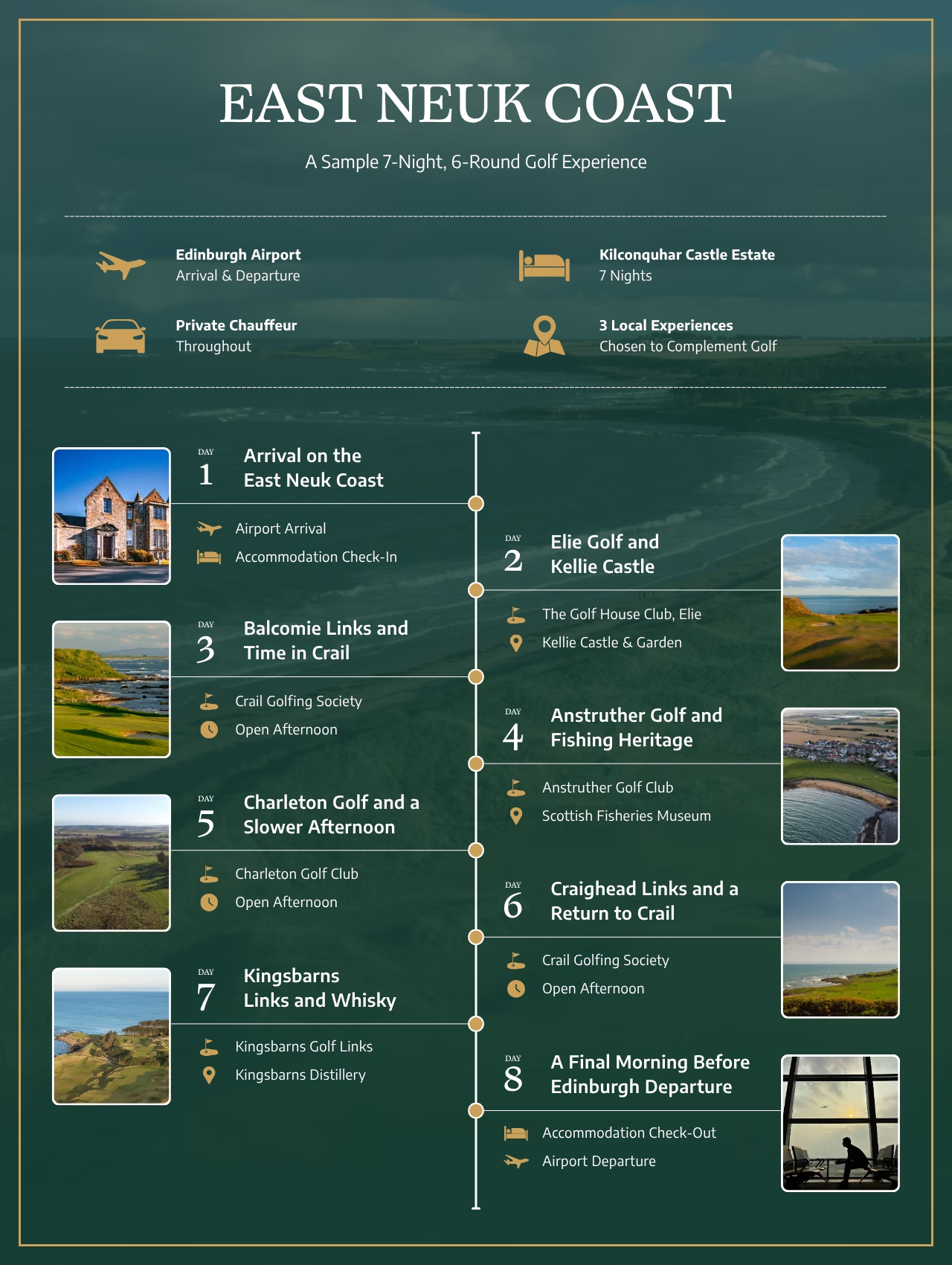
A seven-night stay gives enough time to play all six courses in East Neuk Coast while keeping the schedule to one round on each full golf day. Selected local experiences can then be placed on the days where timing and location make sense, without filling every afternoon.
In this sample itinerary, we chose Kilconquhar Castle Estate as the single East Neuk base for all seven nights, avoiding unnecessary hotel changes while offering accommodation suited to couples and golfing groups. Edinburgh Airport provides the international gateway, with direct services across Europe and North America.
This sample itinerary follows these arrangements:
- Length: 7 nights / 8 days
- Arrival and departure: Edinburgh Airport
- Accommodation: Kilconquhar Castle Estate (7 nights)
- Transport: Private chauffeur throughout
- Golf: 6 rounds (all 6 East Neuk Coast courses)
- Local experiences: 3 selected, scheduled where they fit naturally
Day 1: Arrival on the East Neuk Coast
Arrive at Edinburgh Airport, meet your private chauffeur, and travel to Kilconquhar Castle Estate for check-in.
The first day stays free of golf and scheduled visits, giving the group time for dinner, rest, and any delays around international arrival.
Day 2: Elie Golf and Kellie Castle
Begin with Elie, using the confirmed tee time to shape the day. Kilconquhar keeps the group close to the western side of the East Neuk.
Kellie Castle & Garden follows when opening hours allow. The chauffeur handles the transfer and return to Kilconquhar, while the order can be reversed if the tee time makes an earlier castle visit more practical.
Day 3: Balcomie Links and Time in Crail
Travel east to Crail for Balcomie, then keep the remainder of the day unstructured.
Lunch or time around the village can follow without another timed booking, giving the group a useful pause before the itinerary moves into its busiest combined golf-and-experience day.
Day 4: Anstruther Golf and Fishing Heritage
Anstruther's nine-hole round creates more usable time than the other golf days, making it the natural place for a second booking.
Continue to the Scottish Fisheries Museum after lunch, keeping both parts of the day within Anstruther. The museum's opening days and hours vary by season, so the confirmed tee time should determine whether golf or the museum comes first.
Day 5: Charleton Golf and a Slower Afternoon
Charleton stands alone as the day's only fixed booking.
With no attraction added afterwards, the group can return to Kilconquhar early, take a later lunch, or leave the evening open before the final two golf days.
Day 6: Craighead Links and a Return to Crail
Return to Crail for Craighead several days after Balcomie rather than playing both courses on consecutive days.
The separation gives each round its own place in the week, while the afternoon remains open for lunch, free time in Crail, or an earlier return to the accommodation before dinner.
Day 7: Kingsbarns Links and Whisky
Schedule Kingsbarns early enough to leave a comfortable gap before the distillery booking. Keeping golf and whisky in the same part of the East Neuk reduces transfer time and makes the final full day easy to manage without adding another distant stop.
A pre-booked Kingsbarns Distillery visit follows the round. The visitor centre is currently open seven days a week, so the visit has useful scheduling flexibility once the final tee time is known.
Day 8: A Final Morning Before Edinburgh Departure
After breakfast, check out of Kilconquhar Castle Estate and return to Edinburgh Airport by private chauffeur.
The final morning is left unhurried, allowing one last quiet moment in the East Neuk before the week gives way to the journey home.
East Neuk Coast Within the Golf Region
East Neuk Coast sits within Kinfern's wider St Andrews golf region, giving golfers a clear route into more golf across eastern Fife. Historic links, modern coastal golf, and championship venues all sit within the broader regional picture.
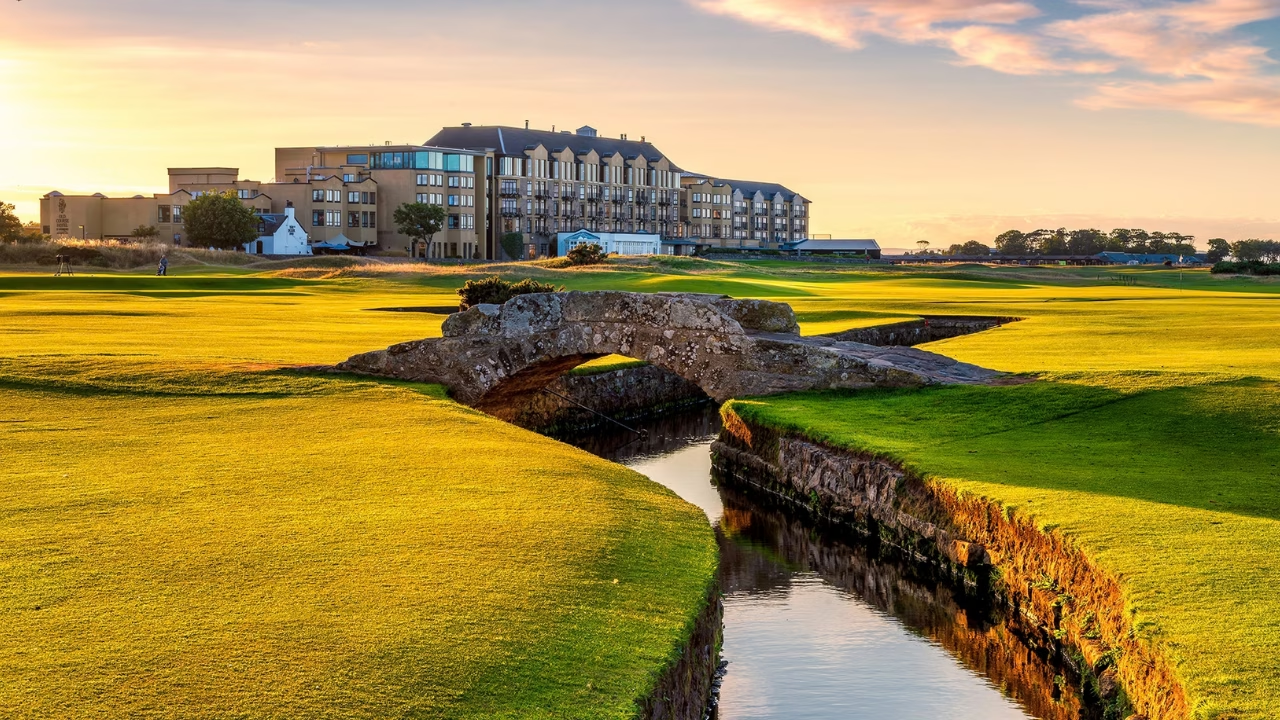 St Andrews Links (Old Course)
Beyond the East Neuk Coast, three headline courses carry particular weight for visiting golfers: St Andrews Links (Old Course), Carnoustie Golf Links (Championship Course), and Dumbarnie Links. These courses add the Home of Golf, major-championship pedigree, and a modern Fife links to a longer regional golf experience.
Other Kinfern-defined Destinations in the St Andrews golf region include:
- St Andrews Links — The historic coastal birthplace where golf heritage began.
- North Fife — Heathland precision and hickory golf all at once.
- Largo Bay Coast — Leven, Lundin, and Dumbarnie along one Fife coastline.
- Carnoustie & Dundee — Historic Angus links and Dundee parkland around the Tay.
East Neuk Coast works especially well for golfers who want several days rooted in one coastal area before adding one or two of the region's headline rounds. That keeps the East Neuk central to the stay, while still allowing access to the strength of golf around St Andrews and Angus.
Start Planning Your Golf Experience
East Neuk Coast offers enough golf to anchor a full stay, yet its compact geography makes room for more than tee times. Six distinct courses, a single well-placed base, and carefully chosen local experiences can give the week structure without making it feel overplanned.
From there, the experience can be shaped around the courses that matter most to you, the pace you prefer, and whether your time in Fife extends farther across the St Andrews golf region.
The best East Neuk stays leave you remembering both the golf and the coast between the rounds.
If a new golf experience is on your mind, start the conversation with Kinfern. We can develop your ideas into a considered itinerary, bringing together the golf, accommodation, transfers, and local details into one well-planned experience.