
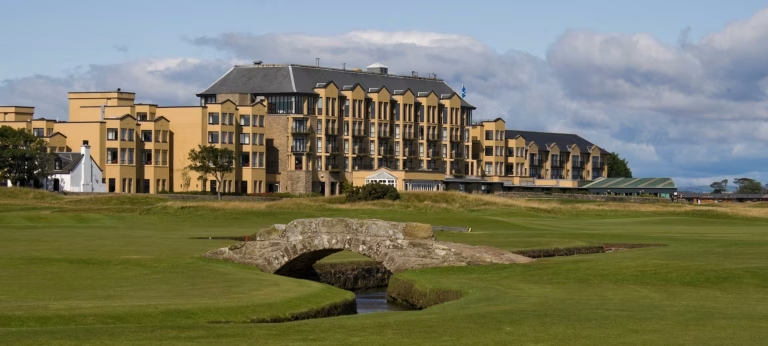
St Andrews Links brings together the courses, town, and golf heritage that have made this corner of Fife one of the game's most important places, giving visiting golfers a focused base for several days of serious play.
In this article, we look at its courses, leading local experiences, a sample seven-night stay, and how St Andrews Links sits within the wider St Andrews golf region.
Key Takeaways
- St Andrews Links brings together ten distinct courses, central St Andrews, and nearby coastal golf within one Kinfern-defined Golf Destination.
- Centuries of public golf, coastal conditions, varied course styles, and championship history define how this Destination plays.
- The ten courses range from the Old Course and traditional links to modern coastal, inland, shorter, and nine-hole options.
- Famous local experiences add golf history, medieval heritage, university culture, and guided access without pulling the stay away from golf.
- A seven-night stay works best with five rounds, a guaranteed Old Course tee time, one St Andrews base, and selected local experiences.
- St Andrews Links can stand alone or be tailored with other Kinfern Destinations and courses across the wider St Andrews golf region.
A Kinfern-Defined Golf Destination: St Andrews Links
Within Kinfern's St Andrews golf region, St Andrews Links centres on the town and courses tied to it. The destination covers links beside St Andrews and nearby Craigtoun, with Fairmont St Andrews adding coastal golf.
St Andrews itself gives the destination a strong physical centre. Historic streets, university buildings, hotels, and the shoreline sit close together, keeping much of a golfer's time between rounds rooted in the town throughout the stay.
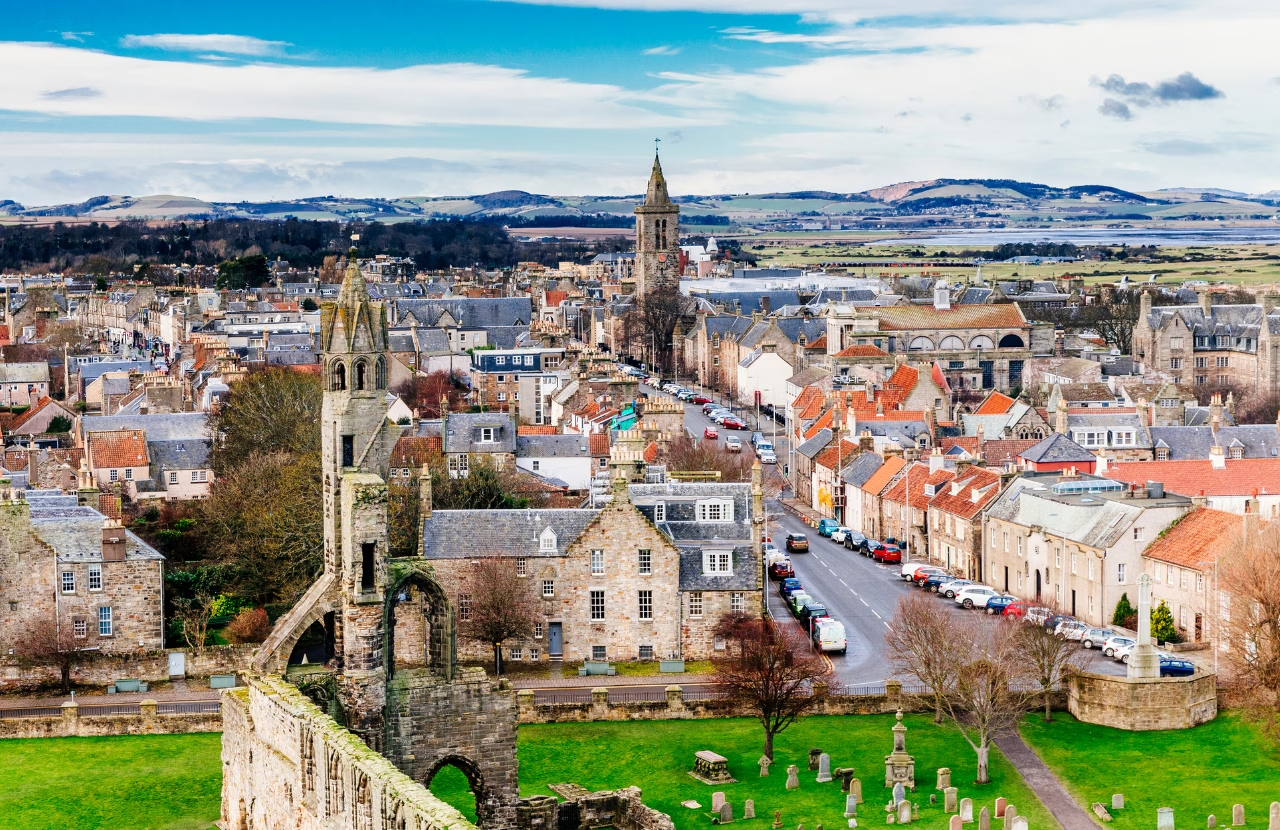 St Andrews town centre on Fife's east coast.
The wider setting reaches from low linksland beside central St Andrews to higher coastal ground east of town. Short transfers connect these areas, while the town remains the natural base for dining, walking, local experiences, and the quieter parts of a multi-day stay.
Golf is woven closely into the town's everyday layout. Fairways sit beside roads and hotels, while visitors can move between St Andrews and the main links on foot, creating a direct connection between golf and daily life.
Kinfern groups ten courses within this destination, from the historic St Andrews Links layouts to the Torrance and Kittocks courses at Fairmont St Andrews. The range gives visiting golfers enough depth for several days while keeping transfers short and avoiding an unnecessary change of hotel during the stay.
The playing options also extend beyond one style of golf. Traditional links, modern coastal layouts, shorter courses, and an inland course give the week useful variety while the shared St Andrews base keeps everything connected.
For Kinfern, the destination works because its geography supports a focused stay. Golfers can settle into St Andrews, build distinct rounds around one base, and still spend meaningful time in the town itself, keeping the experience closely tied to the place as well as the courses.
What Defines Golf in This Destination
Golf here carries a depth of continuity. Centuries of play have left visible traces in how courses are laid out, how access is managed, and how golfers approach the ground, while newer designs add different playing conditions without breaking the area's connection to the game.
Five characteristics give the golf here its shape:
- Centuries of golf. Golf has been played on St Andrews Links for around 600 years, with the Old Course developing from ground used before modern course architecture.
- Public golfing tradition. A 1552 charter recognised the right of the people of St Andrews to play golf on the Links. The tradition remains visible through the Links Trust and the Old Course ballot, which still gives visiting golfers another route to a tee time.
- Coastal playing conditions. The older courses occupy exposed links ground, where coastal weather can change the way shots are judged throughout a round. Fairmont's Torrance and Kittocks courses continue that coastal influence through modern links-style golf, with undulating fairways, rolling greens, and wide views across the surrounding water.
- Different forms of golf. The destination includes more than links golf. Craigtoun brings a tree-lined heathland setting, while Balgove offers a shorter nine-hole round alongside full-length courses built for a very different scale of play.
- Championship pedigree. Championship golf is part of the local identity. The Old Course has hosted The Open more often than any other venue, while the Torrance Course has staged DP World Tour and Asian Tour events, along with the Men's Scottish Amateur Championship.
St Andrews Links Golf Courses
St Andrews Links rewards golfers who notice how each course uses familiar coastal ground in a different way. Some offer width and angles, while others tighten the lines or expose the ball more fully to wind, giving every round its own demands within the wider St Andrews setting.
St Andrews Links (Old Course)
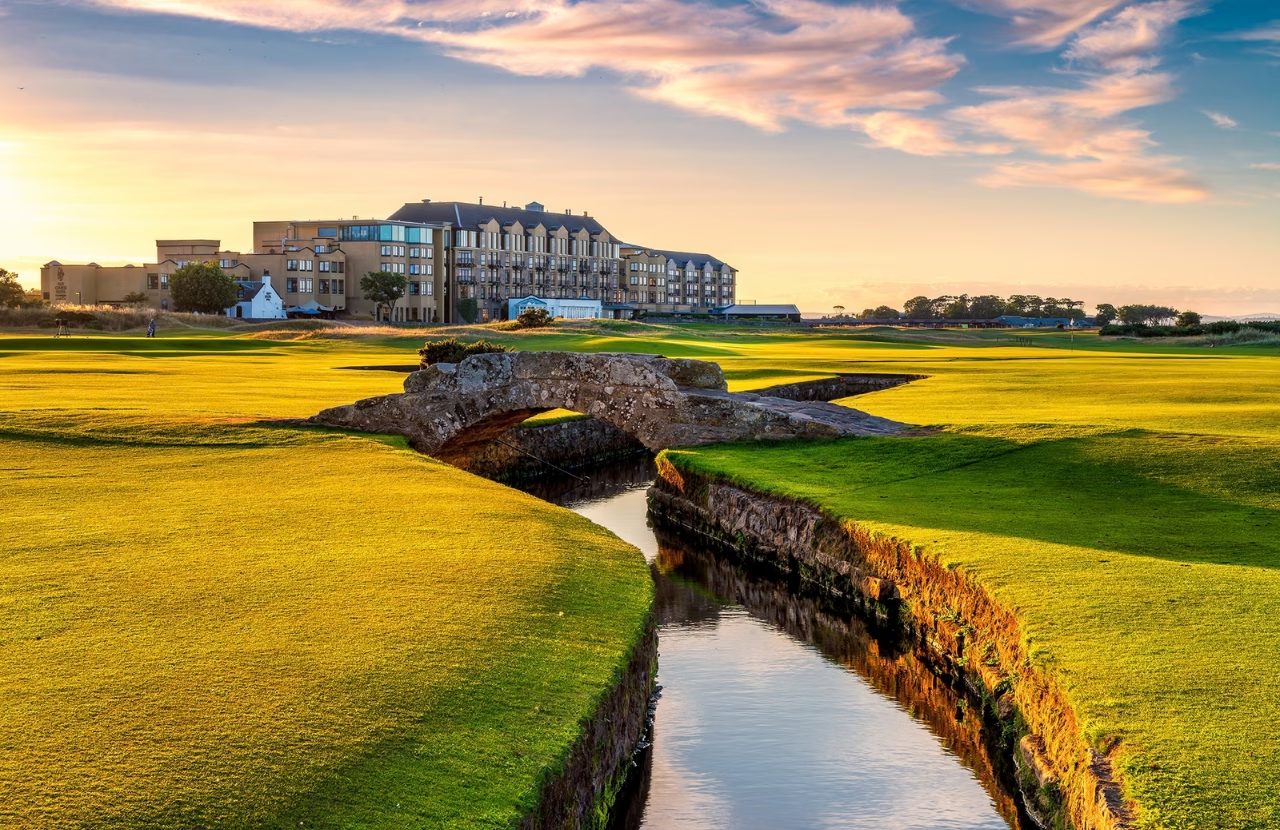 St Andrews Links (Old Course)
The Old Course is often the reason golfers put St Andrews on the itinerary in the first place. Once there, its broad shared fairways, double greens, natural humps, deep bunkers, and Swilcan Burn place familiar landmarks within a course whose history reaches back centuries.
Golf was being played on this ground by the 15th century, and the course developed gradually from the landscape instead of following a single formal design. It was once played in both directions, with outward and inward holes sharing fairways and greens, a structure still visible today.
Old Tom Morris played a major part in shaping the course golfers recognise now. His work included enlarging greens, altering the routing, and introducing the present first green in 1870, helping establish the anticlockwise direction used for normal play today.
The Old Course first hosted The Open in 1873, when Tom Kidd became the first Champion presented with the Claret Jug. It has since hosted the Championship more times than any other venue, linking generations of golfers with one of the game's longest competitive histories.
St Andrews Links (New Course)
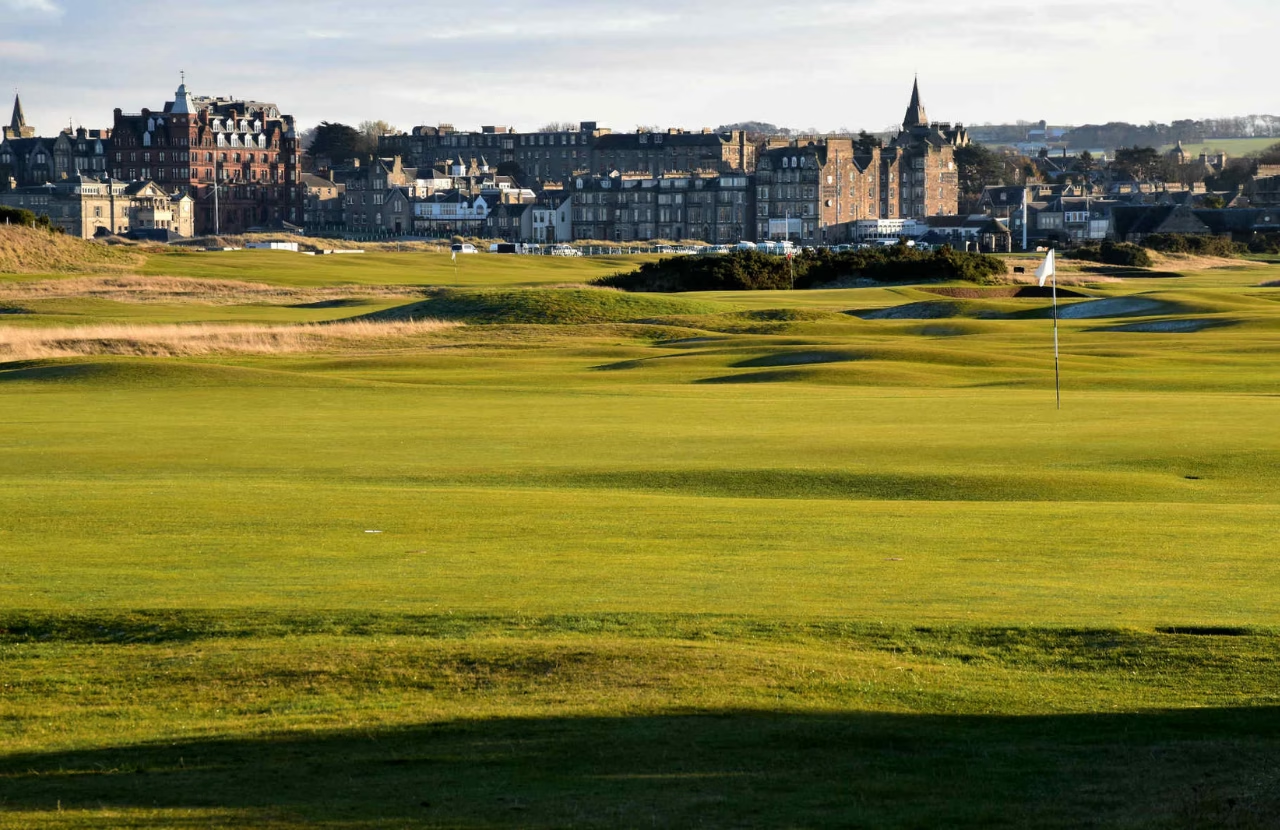 St Andrews Links (New Course)
The New Course offers a traditional links round with clearly defined fairways, strategic bunkering, and an out-and-back routing that runs away from town before returning.
Old Tom Morris laid out the course in 1895, so its name now hides more than a century of history. The design still reads as traditional links golf, with firm ground, natural movement, strategic bunkering, and greens that reward approaches played from the correct side of the hole.
The homeward half becomes demanding when the wind turns against you, leaving less room to recover from poor positioning. That makes this course a useful early round for golfers wanting a serious links test before another day brings the greater occasion of the Old Course.
St Andrews Links (Jubilee Course)
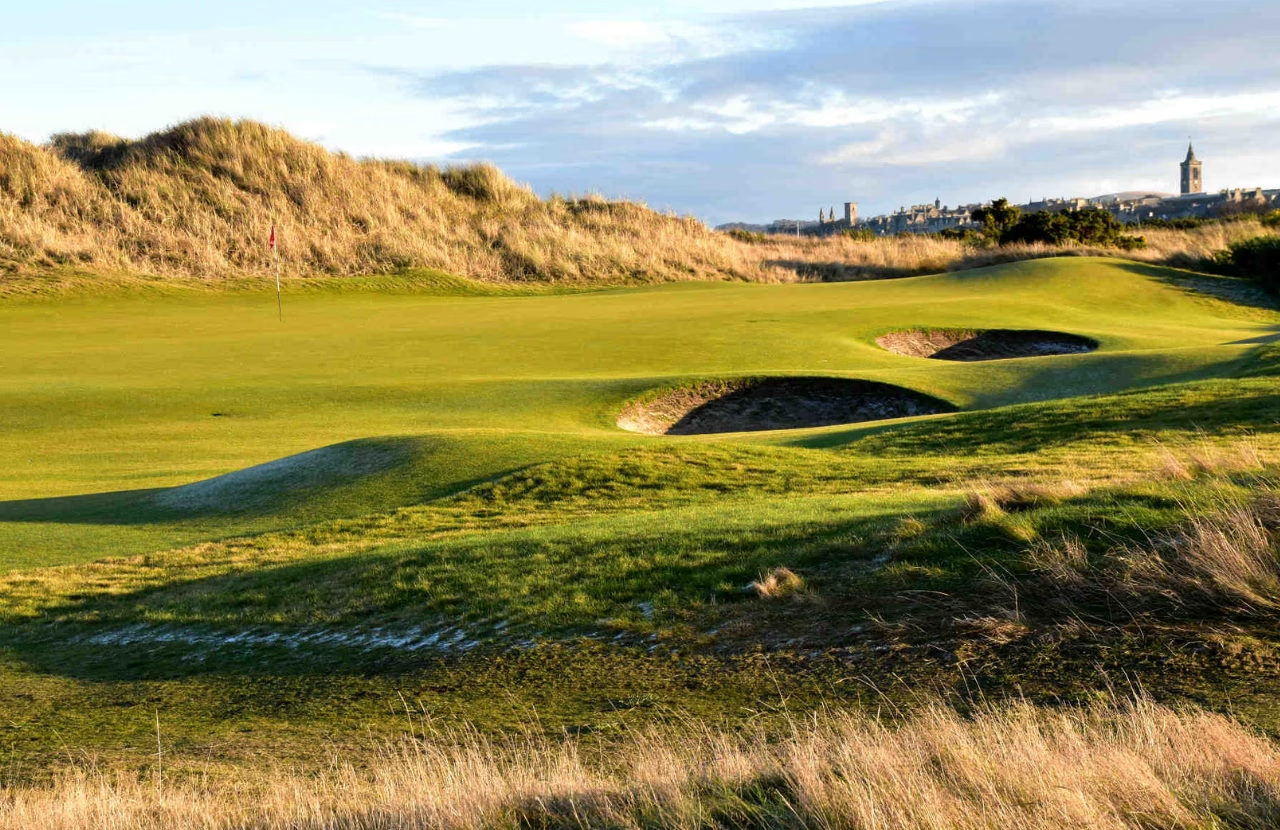 St Andrews Links (Jubilee Course)
The Jubilee has a firmer edge than its original purpose might suggest. Narrower corridors, stronger dunes, and exposed links ground create a demanding round where loose driving quickly affects the next shot. It has developed a reputation as one of the sterner tests across St Andrews Links.
Opened in 1897 during Queen Victoria's Diamond Jubilee, it began as a shorter course for ladies and beginners. It later grew into eighteen holes before Donald Steel's major 1988 redesign shaped the championship course golfers encounter today.
Good scoring asks for control through the wind and disciplined driving around bunkers that squeeze the useful landing areas. The Jubilee suits confident players who enjoy being tested throughout the bag, giving a St Andrews stay a demanding round built around precision and sound course management.
St Andrews Links (Castle Course)
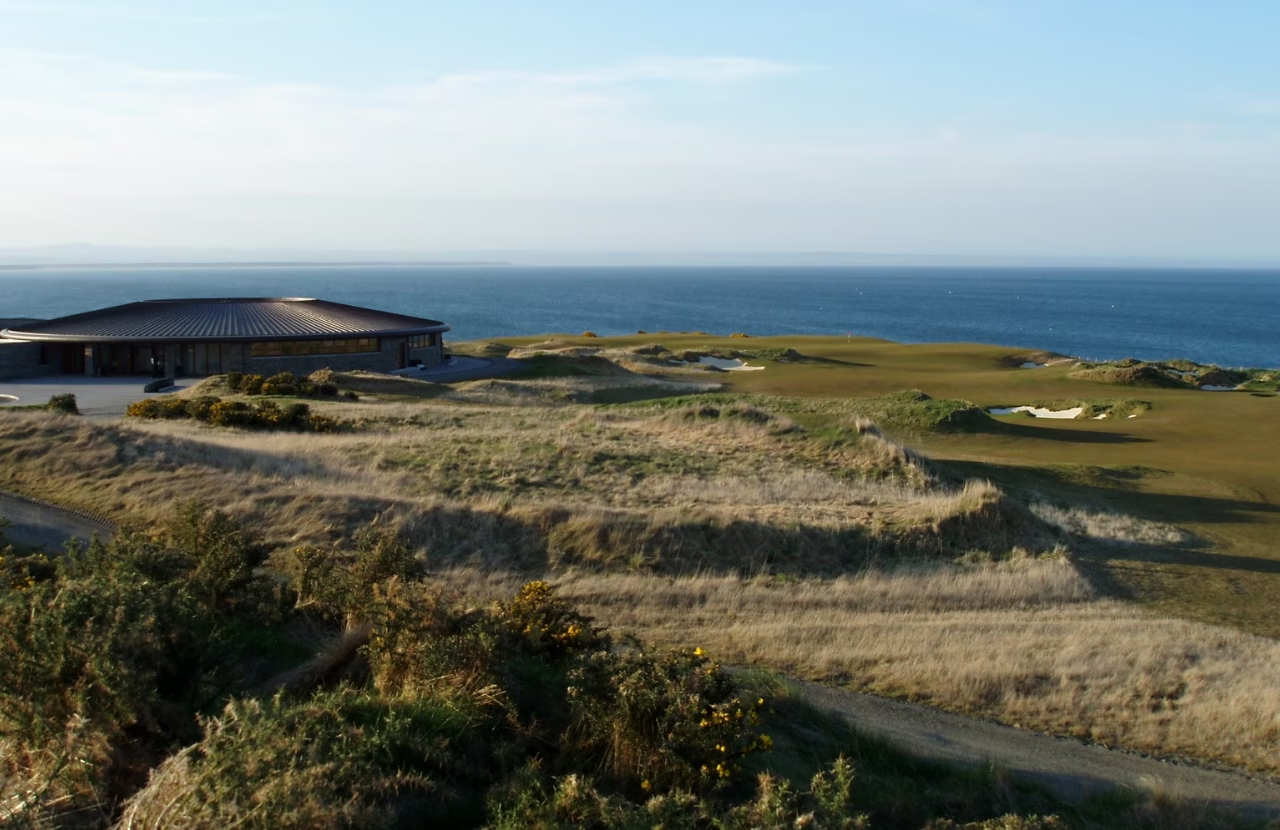 St Andrews Links (Castle Course)
The Castle Course sits on clifftop ground east of St Andrews, where elevation and exposure separate it from the older links beside town. Opened in 2008, it brings a modern scale and wide views across St Andrews Bay.
David McLay Kidd designed the course on land that had been largely flat farmland. The finished layout uses pronounced contours, rolling fairways, and heavily shaped greens to create movement across the site, so golfers spend much of the round judging slopes, landing points, and pace as carefully as distance.
The closing stretch gives the course much of its identity. The par-three 17th asks for a committed carry across a coastal ravine to a green near the cliff edge, where wind, elevation, and the exposed target can quickly change the shot required.
Within a longer St Andrews stay, the Castle works well when you want a round that feels clearly different from the traditional links. Its higher ground, modern shaping, and exposed coastal position change the visual cues and shot choices while keeping golfers close to St Andrews.
Fairmont St Andrews (Torrance Course)
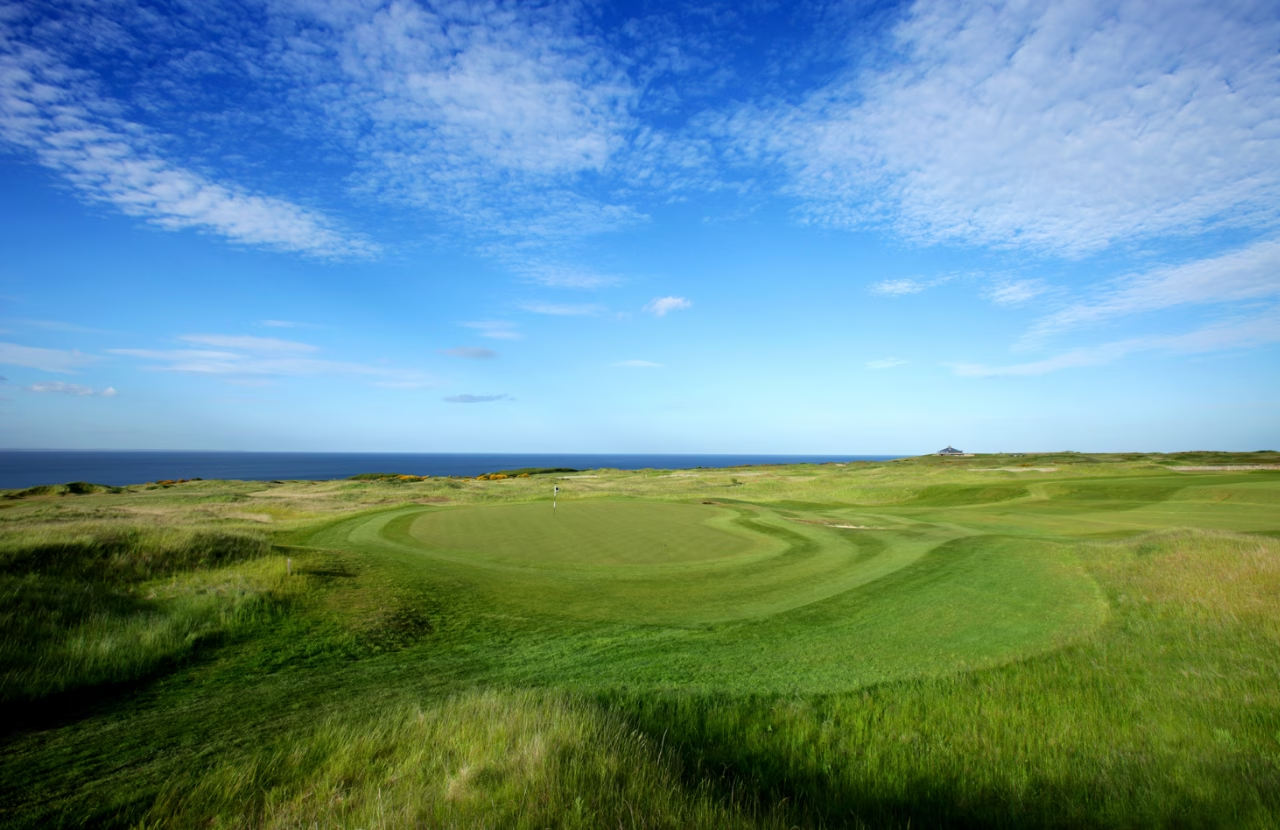 Fairmont St Andrews (Torrance Course)
The Torrance Course gives Fairmont St Andrews a championship layout with a different rhythm from the town links. Links-style features meet a modern resort scale, with open ground, modern shaping, and coastal exposure influencing how the round unfolds.
Sam Torrance is closely associated with the design, but the course golfers see today also reflects later work. Ahead of its role as a Final Qualifying venue for The 2010 Open, the layout was reconfigured and exchanged holes with the neighbouring Kittocks, changing its closing sequence and helping establish the present routing for visiting golfers.
The course becomes more dramatic as it moves towards the coast. Wind, elevation, and increasingly open views influence the later holes, while broad playing corridors still reward sensible positioning before approaches into greens where a poor angle can complicate distance control.
Tournament use gives the Torrance useful context for visiting golfers. It staged DP World Tour events from 2020 to 2022, an Asian Tour event in 2023, and the Men's Scottish Amateur Championship in 2024, showing that the layout can be prepared for high-level competition.
Fairmont St Andrews (Kittocks Course)
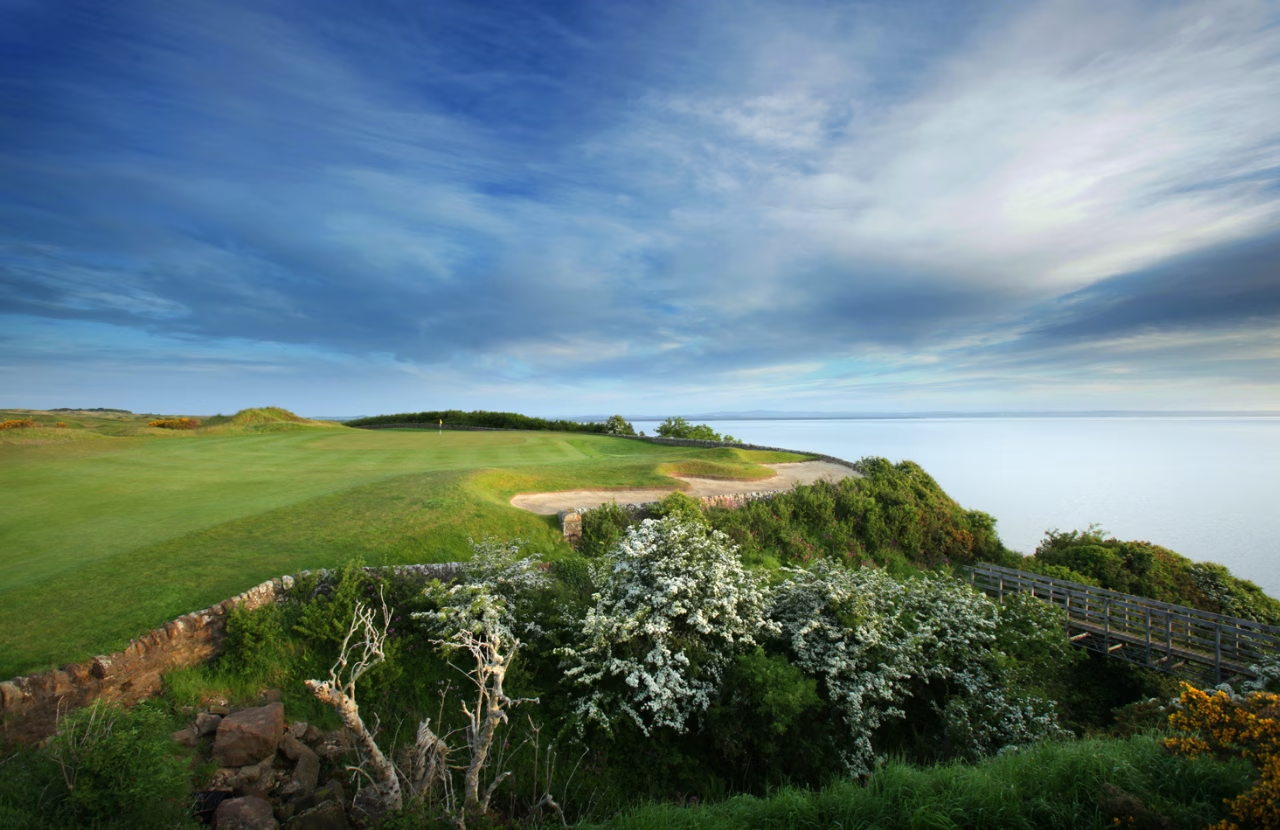 Fairmont St Andrews (Kittocks Course)
The Kittocks Course uses Fairmont's coastal edge directly, with undulating fairways, large rolling greens, and holes close to the water. Its out-and-back structure takes golfers furthest from the clubhouse at the ninth before turning home.
Bruce Devlin led the original design, with Gene Sarazen also associated with the course, before Gary Stephenson later reshaped parts of the layout. That work altered tees, bunkering, and green complexes, while two holes that had belonged to the Torrance were incorporated into the revised Kittocks.
Changes in elevation, coastal wind, deep bunkers, and large greens put a premium on distance control. The cliffside holes also make line selection important, especially when the safer route and the more rewarding scoring line ask for different levels of commitment.
Kittocks and the Torrance work naturally as a two-course pairing for golfers based at Fairmont St Andrews. Kittocks leans more heavily into the cliff-edge setting and rolling terrain, giving the second Fairmont round its own character within a wider St Andrews golf experience.
St Andrews Links (Eden Course)
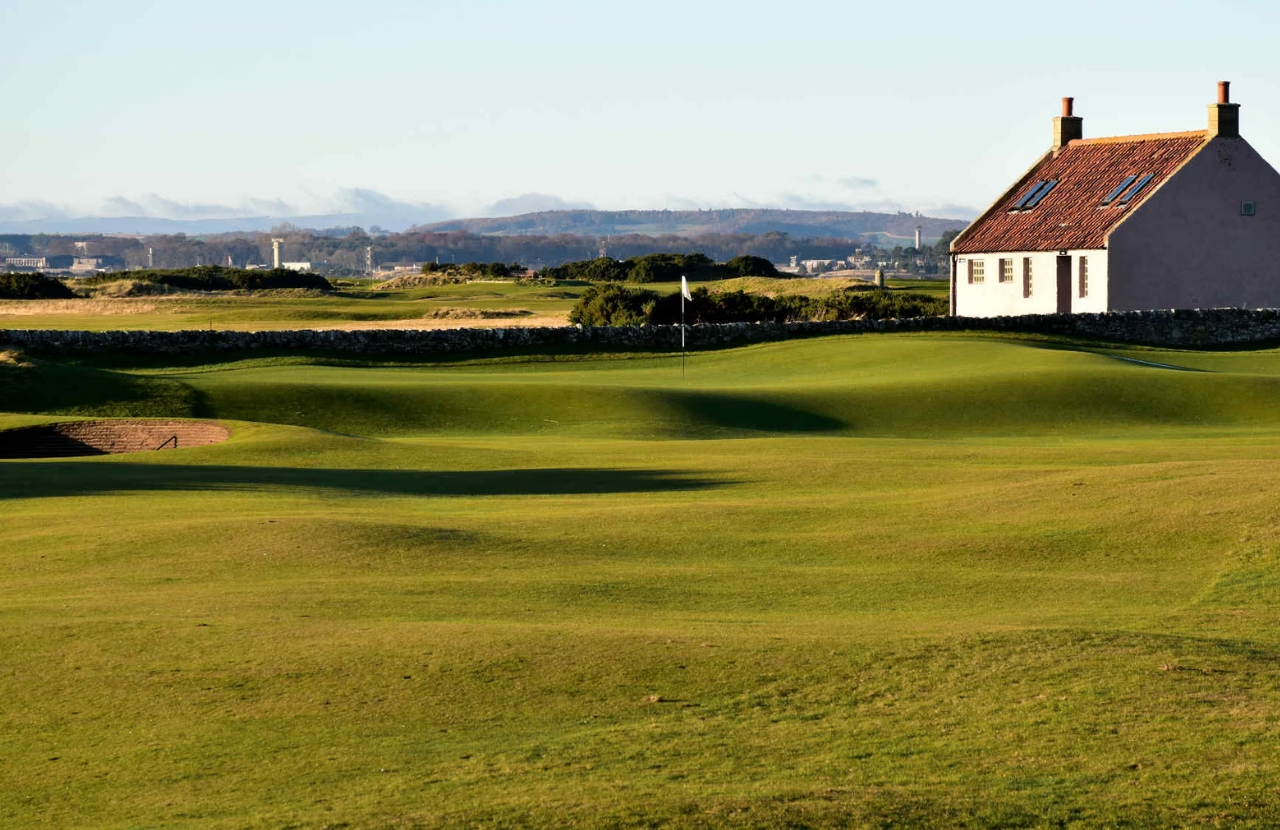 St Andrews Links (Eden Course)
The Eden Course rewards golfers who think carefully around shorter links ground. Wide fairways can invite ambition, but deep bunkers, uneven lies, and strongly contoured greens make accurate approaches far more important than simply chasing distance from the tee.
Harry Colt designed the course in 1914, using natural boundaries beside the Eden Estuary to shape a layout with a character of its own. Donald Steel later reworked the opening and closing holes, yet Colt's strategic ideas remain evident in the routing, bunkering, and notably undulating putting surfaces.
The greens give the round much of its difficulty. Slopes, tiers, and run-offs can turn a safe-looking approach into a demanding recovery, while the shorter holes place greater value on club selection, distance control, and touch than raw power.
For a multi-round stay, the Eden can sit comfortably between harder championship days. It still gives experienced golfers a proper links test, but its shorter scale can ease the physical load while demanding enough course management to keep the scorecard interesting throughout.
St Andrews Links (Craigtoun Course)
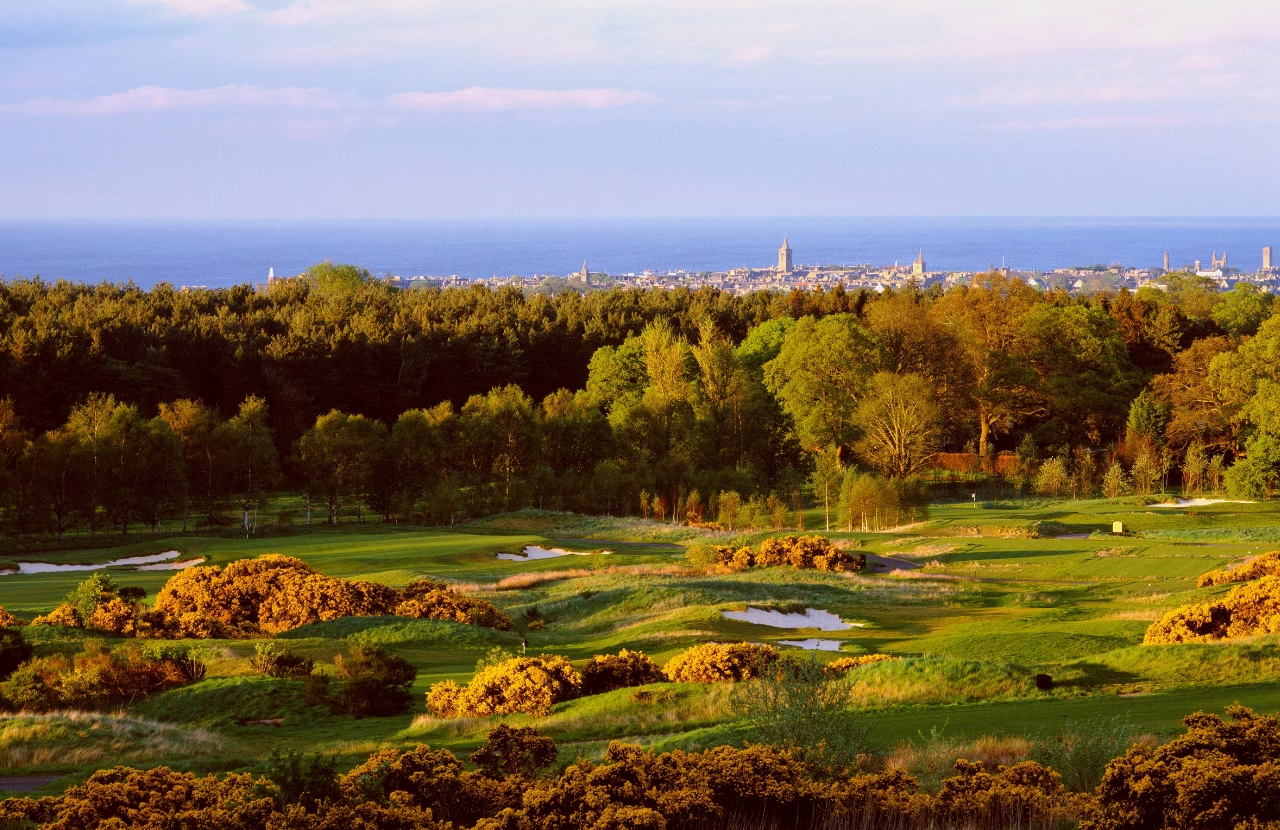 St Andrews Links (Craigtoun Course)
Craigtoun changes the visual language of golf in St Andrews. Established trees, gorse, heather, and rolling inland ground replace the exposed coastal feel found across much of the destination, giving the round a noticeably more enclosed heathland character.
Peter Thomson designed the original course, which opened in 1995, before Tim Liddy carried out a major redesign in 2006, altering the routing, bunkering, and several greens. The present course uses elevation, bunkering, and changing lines to create repeated decisions between safer positions and more ambitious routes.
Driving matters because trees and bunkers give many holes a clearer shape from the tee. Finding the preferred side of a fairway can open a better angle into the green, while a misplaced drive often leaves a more awkward approach.
The course joined St Andrews Links in January 2026, when the Trust took over the former Duke's Course and renamed it Craigtoun. That brought an established inland layout into the same operating family as the historic links, widening the type of golf available during one St Andrews stay.
St Andrews Links (Strathtyrum Course)
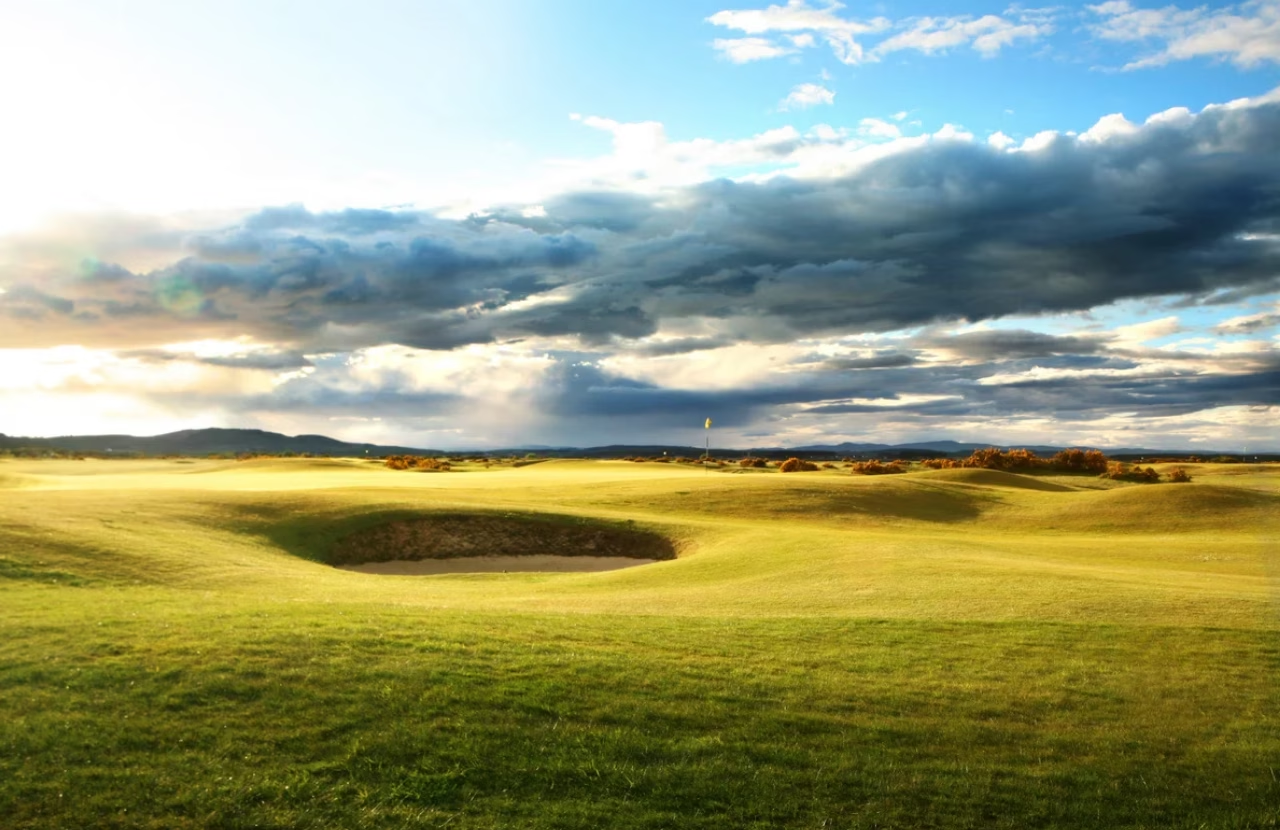 St Andrews Links (Strathtyrum Course)
Strathtyrum is the shortest full eighteen-hole course at St Andrews Links, but it still asks for accurate golf. The lower yardage creates scoring chances, while carefully placed bunkers and sloping greens can quickly punish careless iron play.
Opened in 1993, the course was created to complement the longer championship layouts. Donald Steel, Tom Mackenzie, and Martin Ebert are credited with the design, giving St Andrews an eighteen-hole option where a more manageable length still leaves enough hazards, movement, and putting difficulty to test sound technique.
Its scale makes Strathtyrum useful during a longer golf stay. It can provide a lighter round between harder tests, yet better players still need to find the correct sections of the greens if they want realistic birdie chances instead of difficult recovery putts.
St Andrews Links (Balgove Course)
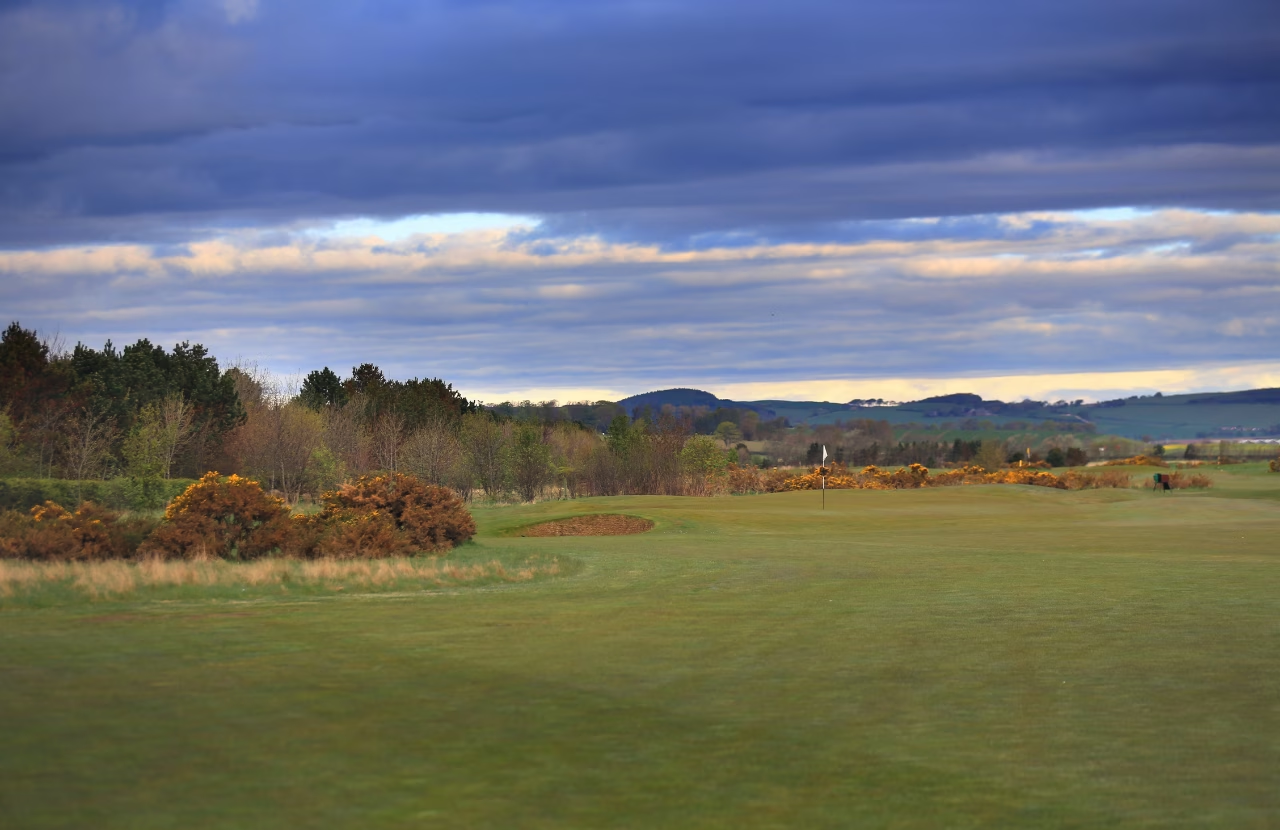 St Andrews Links (Balgove Course)
Balgove is the only nine-hole course at St Andrews Links and serves a different purpose. Wide fairways, shallow bunkers, and gently rolling greens make it approachable for beginners, juniors, and families while retaining a clear links identity.
The par-30 layout contains six par threes and three par fours, so iron play and short-game control matter more than driving length. Bunkers and a double green introduce traditional links features, making the course useful for learning, sharpening approach play, or fitting some informal golf into a shorter window.
For international golfers, Balgove works best as an optional extra rather than a headline round. It can suit mixed-ability groups, families, or anyone wanting relaxed golf on a lightly scheduled day without committing the time and energy required by a full eighteen-hole course.
Experiences Away from the Course
Rounds may set the pace of a stay in St Andrews, but time away from the fairways can deepen what golfers take from the town. The most worthwhile additions fit around tee times and add context without taking over the day.
St Andrews offers far more local experiences and activities than one golf-led visit can reasonably include. For this guide, we have kept the focus on five of the most worthwhile and popular choices, each able to sit naturally beside the courses and within a well-paced itinerary.
The R&A World Golf Museum
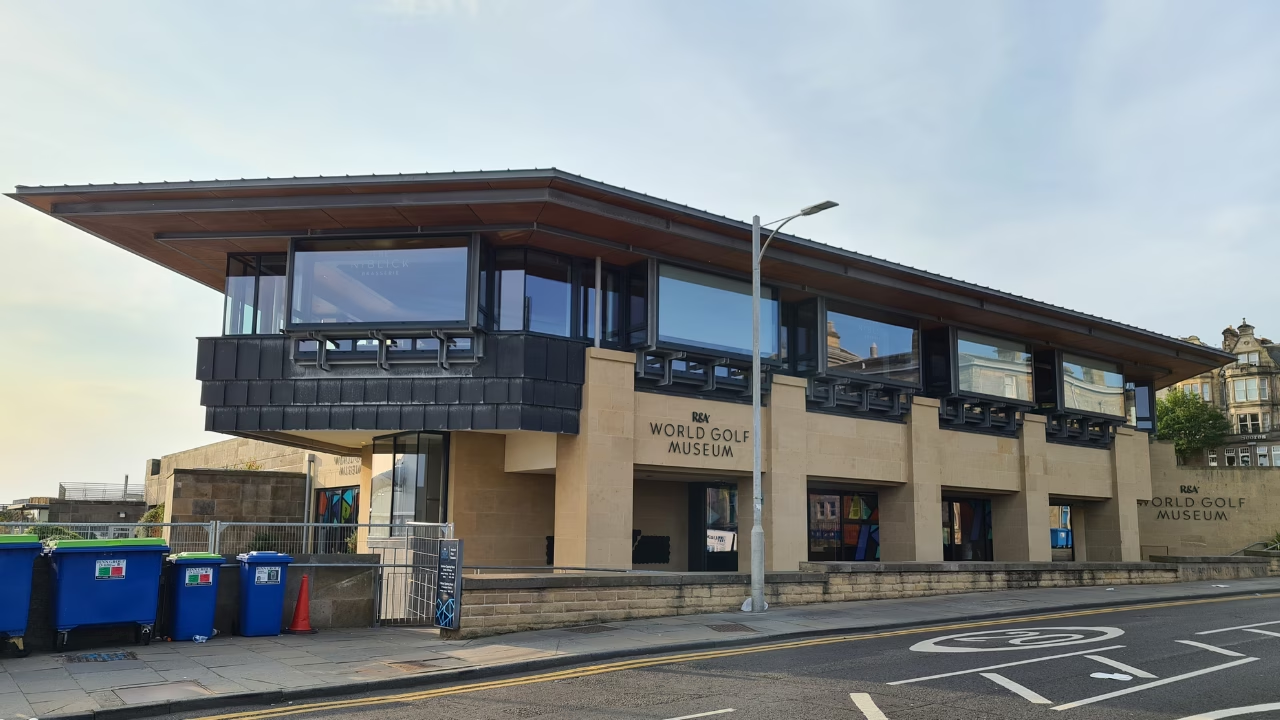 The R&A World Golf Museum on Bruce Embankment in St Andrews. Image: Wikipedia.
The R&A World Golf Museum gives golfers a broader view of the game than any single course can provide. Its galleries cover more than 400 years, following golf from early societies and equipment through championship history and its growth around the world.
For experienced golfers, the collection provides much of the substance. More than 100 historic clubs are displayed alongside medals, artwork, clothing, personal objects, and championship material, allowing visitors to trace how equipment, competition, and golfing culture changed as the game moved through different eras and countries.
Its location on Bruce Embankment, opposite the Royal and Ancient Clubhouse, makes the museum easy to place around a day on the Links. Time here before or after golf adds historical depth without requiring a separate excursion away from central St Andrews.
Official Guided Walk of the Old Course
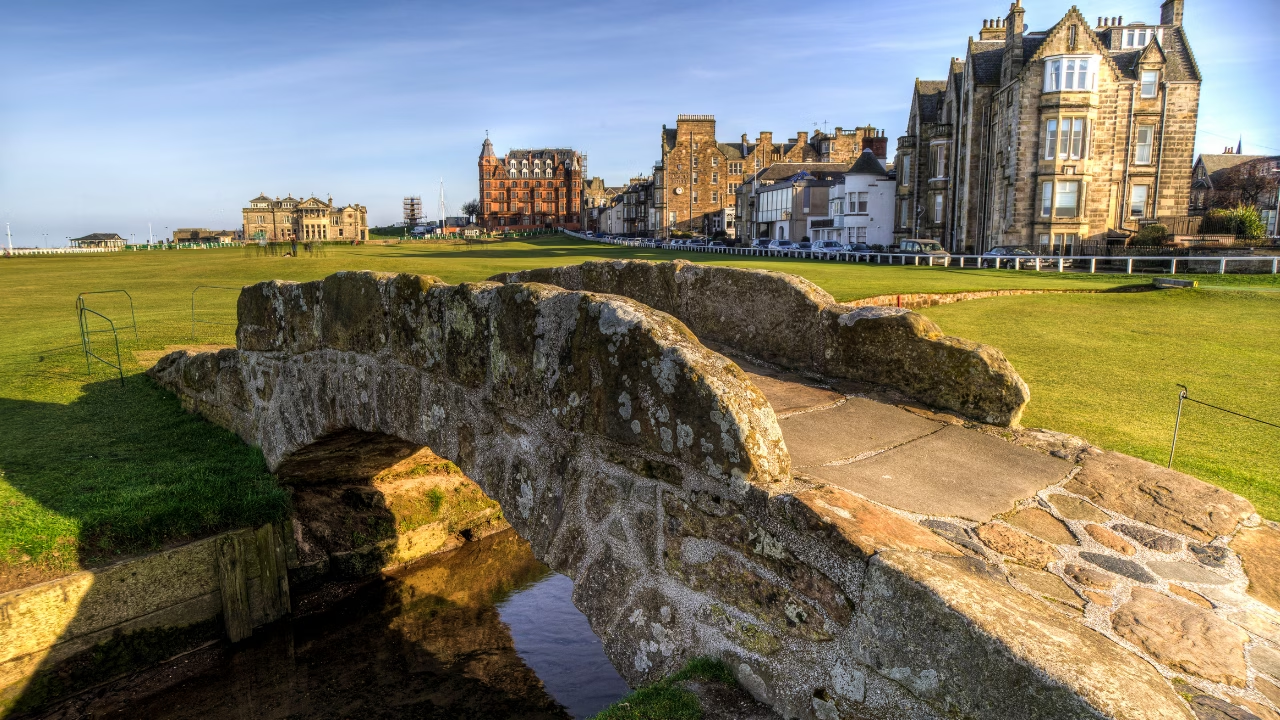 Swilcan Bridge on the Old Course with St Andrews beyond, seen along the Official Guided Walk.
The official Guided Walk of the Old Course lets golfers study famous ground without needing a tee time. Led by an expert guide, the route takes in the first, seventeenth, and eighteenth holes, giving a player's-eye view of landmarks and ground closely tied to the course's history.
The guide explains landmarks, routing, and stories linked to the closing stretch, while the route also shows how closely the course, clubhouse, roads, and town meet around this part of St Andrews.
The standard walk lasts about one hour and fifteen minutes and covers roughly two kilometres, making it straightforward to fit into a golf-led day. It suits companions, golfers without an Old Course tee time, and repeat visitors who want to examine familiar ground more closely.
Current guided-walk tickets also offer discounted entry to The R&A World Golf Museum, subject to availability. Pairing the two connects the physical ground of the Old Course with the wider history of golf without requiring another part of the day to be set aside.
St Andrews Cathedral and St Rule's Tower
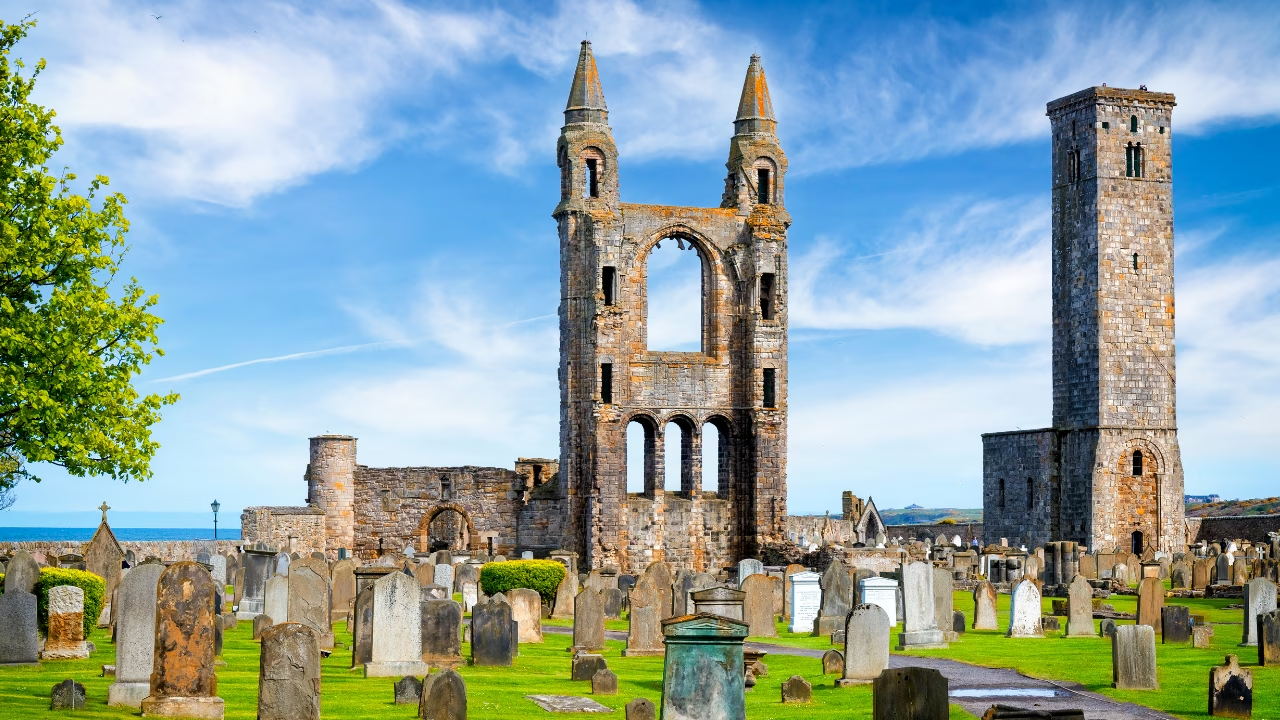 St Andrews Cathedral and St Rule's Tower
St Andrews Cathedral stood at the centre of medieval religious life in Scotland. Work began in the 12th century, and after its dedication in 1318, it became the country's largest church and the seat of Scotland's leading bishops and archbishops.
St Rule's Tower predates the cathedral and rises 33 metres above the site. It may have acted as a beacon for pilgrims travelling towards the shrine of St Andrew, while the climb now gives visitors a broad view over the town and coastline from one of its oldest surviving landmarks.
Walking the cathedral grounds puts another layer of St Andrews into view. The surviving walls, precinct, graveyard, and tower show how important the town was centuries before modern golf travel, while the site remains easy to fit around a round or quieter afternoon.
St Andrews Castle
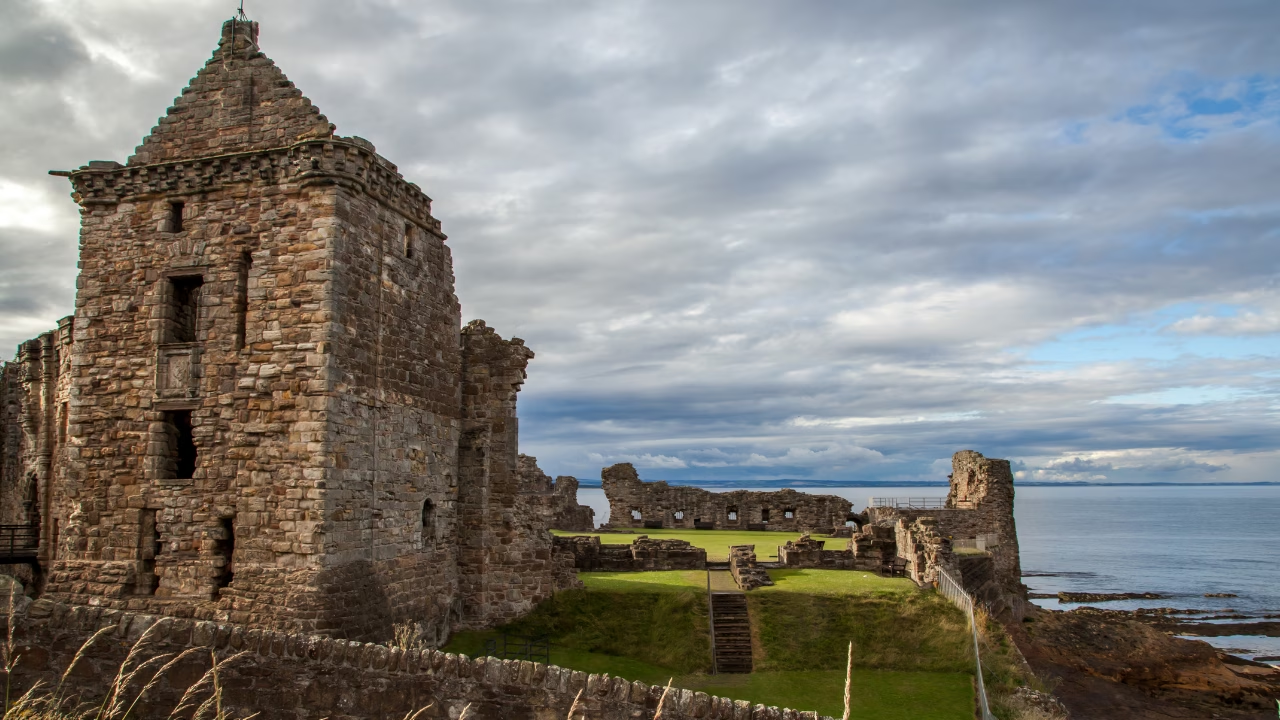 St Andrews Castle
St Andrews Castle served as the official residence of the bishops, and later archbishops, of St Andrews throughout the Middle Ages. Its fortified position above the sea reflected the wealth and authority of church leaders who played a major part in the religious and political life of the country.
The Reformation brought a turbulent period to St Andrews Castle. George Wishart was burned at the stake outside its walls, Cardinal David Beaton was later murdered, and the siege of 1546-47 led to the mine and countermine beneath the fortifications.
Today, visitors can explore the main courtyards, towers, interior spaces, bottle dungeon, and Hamilton Façade. The mine, countermine, and Bishop's Apartments are currently closed, so the experience is best approached for the surviving architecture and history rather than those underground passages.
Wardlaw Museum
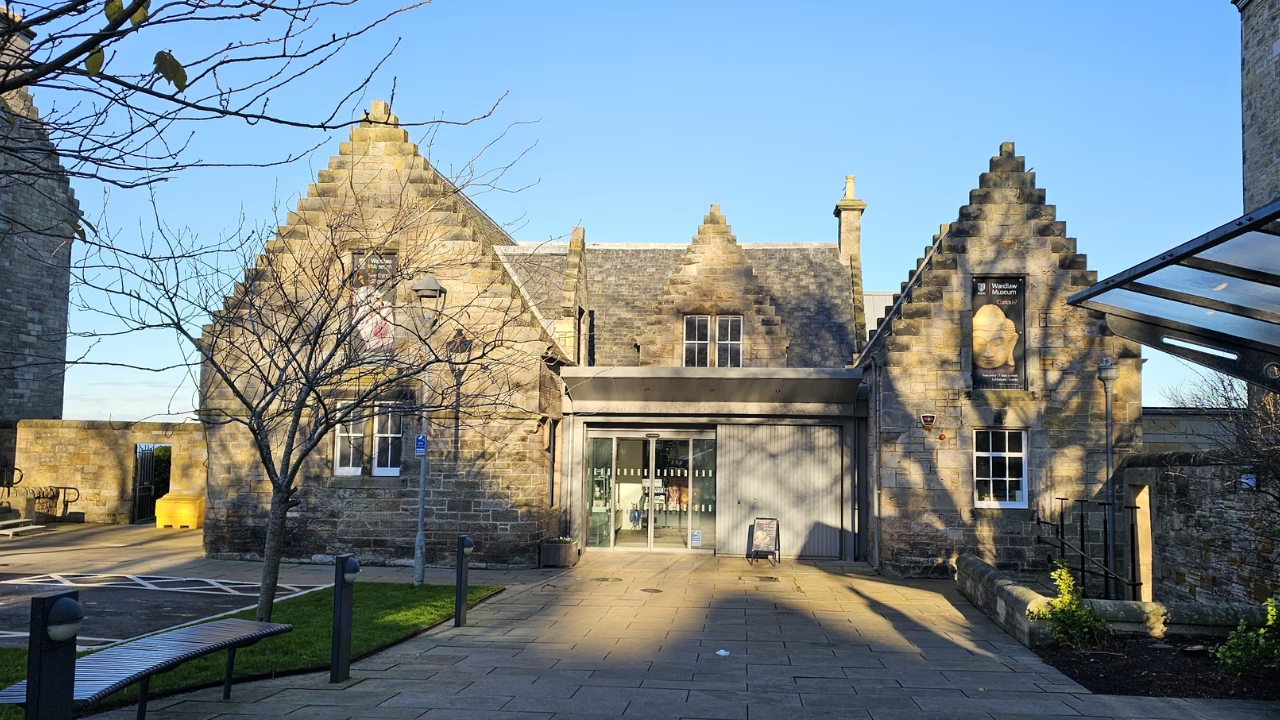 Wardlaw Museum at the University of St Andrews. Image: Wikipedia.
Wardlaw Museum gives golfers a view of St Andrews through its university. Four thematic galleries draw on collections spanning art, history, science, and natural history, bringing together objects and stories connected with the University's research and wider influence.
Temporary exhibitions and the Research Studio keep part of the experience changing, with current university work appearing alongside the permanent collections. That makes the museum especially useful for repeat visitors who already know the town's better-known landmarks but want another worthwhile reason to spend time beyond the Links.
The museum sits on The Scores and includes a terrace and garden with views towards the sea. Entry is free, making it easy to add to an unscheduled hour or quieter part of the day without taking a large block from a golf-led itinerary.
A Sample St Andrews Links Golf Experience
A seven-night stay gives enough time to play five of the destination's ten courses while leaving room for the local experiences that matter most. One round on each main golf day keeps the stay centred on golf without crowding every afternoon.
For this sample itinerary, Old Course Hotel provides the single base for all seven nights, placing golfers beside the Links and within a short walk of central St Andrews. Edinburgh Airport is the main international gateway, with direct services across Europe and North America and road access to the town.
This sample itinerary follows these arrangements:
- Length: 7 nights / 8 days
- Arrival and departure: Edinburgh Airport
- Accommodation: Old Course Hotel (7 nights)
- Transport: Private chauffeur throughout
- Golf: 5 rounds (out of 10 St Andrews Links courses)
- Old Course access: Guaranteed tee time, secured in advance
- Local experiences: 5 selected, scheduled where they fit naturally
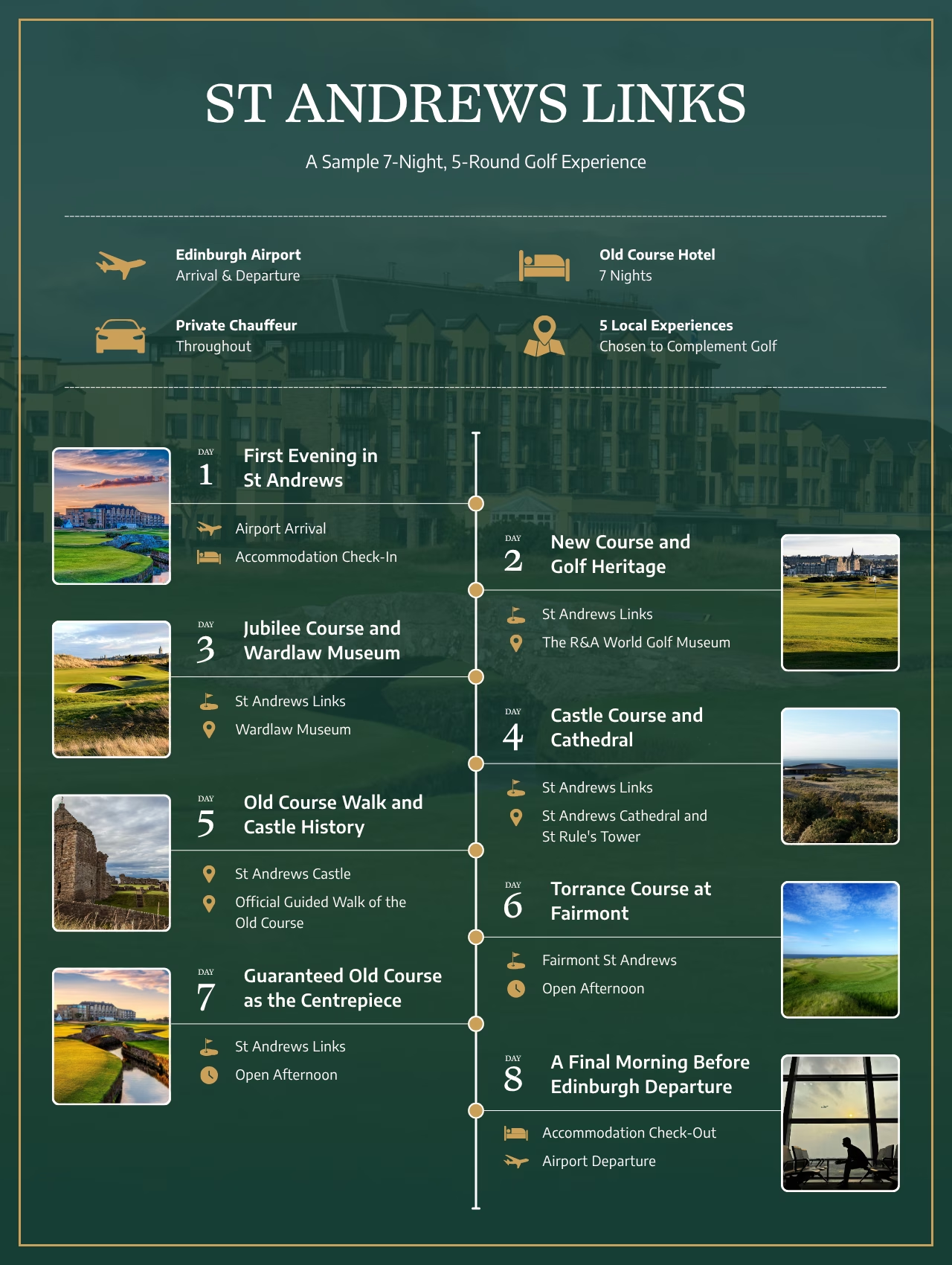
Day 1: First Evening in St Andrews
Arrive at Edinburgh Airport, where your private chauffeur meets you for the drive into Fife.
After checking in at Old Course Hotel, leave the evening unplanned. A gentle walk through town or an early dinner gives you space to settle in before the first full golf day begins.
Day 2: New Course and Golf Heritage
Begin the first full day with a round on the New Course, keeping the opening golf day close to your St Andrews base.
Afterwards, visit The R&A World Golf Museum before returning to the hotel, leaving the evening free for dinner and time around town.
Day 3: Jubilee Course and Wardlaw Museum
Play the Jubilee Course on the third morning, with chauffeur transfers arranged around the confirmed tee time.
Visit Wardlaw Museum before the evening begins. Afterwards, the schedule is left open for dinner and an unhurried evening in St Andrews.
Day 4: Castle Course and Cathedral
Travel out to the Castle Course for the day's round before returning towards the centre of St Andrews.
Later, visit St Andrews Cathedral and St Rule's Tower, leaving enough time to explore the site before an unhurried evening back in town.
Day 5: Old Course Walk and Castle History
A day away from playing starts with the Guided Walk of the Old Course, giving you time around the Links without another scorecard to manage.
Continue to St Andrews Castle later in the day, then leave the remaining hours open. This is a useful point in the week for the hotel spa, a longer lunch, shopping, or simply returning to favourite parts of town before golf resumes.
Day 6: Torrance Course at Fairmont
Your chauffeur takes you to Fairmont St Andrews for a round on the Torrance Course, bringing the week's golf beyond the central Links.
Return to Old Course Hotel afterwards, with no scheduled local experience competing for the rest of the day.
Day 7: Guaranteed Old Course as the Centrepiece
The guaranteed Old Course tee time gives the final full day its focus from the outset.
With the week's other rounds and local experiences already completed, there is nothing else that needs fitting around it, allowing the day to belong fully to the round and the occasion.
Day 8: A Final Morning Before Edinburgh Departure
There is time for breakfast and one final look across St Andrews before your chauffeur collects you for Edinburgh Airport.
The departure comes after a week based in one place, with five distinct rounds and enough time between them to properly settle into the town.
St Andrews Links Within the Golf Region
St Andrews Links is one distinct Golf Destination within Kinfern's broader St Andrews golf region. Golfers extending their stay can move across eastern Fife and towards Carnoustie and Dundee for additional rounds, while keeping St Andrews as the established centre of the experience.
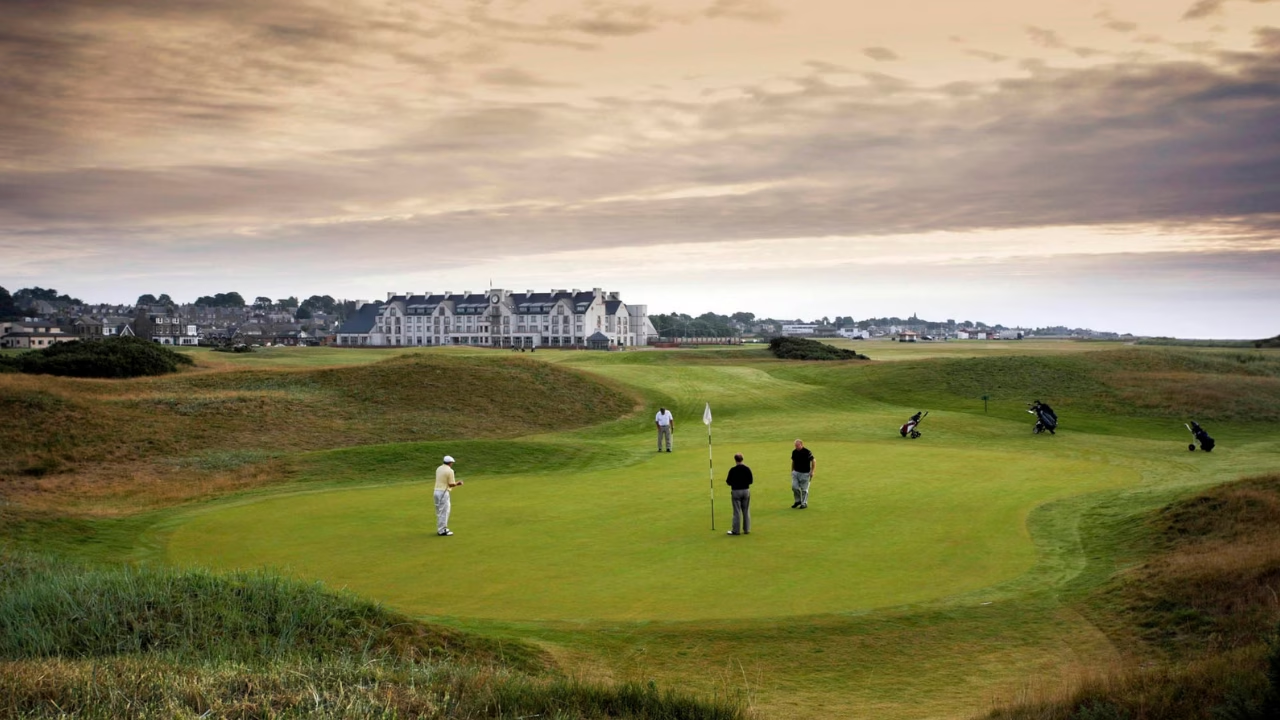 Carnoustie Golf Links (Championship Course)
Beyond the courses already covered here, three of the most recognisable regional courses are Carnoustie Golf Links (Championship Course), Kingsbarns Golf Links, and Dumbarnie Links. They bring major-championship history and two acclaimed modern coastal layouts into reach of a longer stay.
Other Kinfern-defined Destinations in the St Andrews golf region include:
- East Neuk Coast — Six distinctive links trace golf across Fife's eastern coast.
- Largo Bay Coast — Leven, Lundin, and Dumbarnie along one Fife coastline.
- North Fife — Traditional inland golf with hickory and Tay-side character.
- Carnoustie & Dundee — Historic Angus links and Dundee parkland around the Tay.
A St Andrews-based stay therefore has room to grow without losing its centre. Golfers can keep the town and its links as the defining reference points, then add selected rounds farther afield according to time, playing priorities, and how much golf they want from Scotland.
Start Planning Your Golf Experience
St Andrews Links can hold a full week on its own, with historic courses, modern tests, luxurious hotels, and enough time beyond golf to understand the town around them without turning the stay into a rushed sequence of tee times.
With St Andrews as the fixed base, the week can stay focused on the Links while still leaving room for slower afternoons, local history, and selected rounds beyond the town when they genuinely add something.
Few places let golf history feel this present from the first tee to the final morning.
If a new golf experience is on your mind, start the conversation with Kinfern. We can develop your ideas into a considered itinerary, bringing together the golf, accommodation, transfers, and local details into one well-planned experience.