
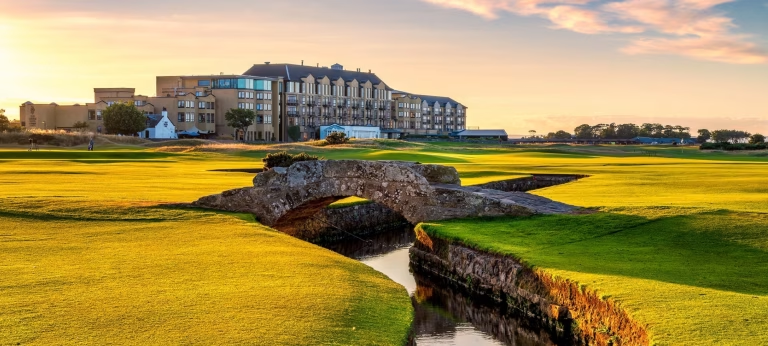
Few landmarks in golf are as recognisable as the Swilcan Bridge. Set beside the 18th fairway of the Old Course at St Andrews, this modest stone crossing has become closely tied to the history and memory of the game.
In this article, we look at the bridge's early purpose, its place in Old Course tradition, its preservation, and some of golf's most memorable farewells.
Key Takeaways
- The Swilcan Bridge is a centuries-old stone crossing on the Old Course beside the 18th fairway.
- Built long before organised golf at St Andrews, the bridge originally provided a crossing for livestock over the Swilcan Burn.
- Between the first and 18th holes, the bridge forms part of the Old Course's distinctive opening and closing landscape.
- Generations of golfers, championship coverage, and the traditional bridge photograph gradually turned this modest stone crossing into a global symbol of golf.
- Heavy foot traffic has required careful conservation around the bridge to protect its approaches, turf, and historic setting.
- Palmer, Nicklaus, Watson, and Woods created memorable Swilcan Bridge moments that strengthened its place in championship history and golf culture.
What Is the Swilcan Bridge?
The Swilcan Bridge is a small stone footbridge on the Old Course at St Andrews, spanning the Swilcan Burn near the final fairway. Its simple arched form sits quietly within one of golf's most historic settings.
It stands between the first and 18th fairways, where the Swilcan Burn crosses ground shared by the opening and closing holes. Golfers meet the bridge while walking towards the 18th green, with St Andrews immediately beyond the links and the familiar clubhouse skyline forming part of the view ahead.
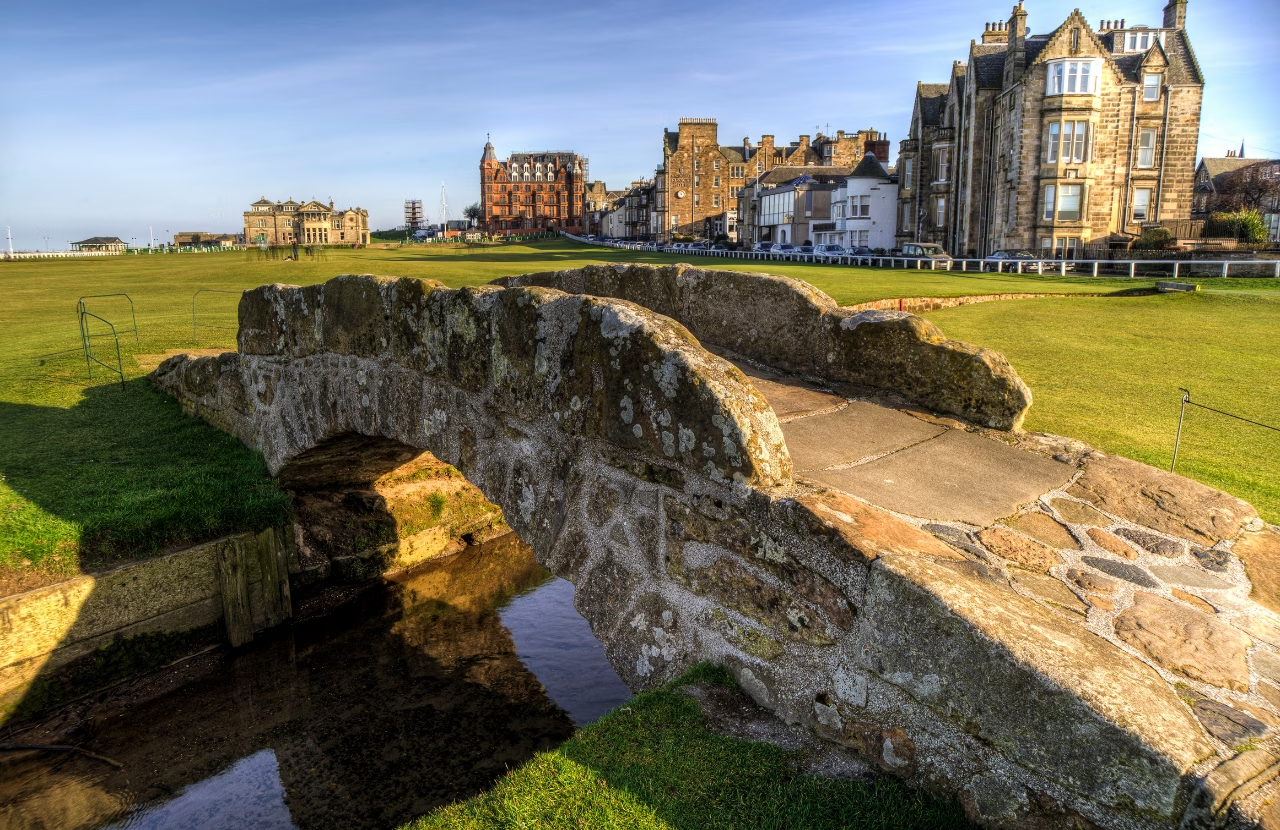 The Swilcan Bridge at the Old Course.
At roughly 30 feet long, eight feet wide, and six feet high, the bridge is smaller than photographs can suggest. A single stone arch carries the walkway over the burn, bordered on each side by low parapets.
The immediate setting makes the bridge easy to place within St Andrews. The Old Course spreads around it, while the Royal and Ancient Clubhouse and the buildings beside the 18th frame one direction. Turn the other way, and the open character of the links leads the eye towards the coast.
Seen at close range, the Swilcan Bridge is remarkably plain, formed from weathered stone with a shallow walkway over one compact arch. Its modest proportions can surprise first-time visitors because photographs can make it appear larger than it is, yet its position beside the 18th leaves little doubt that you are standing at St Andrews.
The History of the Swilcan Bridge
The Swilcan Bridge predates organised golf at St Andrews by centuries. Its exact construction date is unknown, although it is commonly dated to more than 700 years ago, placing its origins well before the Old Course took recognisable shape.
Before golfers ever crossed it, the bridge served a practical purpose for people working the land around St Andrews. It provided a dependable route over the Swilcan Burn, allowing farmers to move livestock from one side of the burn to the other.
Its early use places the bridge within a landscape older than the golf course surrounding it. Livestock crossed this ground long before golf became the pursuit most closely associated with this part of St Andrews, giving the bridge an everyday role that had nothing to do with the game.
Golf has been played at St Andrews for roughly six centuries, so the bridge was already part of the landscape as the game developed there. As patterns of play changed, golfers came into regular contact with a crossing that had originally served the practical needs of local land use.
The bridge also predates the major nineteenth-century shaping of the Old Course. By the time Allan Robertson and Old Tom Morris were influencing the course, the stone crossing was already an established feature beside the Swilcan Burn.
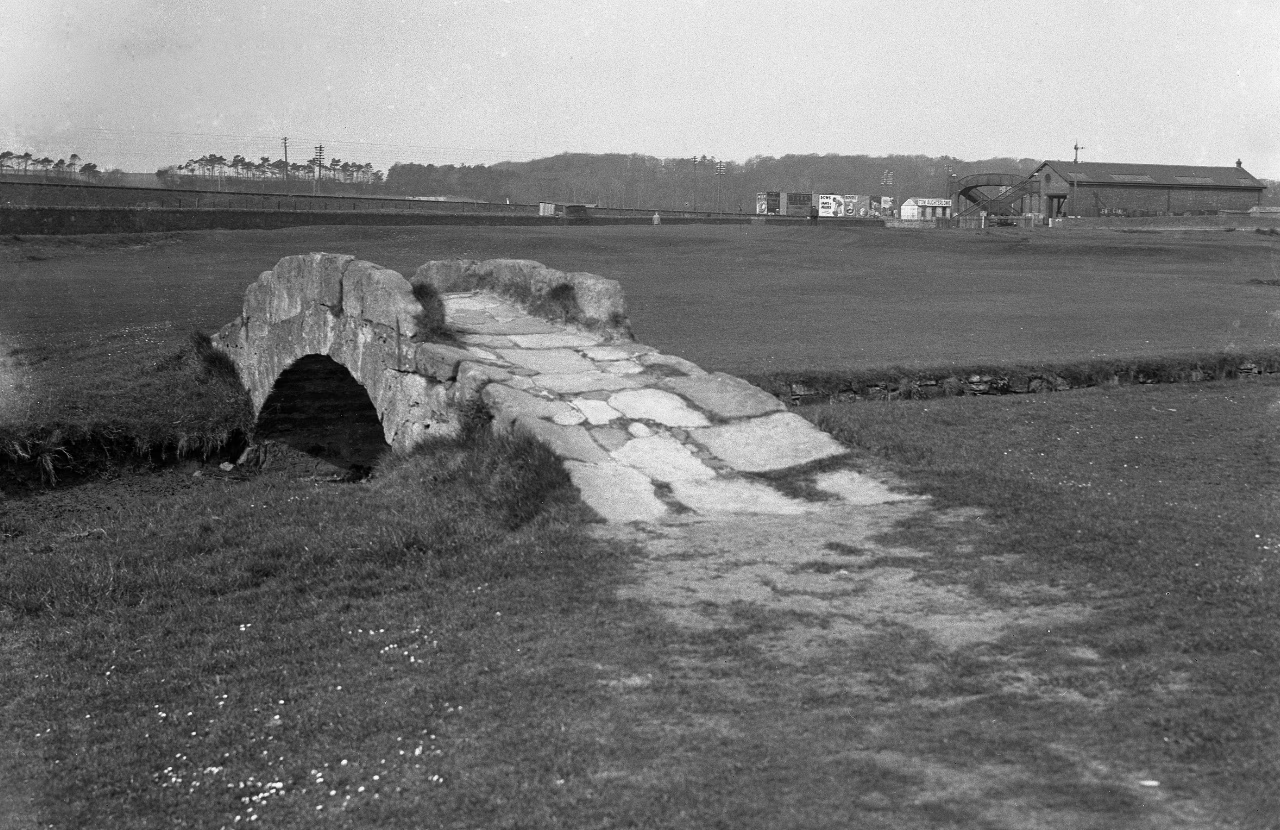 The Swilcan Bridge at the Old Course. c. 1945. Image: University of St Andrews Collections.
Twentieth-century photographs preserve the bridge’s appearance within the Old Course, including University of St Andrews images dating from around 1945. Its name has also appeared in several forms across historical records. Swilcan, Swilken, and Swilkin have all been used for the bridge and burn, with surviving archive descriptions preserving these different spellings.
Across those centuries, the bridge changed in purpose more than in identity. A crossing built for everyday movement gradually became woven into golf at St Andrews as the links evolved around it, leaving an old piece of local infrastructure within a course shaped over many generations.
Swilcan Bridge and the Old Course
The Swilcan Bridge sits where the Old Course begins and ends, within the broad ground shared by the first and 18th holes. The Swilcan Burn cuts across this area, placing the bridge between the outward start and homeward finish.
From the first tee, the burn forms part of the opening hole's immediate landscape. The fairway is exceptionally wide, yet the water crosses the playing ground ahead. Poorly struck opening shots have found it, a reminder that even the Old Course's generous space can demand attention from the first swing.
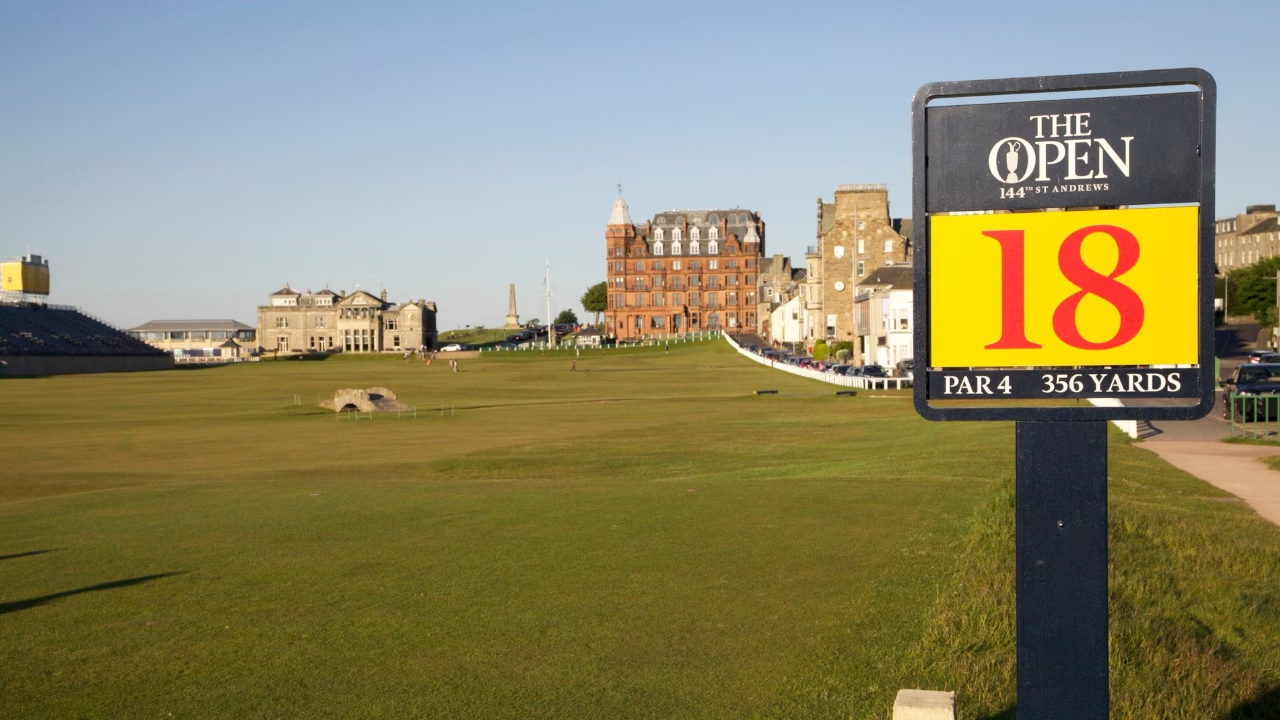 The 18th hole at the Old Course, with the Swilcan Bridge in view.
When golfers return on the 18th, the same stretch of links is approached from the opposite direction. Their tee shots head towards the town, with the bridge lying directly on the route forward across the burn.
The bridge therefore works as part of the course's circulation, rather than as a feature sitting beside play. After teeing off on the closing hole, golfers cross it on foot to reach the fairway beyond, continuing towards the final green beneath the familiar St Andrews skyline.
The first and 18th share a fairway around 129 yards wide, creating an open setting around the bridge, which leaves the stone crossing surrounded by short grass rather than squeezed beside a narrow finishing corridor.
That width makes the bridge understandable within the Old Course's distinctive routing. The opening hole sends golfers away from the town, while the closing hole brings them back across the same ground. The Swilcan Bridge occupies that meeting point between the beginning and end of the round.
The 18th itself is a short par four, so the bridge appears early in the final walk towards the green. Beyond it, the hole runs towards the Royal and Ancient Clubhouse and the buildings of St Andrews, giving the closing stretch a direct connection with the town.
The burn also explains why the crossing belongs here. It passes through the first and 18th holes as part of the links landscape, so the bridge provides the practical route golfers need when moving across the watercourse during play.
Within the complete routing, the Swilcan Bridge joins the landscape and play in a direct way. Golfers encounter the same broad ground at the start and finish, but from opposite directions, with the crossing sitting between those two parts of the Old Course.
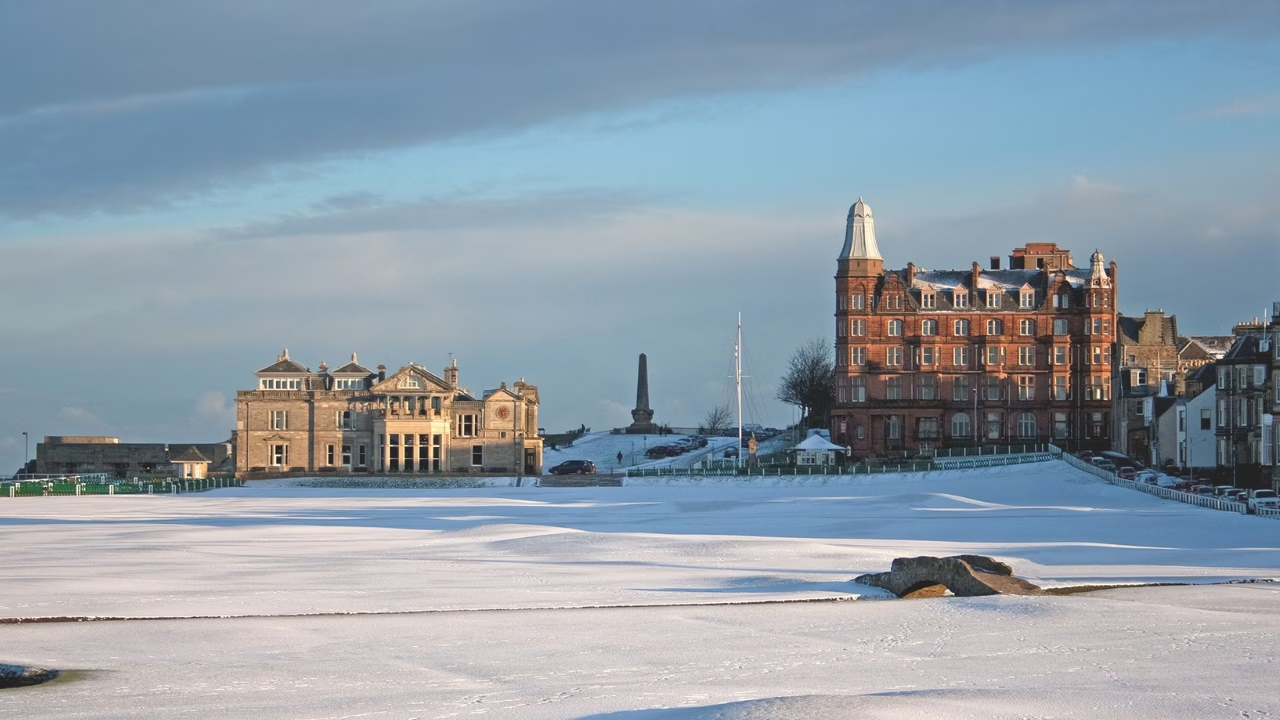 The Old Course beneath winter snow, with the Swilcan Bridge in view.
How Swilcan Bridge Became a Symbol of Golf
The Swilcan Bridge became a symbol of golf gradually rather than by design. Its place on the closing walk of the Old Course put a modest stone crossing in the path of generations of golfers, allowing repeated experience to give it meaning far beyond its original purpose.
For many players, stopping on the bridge for a photograph has become part of playing St Andrews. Friends, couples, golf societies, and groups pause at the crest before continuing towards the final green, creating a personal record of a round many have anticipated for years.
Those photographs are easy to recognise without a caption. The low stone arch sits against open links and the St Andrews skyline, creating a scene now closely associated with the Old Course throughout the golfing world.
The Old Course carries a place in golf that few venues can match, and the bridge benefits from that setting. Golfers arriving from across the world cross a part of the game they may have known through televised championships, old photographs, personal stories, and decades of anticipation before arriving there.
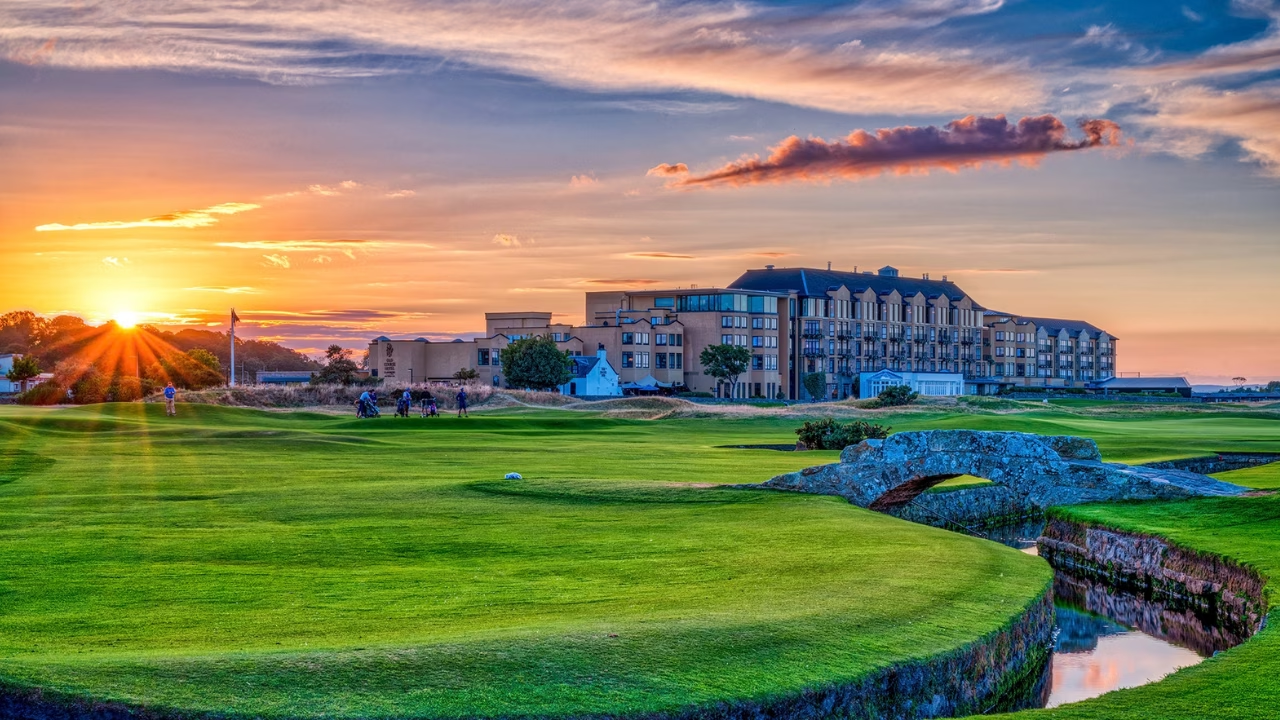 The Swilcan Bridge with Old Course Hotel beyond at sunset.
The ritual connects different levels of the game. Major champions, club golfers, first-time visitors, and lifelong players all use the same narrow crossing, giving the bridge a rare sense of shared experience within a sport played on many different stages.
For many groups, the bridge photograph outlasts the scorecard. It records the people who shared the round and fixes one familiar St Andrews moment within a larger personal memory of the day for years afterwards.
Preserving an Icon at the Home of Golf
Heavy foot traffic has made the ground beside the Swilcan Bridge a conservation challenge. Tens of thousands of golfers, alongside countless other visitors, cross or approach it each year, placing repeated pressure on the turf at both ends.
By 2023, wear around the approaches had become difficult to manage. St Andrews Links Trust had already tested different ways to protect the area, including synthetic surfaces and repeated turf repairs, but none had provided a lasting answer for ground exposed to such concentrated use throughout the year.
In February 2023, new stonework was installed at the approach and exit as a possible long-term solution. The work focused on the surrounding ground rather than the historic bridge itself, which remained untouched throughout the trial.
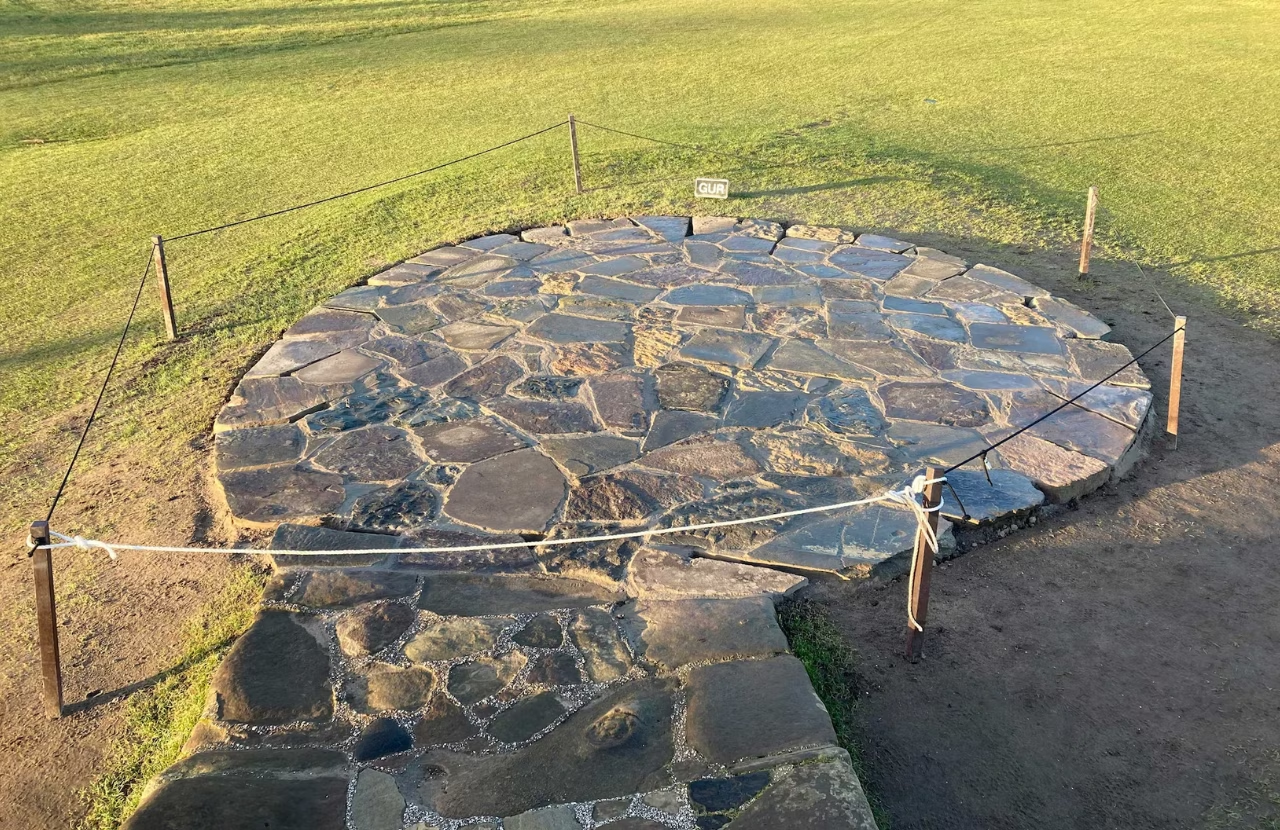 Temporary stonework beside the Swilcan Bridge in 2023. Image: Golf Digest.
The appearance drew an immediate response from golfers around the world. Many felt the new paving looked too formal beside the old stone crossing and natural links turf. Much of the criticism focused on whether the treatment belonged within the established character of the Old Course.
Within days, the Links Trust decided to remove the stonework and return the approaches to turf. The decision followed feedback from partners, stakeholders, and the golfing public about how the new surface fitted the setting.
Famous Moments on Swilcan Bridge
By the late twentieth century, the Swilcan Bridge had become a natural stage for farewells at St Andrews. Its place on the final hole gave players one last pause before the 18th green as spectators gathered nearby.
Arnold Palmer's Farewell, 1995
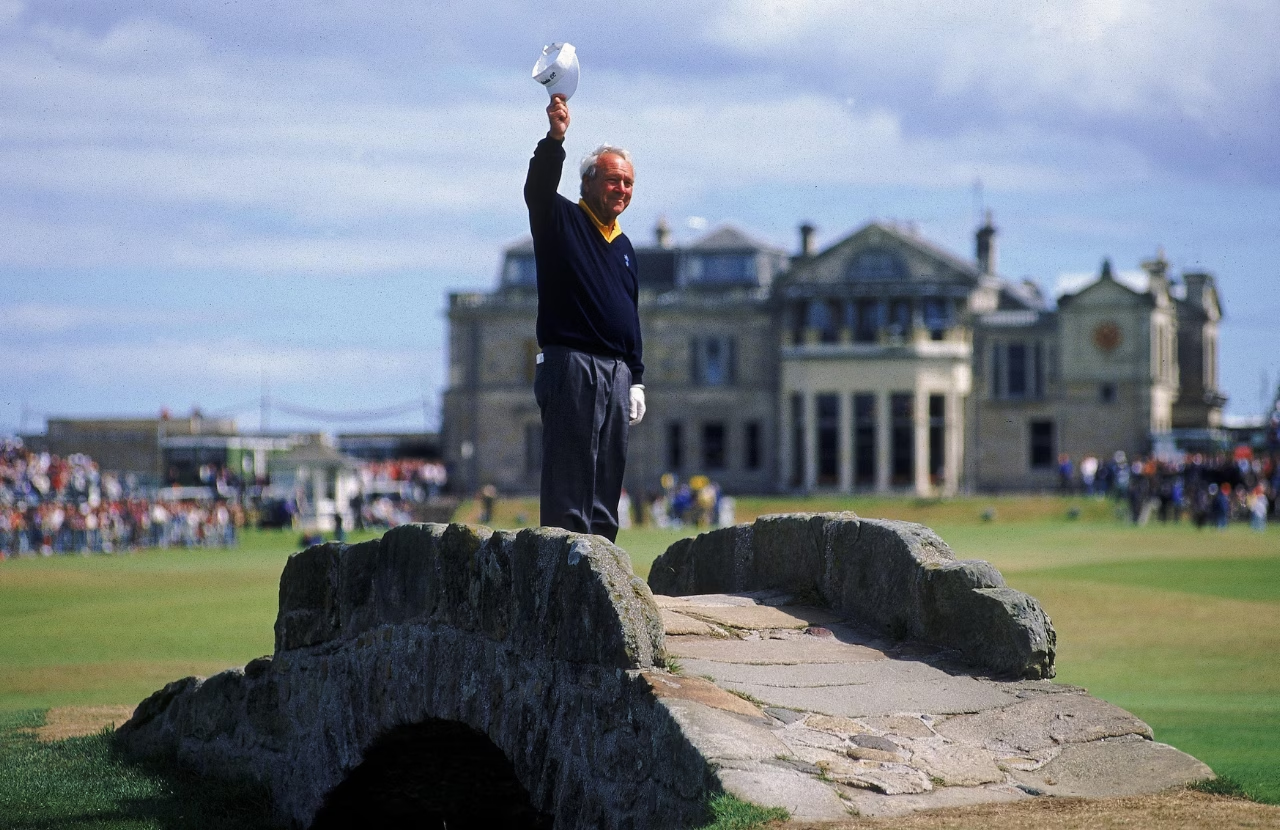 Arnold Palmer bids farewell from the Swilcan Bridge at The Open in 1995. Image: The Open.
Arnold Palmer made his final Open appearance at St Andrews in 1995, thirty-five years after his first visit to the Championship there. On Friday, he stopped on the Swilcan Bridge and saluted the galleries, closing an Open career that had included victories in 1961 and 1962.
Jack Nicklaus' Farewell, 2005
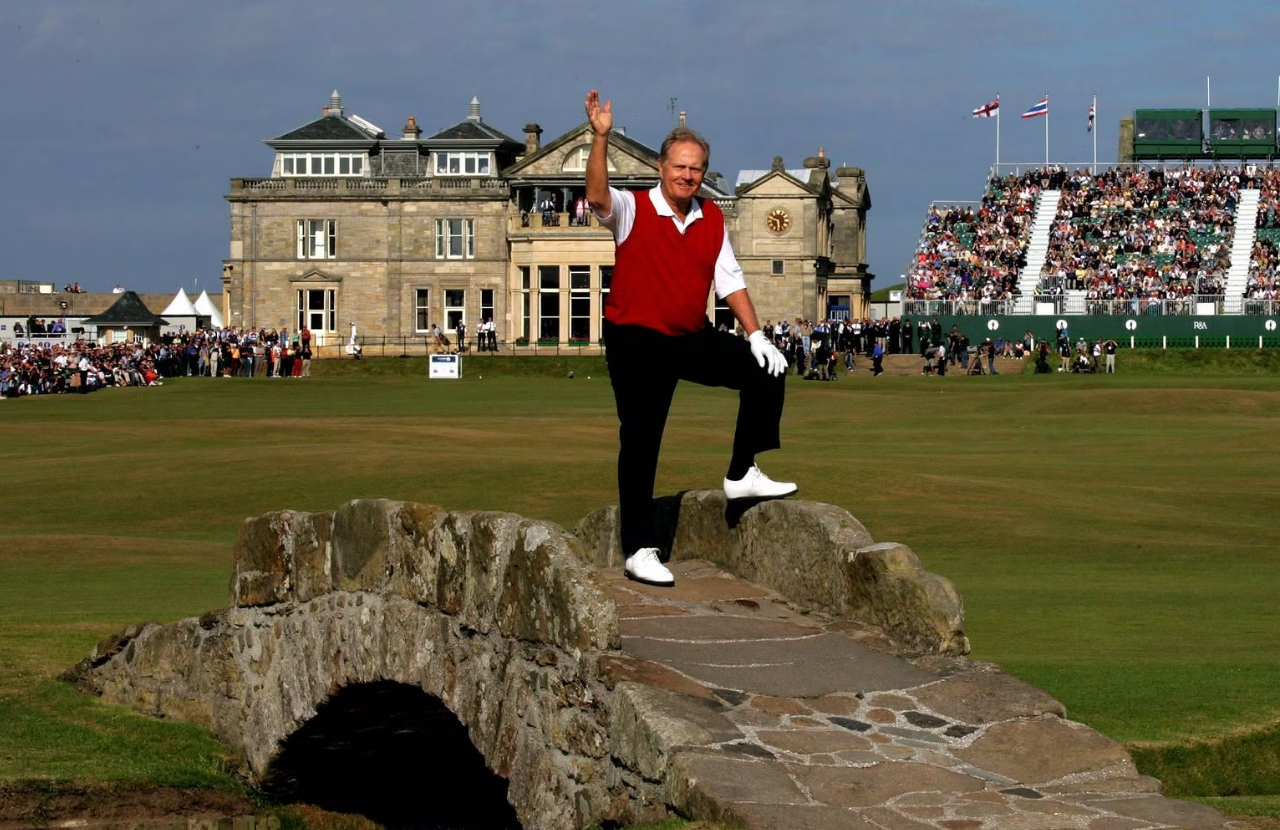 Jack Nicklaus waves farewell from the Swilcan Bridge at The Open in 2005. Image: The Open.
Jack Nicklaus returned to St Andrews in 2005 for his final Open at 65. After driving down the 18th in the second round, he stopped on the bridge with playing partners Tom Watson and Luke Donald.
Spectators lined the fairway as Nicklaus continued towards the green, where he finished with a 15-foot birdie for an even-par 72. His pause on the bridge, followed by that final putt, created one of the Old Course's most enduring championship farewells and a fitting close to his Open career.
Tom Watson's Farewell, 2015
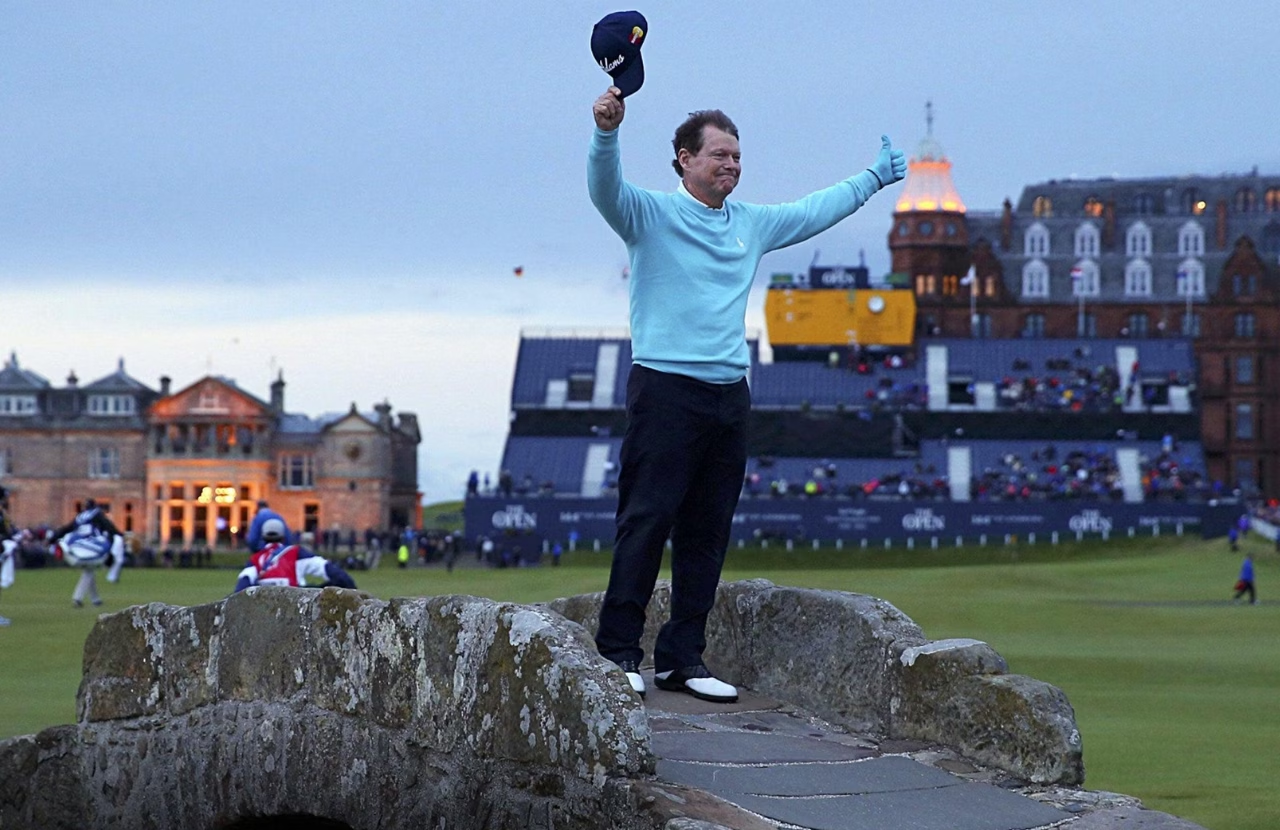 Tom Watson says farewell from the Swilcan Bridge at The Open in 2015. Image: The Independent.
Tom Watson made his final Open appearance at St Andrews in 2015. With fading light over the Old Course, the five-time Champion Golfer crossed the Swilcan Bridge, acknowledged the galleries, and completed his final hole shortly before 10pm.
Tiger Woods at the 150th Open, 2022
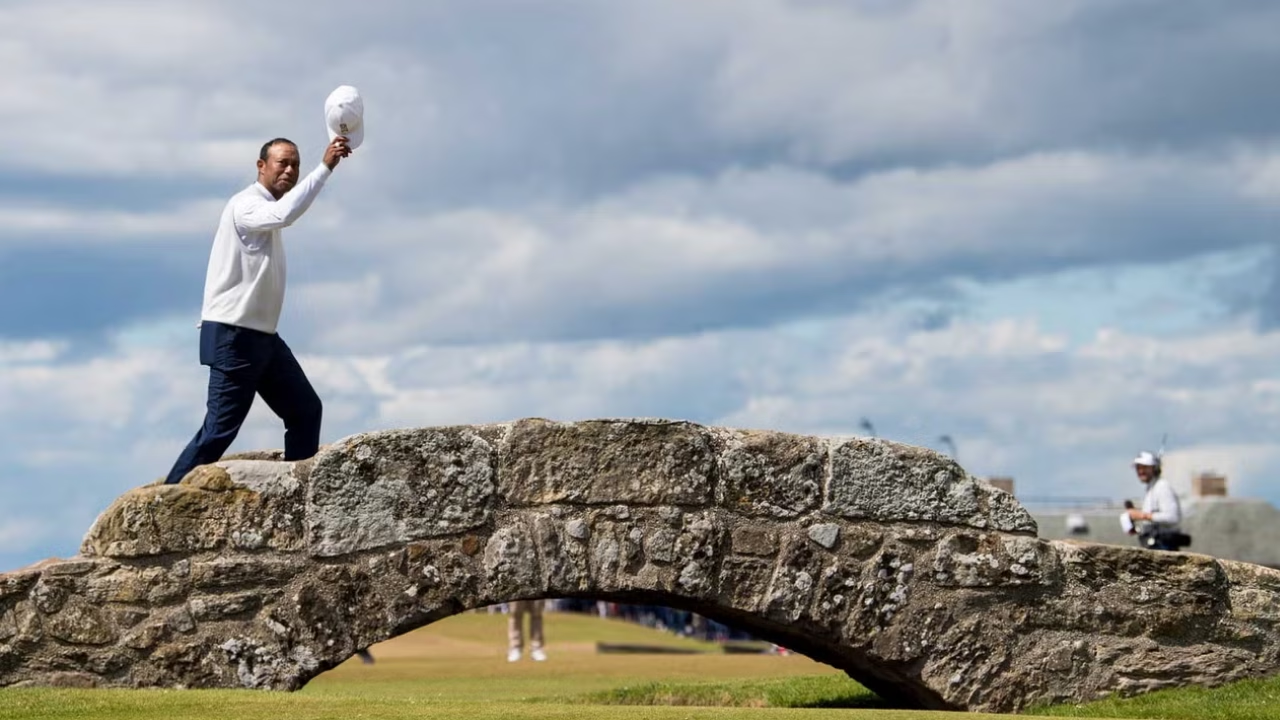 Tiger Woods acknowledges the crowd crossing the Swilcan Bridge at The Open in 2022. Image: GOLF.
Tiger Woods reached the bridge during the second round of the 150th Open in 2022 knowing he would miss the cut. As he crossed, the galleries rose in a prolonged ovation. Woods became visibly emotional as he continued towards the 18th green.
Woods said afterwards that he was not retiring, but that the moment felt as though it might have been his final Open at St Andrews.
Stand Where Golf History Lives
The Swilcan Bridge still belongs naturally within the Old Course. Its age and simple construction have endured beside a game that changed around it, while generations of golfers have reached the same crossing near the end of a round in St Andrews.
Standing there brings the story closer. The familiar stone arch and the town beyond turn years of photographs and televised moments into something you can finally place within your own round.
Long after the score is forgotten, the walk across Swilcan Bridge remains.
If a new golf experience is on your mind, start the conversation with Kinfern. We can develop your ideas into a considered itinerary, bringing together the golf, accommodation, transfers, and local details into one well-planned experience.