

The Old Course at St Andrews has been shaped by six centuries of golf. Its fairways, shared spaces, famous features, and place within the town show how the links changed over time while remaining central to the game.
In this article, we trace that story through its early development, Old Tom Morris, The Open, the town of St Andrews, famous landmarks, and the different routes to a tee time.
Key Takeaways
- The Old Course developed across six centuries, helping shape the 18-hole round while remaining closely tied to St Andrews.
- Its double greens, shared ground, overlapping holes, and unusual routing show how the Old Course developed gradually over generations.
- Old Tom Morris reshaped the links through practical stewardship, improving greens, turf care, bunkers, and maintenance for a busier game.
- The Old Course has hosted The Open more than any other venue, with generations of champions adding to its championship history.
- St Andrews and the Old Course remain unusually connected, with the links sitting beside everyday town life.
- The Swilcan Bridge, Hell Bunker, Road Hole, and Valley of Sin carry stories recognised far beyond the scorecard.
- Golfers can pursue Old Course access through advance applications, the Ballot, Singles Daily Draw, or guaranteed Authorised Provider tee times.
How an Ancient Links Became the Old Course
Few golfers need an introduction to the Old Course. Its name is known far beyond St Andrews, but its importance comes from more than fame. This is a course shaped by centuries of play, change, and an unusually deep connection with the game.
Golf has been played at St Andrews for around six centuries, with the Old Course developing on coastal linksland used since the late Middle Ages. Its story began long before formal clubs, fixed routing, or the modern ideas of course design that golfers now recognise.
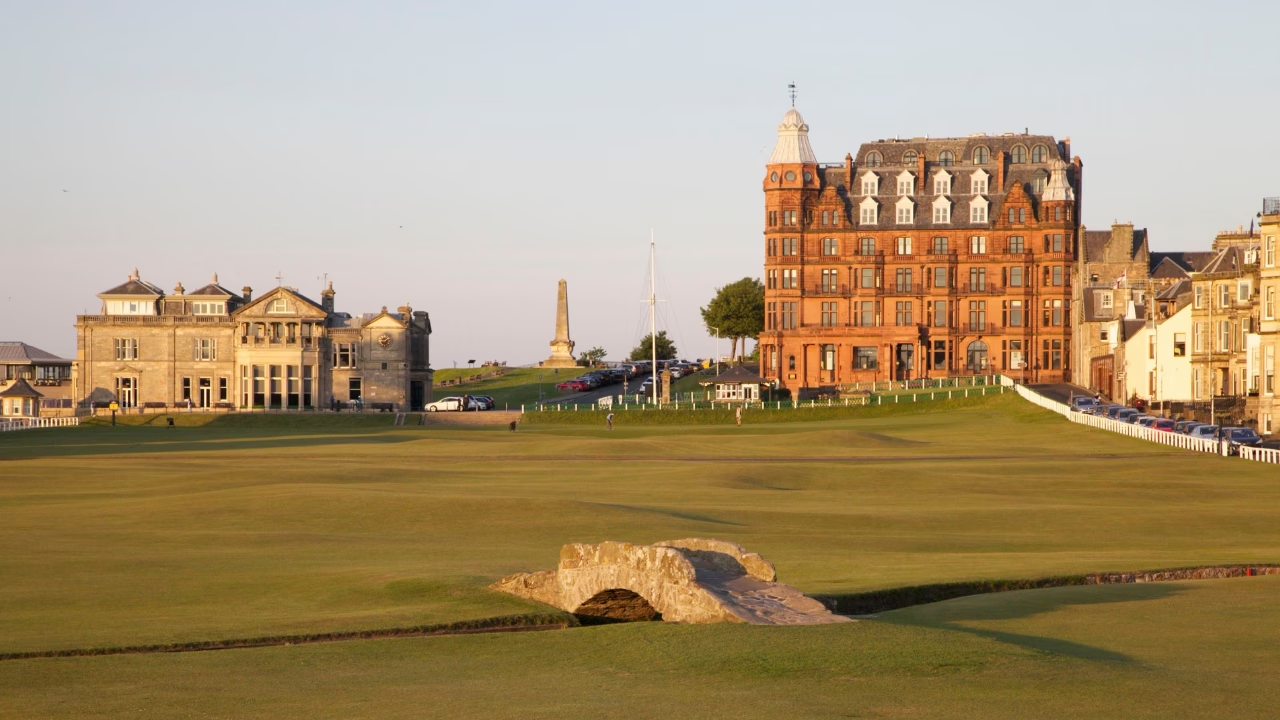 St Andrews Links (Old Course)
A defining moment came in 1552, when Archbishop Hamilton's Charter formally recognised the townspeople's right to play golf on the Links. The same ground was also used for grazing sheep, maintaining rabbit warrens, playing football, and other everyday activities, placing golf firmly within life in St Andrews.
By 1691, St Andrews already held an exceptional place in the game. A university regent described the town as the "metropolis of golfing", showing that its reputation had grown beyond local recreation and was becoming closely tied to St Andrews itself.
The early course differed greatly from the fixed layouts golfers now expect. In the eighteenth century, it had 22 holes, with 11 played outward and the same ground used on the return. In 1764, the layout was reduced to 18 holes, a change felt far beyond St Andrews.
Early courses across Britain used different numbers of holes, so St Andrews did not create an instant standard. Over time, its 18-hole round became increasingly influential as organised golf spread and expectations around a full round began to settle.
The links also faced competing interests. Commercial rabbit warrens threatened the golfing ground during a prolonged dispute, eventually resolved when James Cheape of Strathtyrum bought the Links in 1821. March stones were then used to distinguish the golfing ground from neighbouring pasture and rabbit warrens, with some still surviving.
Formal organisation followed the long-established playing tradition. The Society of St Andrews Golfers, later the Royal and Ancient Golf Club, was founded in 1754, giving local competition a more structured setting and eventually tying St Andrews to the wider development of golf's rules.
For much of its existence, there was no reason to call it the Old Course. That name became necessary after other courses appeared on the Links, beginning with the New Course in 1895. The familiar name arrived relatively late in a much older golfing story.
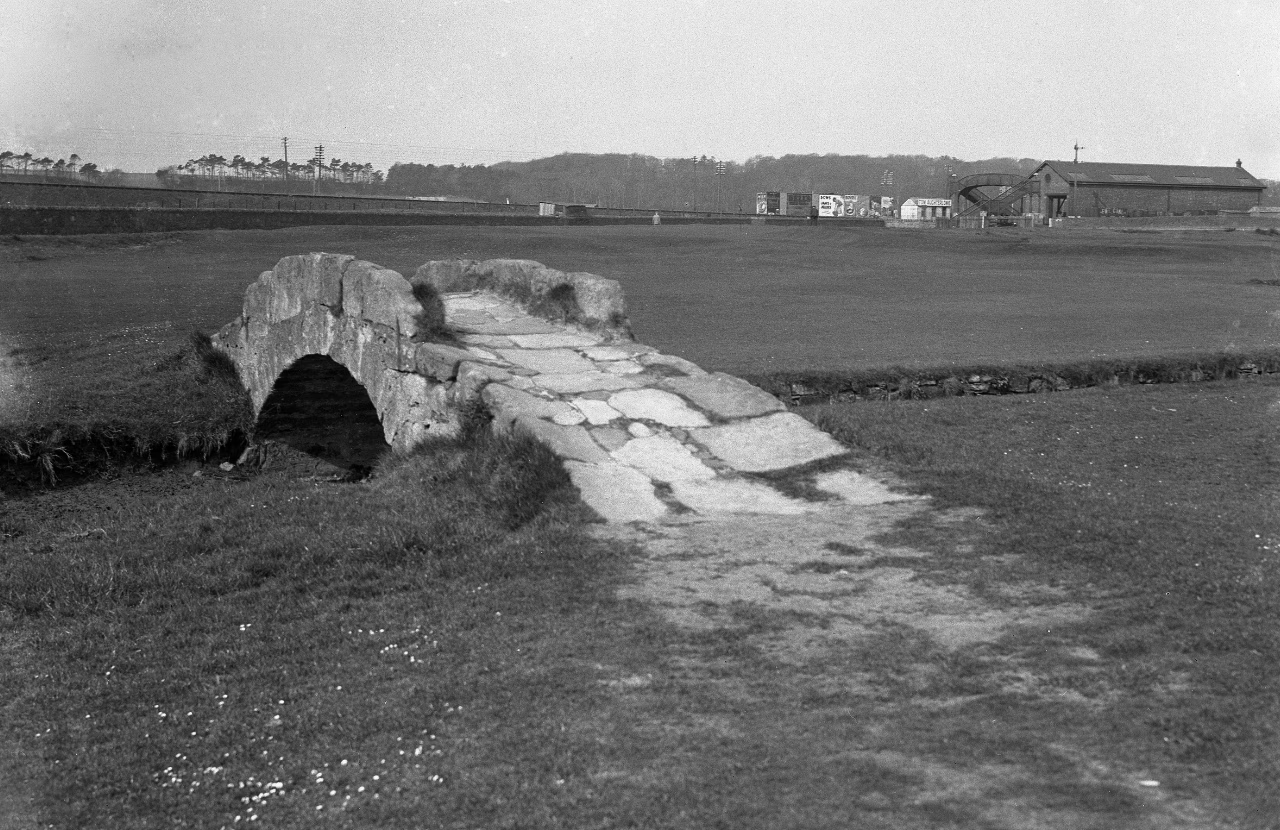 Historic view of the Swilcan Bridge on the Old Course. Image: University of St Andrews Collections.
What Makes the Old Course Different
The Old Course was never created from one architect's plan. It developed gradually as golfers used the natural links and altered routes around existing ground. That slow growth still explains why its physical form feels unlike almost any later course.
Early golfers followed a narrow strip through the links, playing outward before returning across much of the same ground. Fairways and greens could serve holes in both directions, so the course grew through repeated use rather than through eighteen separate corridors laid out together at one moment.
Seven double greens remain the clearest surviving evidence of that arrangement. The pairings run from the 2nd and 16th through to the 8th and 10th, leaving only four holes with putting surfaces entirely of their own.
Shared ground also shapes the course beyond those greens. Outward and inward holes sit closely together, while the 1st and 18th occupy the same vast fairway beside St Andrews. This overlap preserves an older form of links golf in which space was used repeatedly rather than divided into isolated holes.
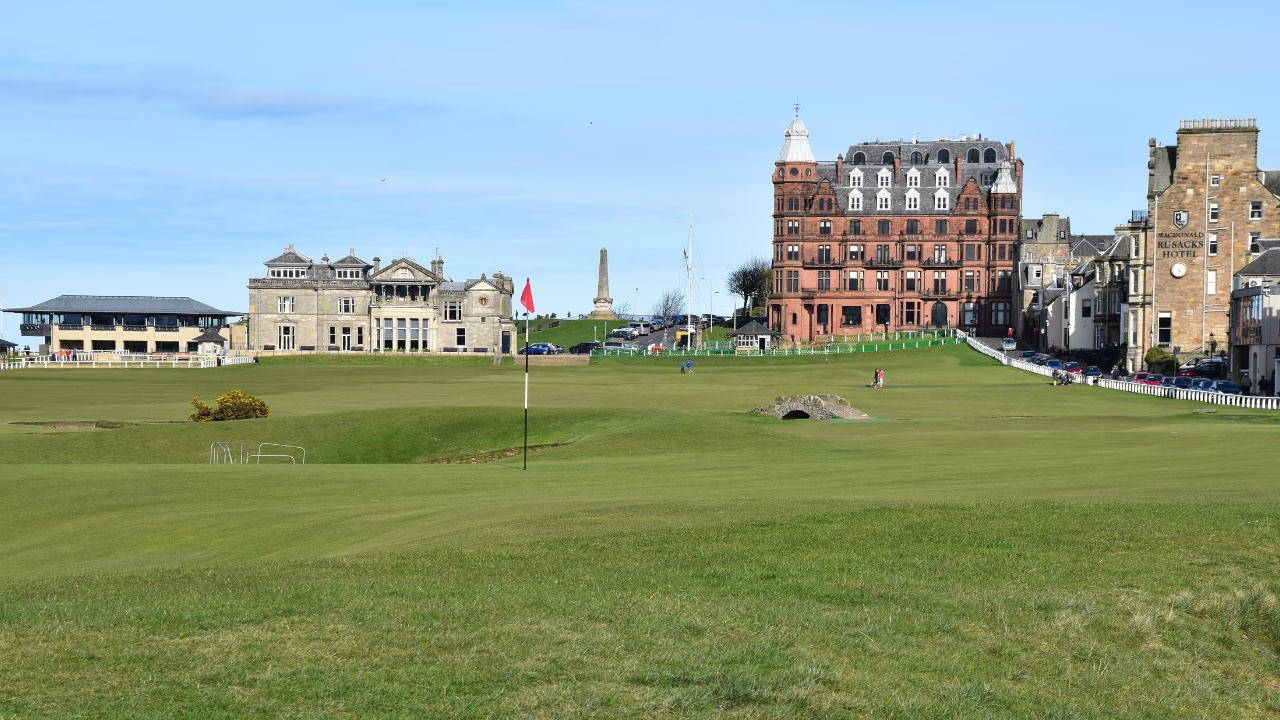 St Andrews Links (Old Course) with the Swilcan Bridge.
The routing preserves another trace of its origins. The Old Course could once be played in either direction, while today's anticlockwise round became established later. Reversed play still revives the clockwise route on special occasions.
The course has never been frozen at one point in its history. More than 60 bunkers were added between 1899 and 1905, while later generations lengthened holes and restored older features as equipment and competitive golf changed around it.
Its difference lies in that accumulation of centuries. Shared greens and overlapping ground remain alongside later alterations, preserving a structure shaped through long use rather than from one finished architectural idea imposed across the whole links.
How Old Tom Morris Shaped the Old Course
Old Tom Morris, known as The Grand Old Man of Golf, returned to St Andrews in 1864 as the links entered a demanding period of change. More golfers were using the ground, and the ancient course needed regular care beyond what earlier generations had known.
Morris formally accepted responsibility as Custodian of the Links. He remained connected with the Old Course for decades, supervising repairs and improvements as golf expanded. His task was practical: keep heavily used links turf playable while allowing an old course to respond to a much busier game.
The playing corridors were far narrower than those golfers know today, with thick whins crowding their edges. Morris cleared substantial areas of this growth, opening more ground for golf and creating space for later alterations across the links.
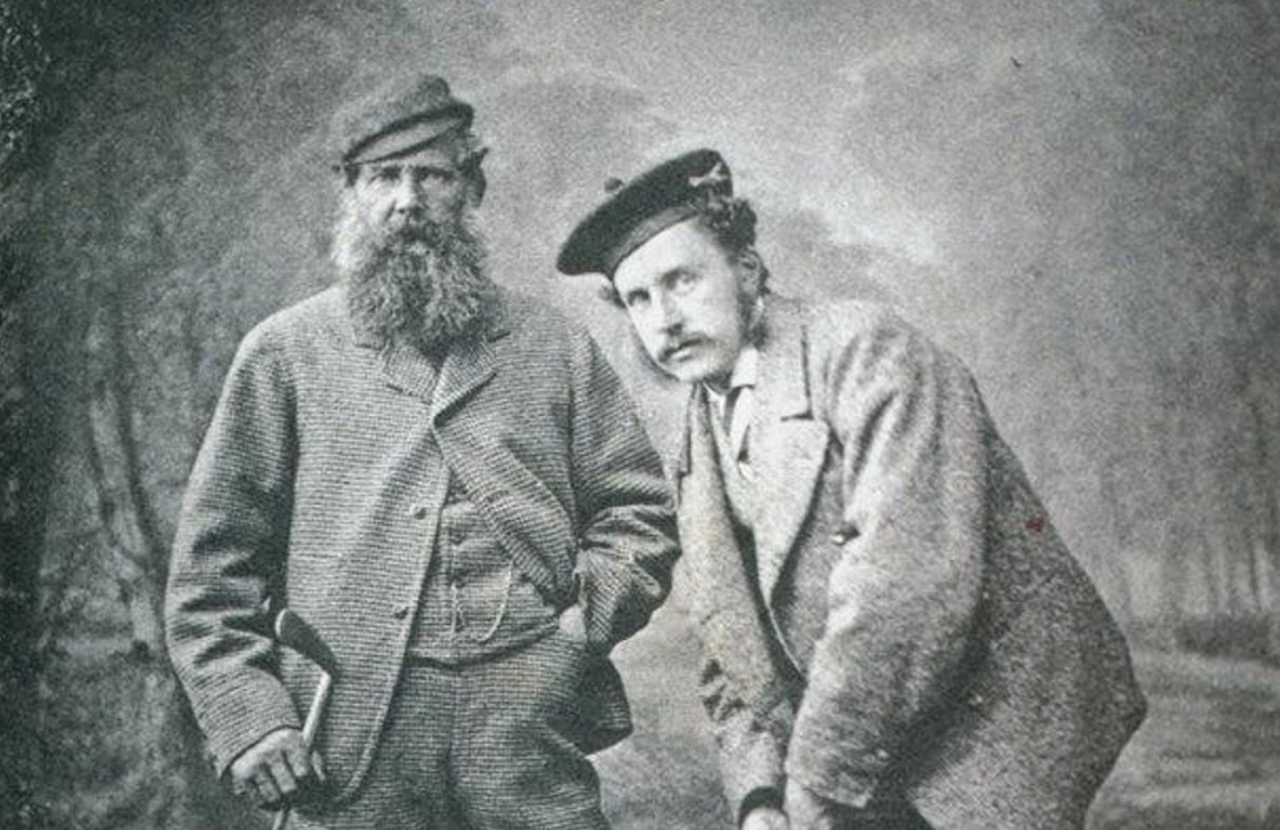 Old Tom Morris with his son, Young Tom Morris. Image: The Scotsman.
Work around the opening and closing holes became particularly important. Morris developed new 1st and 18th greens, partly using reclaimed ground, helping establish the opening and closing area in a form much closer to that known today.
Course repair became part of the routine. Sand from the West Sands was used for top-dressing and course improvement, continuing a practice closely associated with Morris's stewardship of the Links.
Morris brought greater consistency to course preparation. He widened fairways, enlarged greens, used sand to improve putting surfaces, championed mechanical cutting equipment, and added or removed bunkers. These changes helped improve turf conditions as play became busier.
The changes made during Morris's early years back at St Andrews were substantial enough to establish much of the Old Course's later form. His lasting contribution came through continuous stewardship, adapting inherited golfing ground to heavier use while keeping the course closely tied to the landscape that shaped it.
The Old Course and The Open
The Old Course first hosted The Open in 1873, taking the Championship beyond Prestwick for the first time. That edition was also the first Open contested over 18 holes, giving St Andrews a lasting place in its development.
Tom Kidd won by one stroke in difficult conditions and became the first Champion to receive the Claret Jug. The trophy had been commissioned after Young Tom Morris won the original Challenge Belt outright, so its first presentation at St Andrews marked another important change in The Open's early traditions.
 The Claret Jug, the trophy awarded to The Open Champion.
St Andrews gradually became The Open's most frequently used venue. By 2022, the Old Course had staged the Championship 30 times, bringing successive generations of leading golfers back to the same links across nearly 150 years.
Bobby Jones's 1927 victory gave the Old Course one of its defining amateur chapters. He successfully defended the title by six strokes, and his relationship with St Andrews endured long after competition, linking one of American golf's most important figures closely with the town, the course, and its golfing heritage.
Jack Nicklaus won at St Andrews in 1970 after defeating Doug Sanders in an 18-hole play-off. He returned eight years later to win again, making the Old Course the setting for two of his three Open victories.
By the late twentieth century, victory at St Andrews had become a defining line on several major careers. Seve Ballesteros won in 1984, Nick Faldo followed in 1990, and John Daly prevailed after a play-off in 1995, extending the Old Course's championship story into another era.
Tiger Woods made the Old Course part of his own major history in 2000. Winning by eight strokes on 19 under par, he completed the career Grand Slam at 24. Five years later, he lifted the Claret Jug there again.
The Open returned to St Andrews for its 150th staging in 2022, when Cameron Smith closed with a 64 to win on 20 under par. St Andrews will host the Championship for the 31st time from 11 to 18 July 2027, exactly a century after Jones's famous victory.
The Old Course and the Town of St Andrews
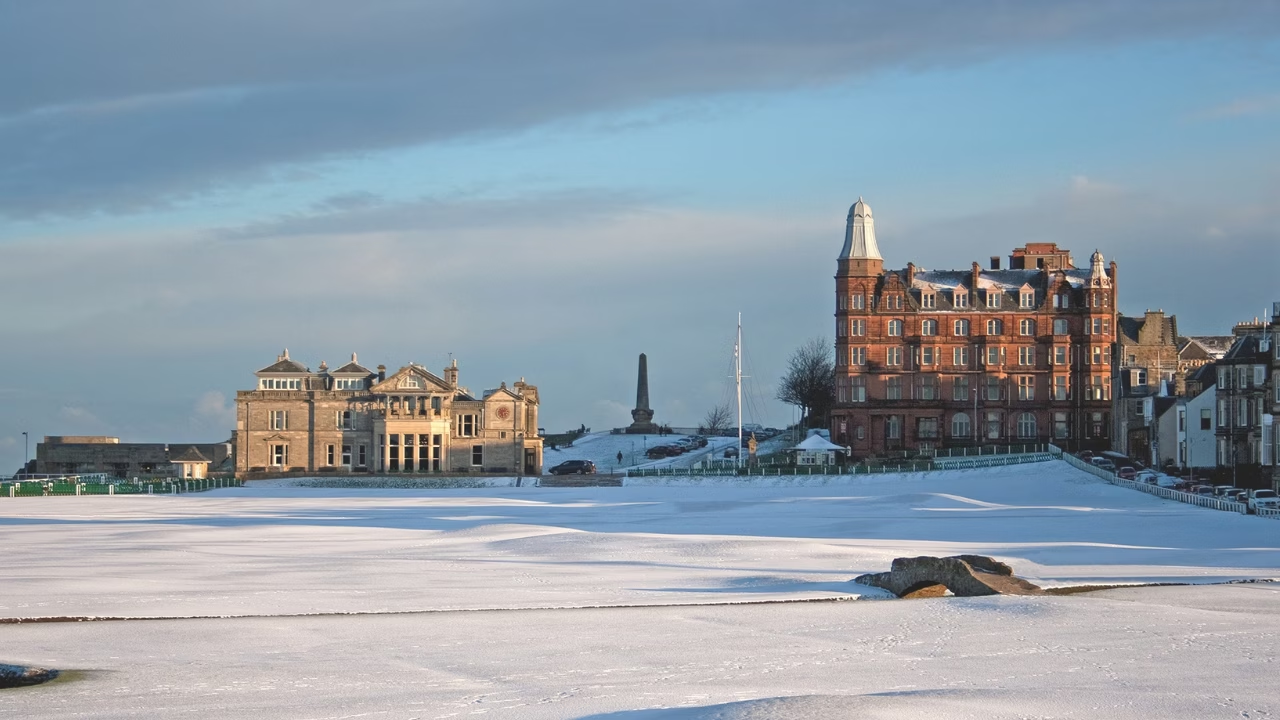
The Old Course sits unusually close to everyday St Andrews. Rather than being separated behind resort gates or private grounds, its town-facing end meets streets, hotels, university buildings, and public spaces within a few minutes' walk.
The wider Links remain public golfing ground, managed today by St Andrews Links Trust, which was established by Act of Parliament in 1974. It keeps the Old Course tied to the town in a practical way, with local golfers, visitors, students, and residents sharing the same landscape.
On Sundays, the Old Course normally closes for golf, which preserves a rhythm few championship venues still have and reinforces the sense that the links belong to a living town, instead of operating only for visiting golfers.
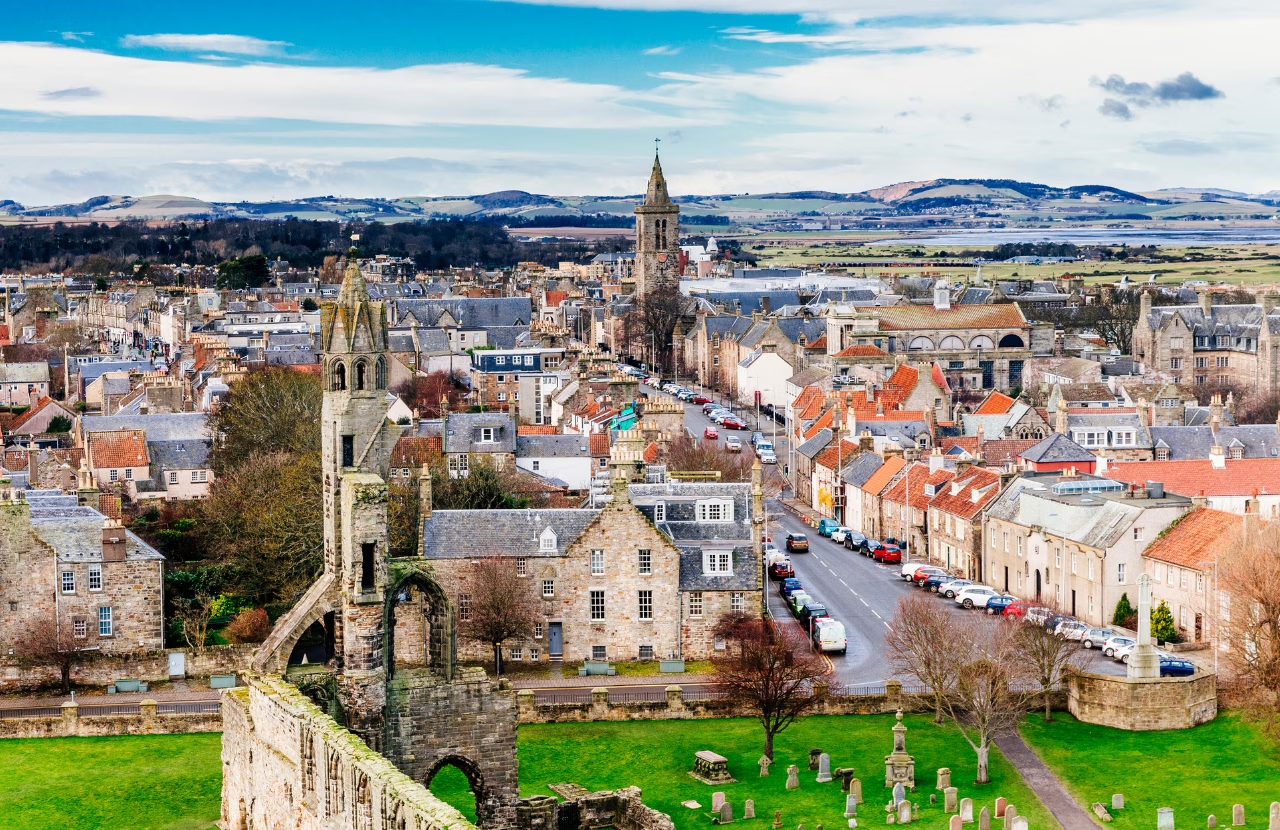 St Andrews, Fife
Golf is visible throughout central St Andrews, while residential streets and university buildings sit close to the links. The town, in return, gives the Old Course a setting that a purpose-built golf resort could never recreate.
Public participation remains part of that relationship today. Links ticketholders continue to receive playing access across the Links, while community initiatives and events keep the courses connected with local life.
The Old Course's Famous Features
A handful of Old Course features have become familiar well beyond St Andrews. Their importance rests on more than appearance, as each carries stories that connect the ancient links with generations of golfers and memorable moments in the game.
The Swilcan Bridge
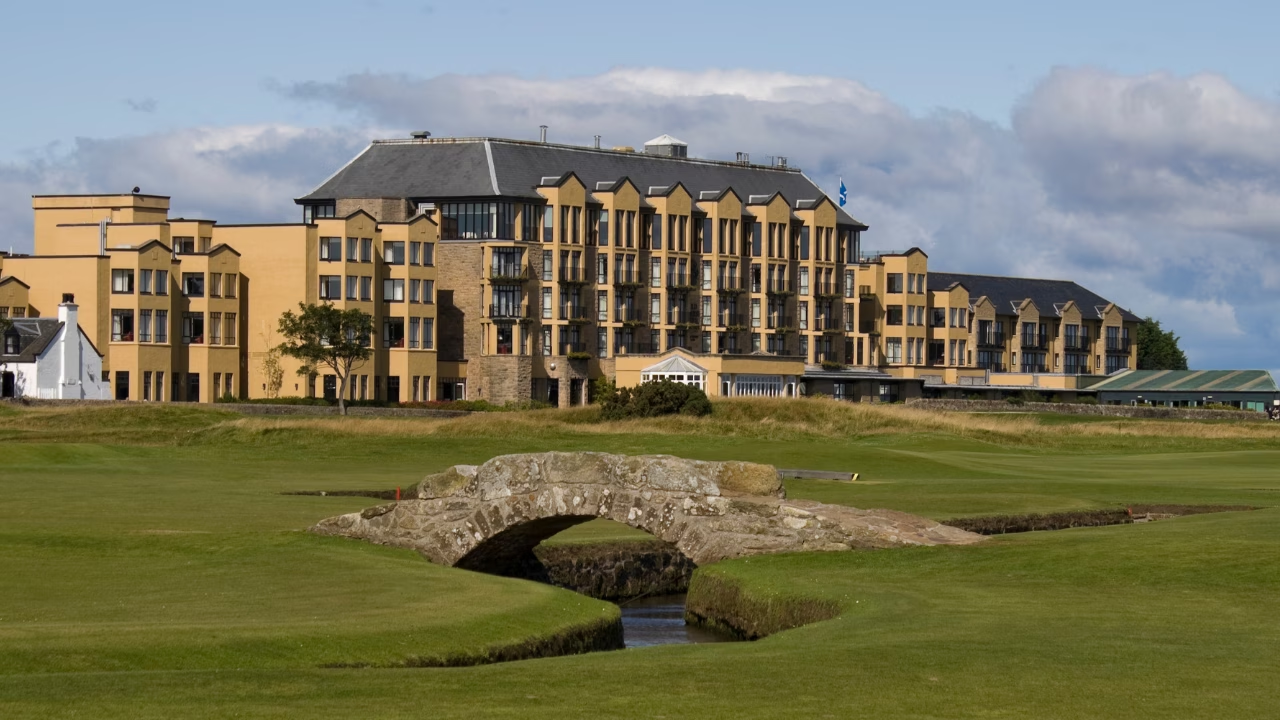
 The Swilcan Bridge on the 18th at St Andrews Links (Old Course).
The Swilcan Bridge crosses the burn on the 18th fairway and is thought to be more than 700 years old. Before golfers made it famous, the small stone structure served a practical purpose, giving livestock a crossing point over the water as animals moved across the links.
Generations of players changed what the bridge represented. Arnold Palmer's farewell to The Open in 1995 took place there, closing a Championship career that had helped restore American interest in the event across the Atlantic.
Jack Nicklaus added another enduring scene in 2005. During his final competitive round, he stopped on the bridge to acknowledge the galleries before walking on to birdie the 18th. That farewell strengthened the Swilcan Bridge's association with golfers marking the end of remarkable careers.
Hell Bunker
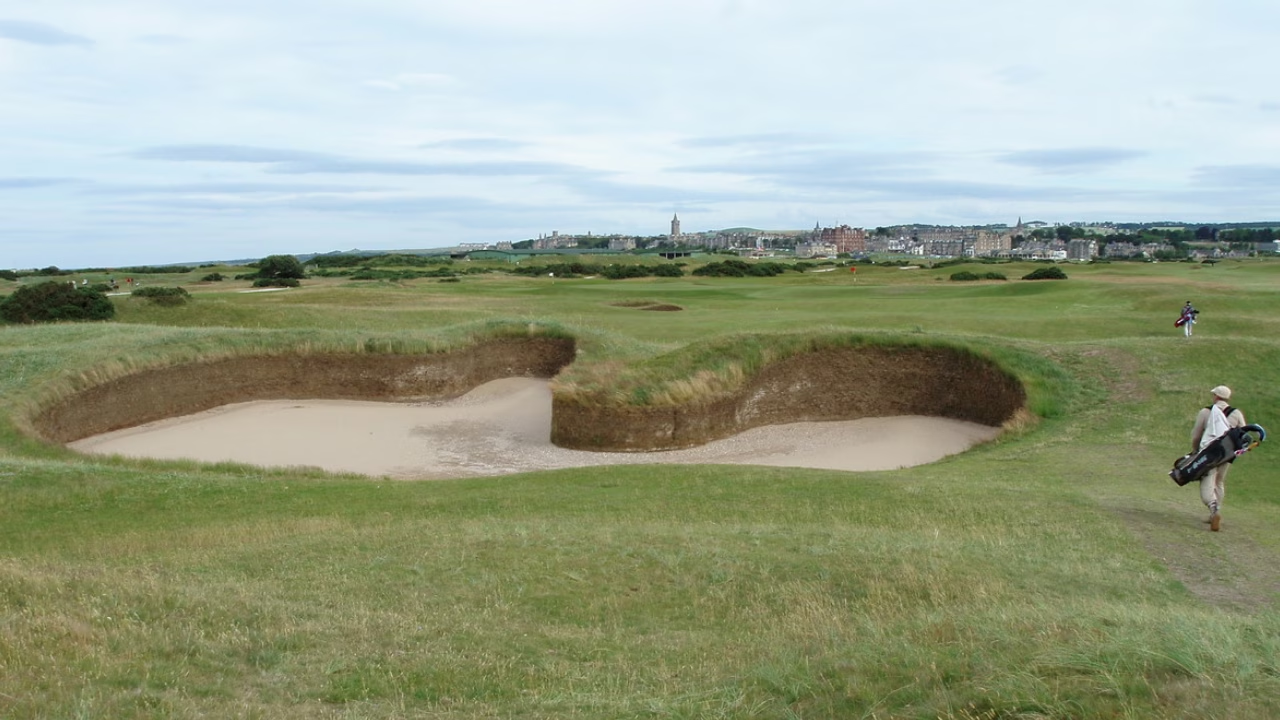 Hell Bunker on the 14th hole of St Andrews Links (Old Course).
Hell Bunker lies on the 14th, the longest hole on the Old Course. Roughly 300 square yards in area and around ten feet deep, it remains one of the largest and most recognisable bunkers on the links.
Jack Nicklaus provided one of Hell Bunker's best-known modern stories during The Open in 1995. He found it in the opening round and needed several attempts before his ball was finally clear, eventually walking away with a 10 on the hole despite his vast experience at St Andrews.
Hell Bunker also belongs to an older St Andrews tradition of hazards carrying names and identities of their own. The 14th has several such features, including the Beardies and Pulpit, yet Hell is the name that has travelled furthest beyond the course.
The Road Hole
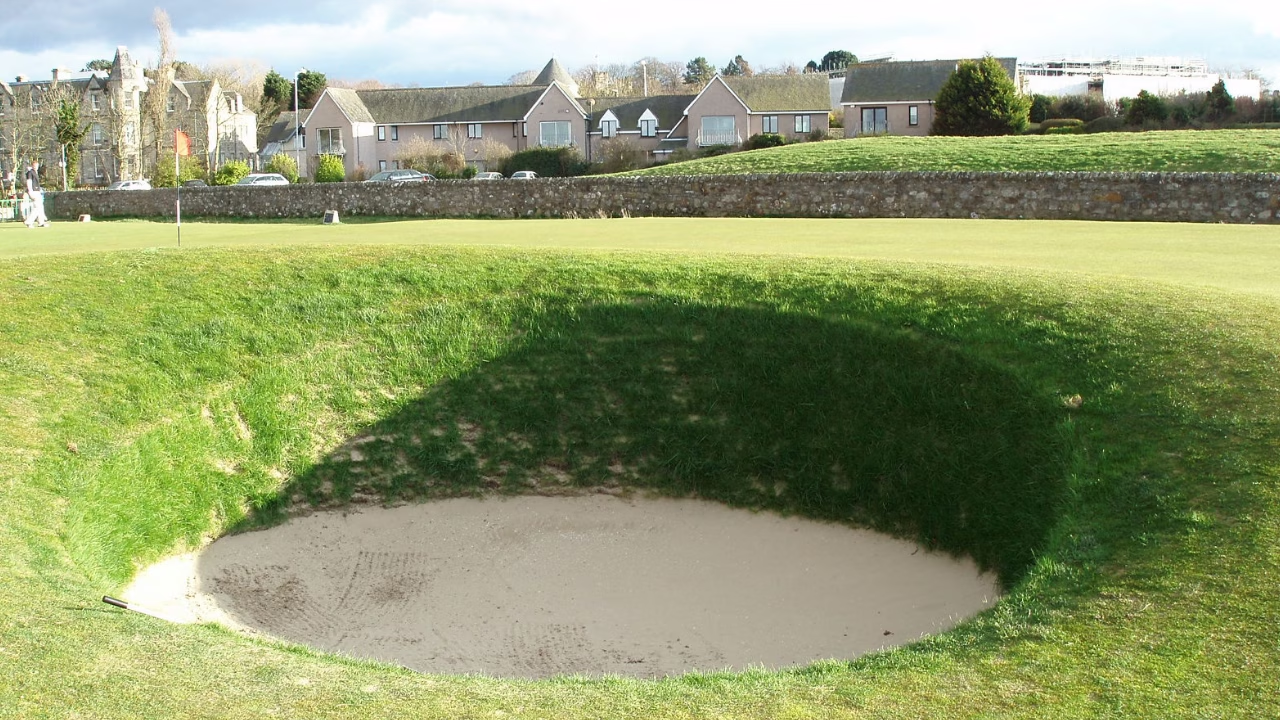 The Road Hole Bunker on the 17th at St Andrews Links (Old Course).
The Road Hole is the Old Course's 17th and one of its most recognisable pieces of ground. Unlike the shared fairways and double greens elsewhere, it stands apart, with the Old Course Hotel dominating the view from the tee.
Its name comes from the boundary behind the green, where the road and stone wall sit only a few paces beyond the putting surface. In front, the deep Road Hole Bunker completes a setting shaped as much by the built edge of St Andrews as by the links itself.
The wall has created memorable moments of its own. In 2010, Miguel Ángel Jiménez deliberately struck a recovery against the stonework, using the rebound to send his ball back towards the green and turn the boundary itself into part of the shot.
The Valley of Sin
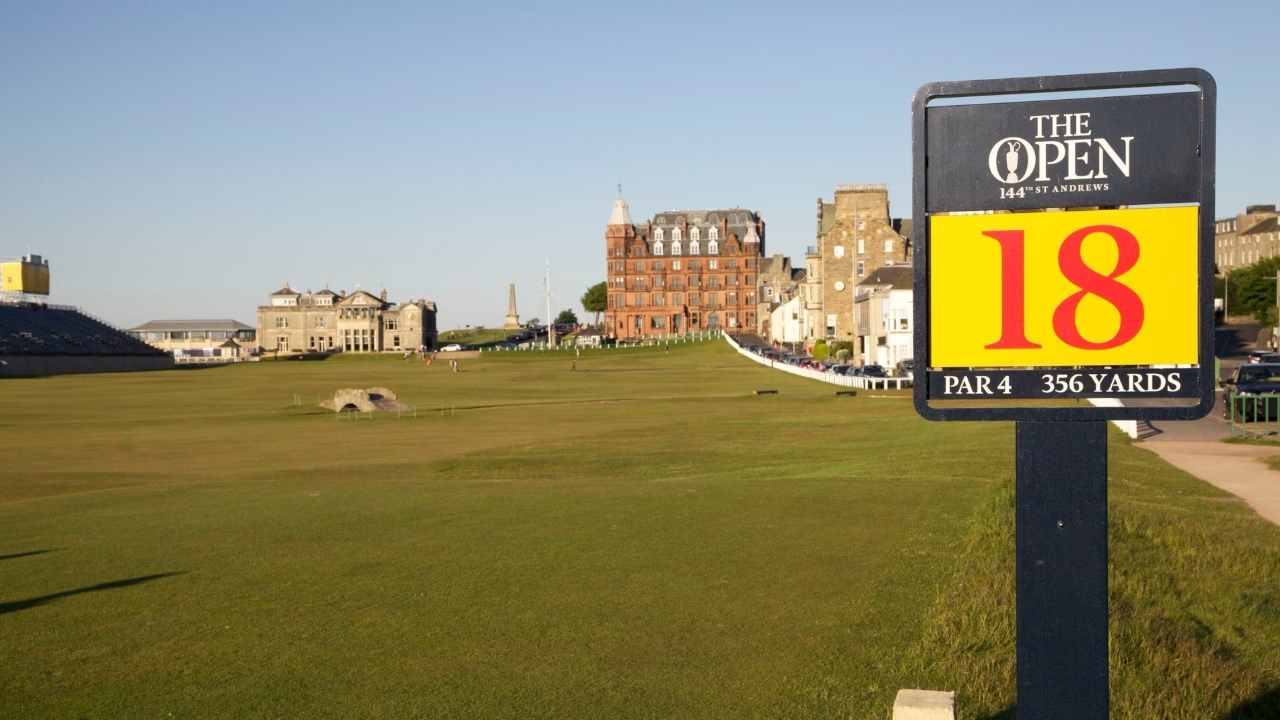 The 18th hole at the Old Course, where the Valley of Sin guards the green.
The Valley of Sin is the deep hollow immediately short of the 18th green. Its position at the end of the Old Course has given a simple fold in the ground an unusually large place in golf memory, especially during championships decided within sight of the town.
Its defining moment came in 1995. Costantino Rocca needed birdie to tie John Daly, then mishit his pitch into the hollow. From around 65 feet, he putted up the slope and into the hole, forcing a play-off.
The hollow had shaped notable finishes before Rocca. Tony Lema played through it to secure a closing birdie during his 1964 victory, while Nick Faldo holed a pitch-and-run from the Valley for an eagle two in the opening round of his 1990 triumph at St Andrews.
Securing a Tee Time on the Old Course
Playing the Old Course is unusual before a ball is struck, because there is no single booking route open to every golfer. St Andrews Links uses different systems for access, each with its own timing and certainty.
The right route depends on group size, travel dates, flexibility, and how much certainty matters. For international golfers building a stay around St Andrews, that difference can shape the rest of the itinerary.
The Swilcan Package
The main advance application route is the Swilcan Package, offered directly by St Andrews Links. Successful applicants receive two rounds on consecutive days, including one guaranteed Old Course tee time, with the second round played on another Links course.
Applications open during a set annual window rather than throughout the year. They are not handled on a first-come, first-served basis. Once the window closes, a lottery determines the order in which available packages are allocated, so submitting early within the application period does not improve the applicant's position.
For 2027, applications were limited to four golfers. Commercial operators could apply for shoulder-season dates, while high-season applications were open to groups of one to four golfers.
The Old Course Ballot
The Old Course Ballot keeps a traditional short-notice route open to visiting golfers. Entries are drawn two days before the intended round, except when Sunday closure or tournament dates affect the usual weekly playing schedule.
At least two golfers are required to enter. St Andrews Links asks for each player's name, home club, and handicap, and the ballot closes at 2 PM two days before play. Results are available after 4:30 PM that afternoon, allowing successful groups to confirm the round before the following day.
A successful ballot entry secures the tee time, but every golfer must still meet the Old Course playing requirement. A current official handicap record or certificate is required, with a maximum handicap of 36 for men and women.
For Kinfern clients whose golf experience includes ballot entry, our team can manage the application on their behalf.
The Singles Daily Draw
The Singles Daily Draw gives solo golfers another route when spaces become available close to play. Introduced in 2024, it replaced the old singles queue and removed the need to wait outside the Old Course for hours hoping to join another group.
Entry must be made in person on the day before the intended round. Current St Andrews Links guidance sets the window from 9 AM to 4 PM at either the Old Pavilion or Links Clubhouse, so this option only works for golfers who are already staying in or near St Andrews.
The draw is for individuals, not groups trying to create another ballot entry. It allocates whatever on-the-day spaces are available, so the number of possible places is never fixed and a successful entry cannot be assumed.
For a solo golfer whose wider group misses the Old Course Ballot, the Singles Daily Draw can therefore remain an option.
Guaranteed Tee Times Through Authorised Providers
Guaranteed commercial tee times allow golfers to know before travelling that the Old Course is included. They are allocated through golf tour operators appointed as Authorised Providers by St Andrews Links Trust and do not depend on success in the public Ballot.
Kinfern is an Authorised Provider, allowing us to include guaranteed Old Course tee times within selected golf experiences, subject to availability and the conditions attached to each allocation. This gives clients another route to the Old Course when certainty is important.
At Kinfern, guaranteed Old Course tee times form part of selected wider golf experiences, which can bring together accommodation, additional rounds, and transport around the confirmed time.
Availability remains limited, and popular periods can fill well before travel begins. For golfers coming from overseas on fixed dates, the main advantage is certainty, because the rest of a St Andrews itinerary can be arranged around a confirmed Old Course round.
Conditions are not identical across every Authorised Provider. Minimum stays, accompanying golf, accommodation, prices, and available dates can vary, while scheduled course closures may also reduce the number of commercial times during a season. Current terms should therefore be checked before confirming an experience.
Play Your Part in Old Course History
The meaning of the Old Course has accumulated over generations. Golfers, greenkeepers, townspeople, and champions have each left something behind on the same links as St Andrews continued to grow around it.
For golfers planning to visit, knowing what came before changes how the round is understood. Familiar features and traditions take on greater meaning when their place in the Old Course's long history is already known.
Six centuries on, the Old Course still connects every round with the history that shaped the game.
If a new golf experience is on your mind, start the conversation with Kinfern. We can develop your ideas into a considered itinerary, bringing together the golf, accommodation, transfers, and local details into one well-planned experience.